
All Commentaries

Next Steps on Congo
For the past 14 years, more than six million Congolese have perished in the ongoing conflict triggered by U.S. allies Rwanda and Uganda when they invaded Congo in 1996. As the world focuses on the Western intervention in Libya under the guise of moral responsibility to protect the vulnerable, the global community must question the lack of action by the United States and the coalition on the millions dead in the Congo.

Call for Attacks on Libyan Infrastructure Provides Glimpse of NATO’s Real Motives
Are we being dragged into a war whose means violate the Geneva Conventions and whose end violates the UN resolution that protects civilians?
Sans Insurance, a Nuclear Meltdown Can Become a Financial Meltdown
Since insurance companies refuse to provide more than minimal coverage for nuclear-power plants, the state must absorb the bulk of the costs of a disaster such as Fukushima.
The New York Times Backs the Administration’s Tenderize-the-Taliban Policy
The New York Times backs the administration and Gen. Petraeus’s policy of softening up the Taliban with a pounding before talking with its representatives.

WikiLeaks: Canada’s Harper Embodies American Right’s Worst Tendencies
Canada’s Prime Minister Stephen Harper, whose Conservative Party took a commanding majority in nationwide elections last week, has built his political success on a platform of his country’s supposed Arctic sovereignty, pro-business economics, and dodging action on climate change.
Pakistan Makes It Hard to Defend From the “They Don’t Value Human Life” Libel
Pakistan seems oblivious to the threat that expanding its nuclear-weapons program poses.
Afghanistan under the Knife
It was a primitive form of surgery. Almost ten years ago, the United States and its allies stuck a knife deep into Afghanistan in an attempt to remove two malignancies, al-Qaeda and the Taliban. One of those, Osama bin Laden’s crew, is nearly gone. The Taliban, after going into remission for a brief period, has come back.
The knife remains in the patient. With bin Laden gone, the debate has intensified: what to do with the knife?
Contamination: From Minamata to Fukushima
As with methyl-mercury a half century ago, Japan is once again threatened by a new persistent toxin accumulating in its food and water. But unlike the early days of the discovery of mercury poisoning, Japan’s government has quickly launched responses to this contamination, even far beyond the local site of contamination.
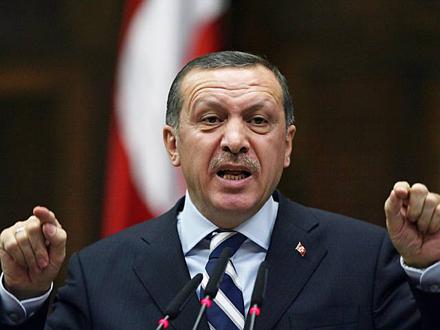
Arab Spring, Turkish Summer?
Political freedom, accountability, corruption, and economic justice are at the center of democratic protests. Turkey’s record on these issues has drawn the notice of many in the Islamic world. But Turkey’s experience with electoral politics and market economics is unique, a response to the specifics of Turkish history and culture. The example therefore may not be replicable.

Tax Justice as Climate Justice
You don’t have to leave America to go to the Third World. I, for example, live in the San Francisco Bay Area, and here, as in all northern megacities, crushing poverty surrounds the comfortable precincts. I can’t call it “extreme” poverty, for of course it cannot compete with the despair endemic to, say, the North African drought zones. But when an organization like Remote Area Medical feels compelled to bring its traveling free clinic to The Oakland Coliseum (now, officially, the Oracle Arena), and when thousands stand for long hours to receive basic care they could not hope to afford, the problem is nonetheless clear. This last April, when the good folks at RAM pulled up stakes and left Oakland for their next stop, it was Haiti. The America they were leaving was not the “exceptional” America of the official dream.