
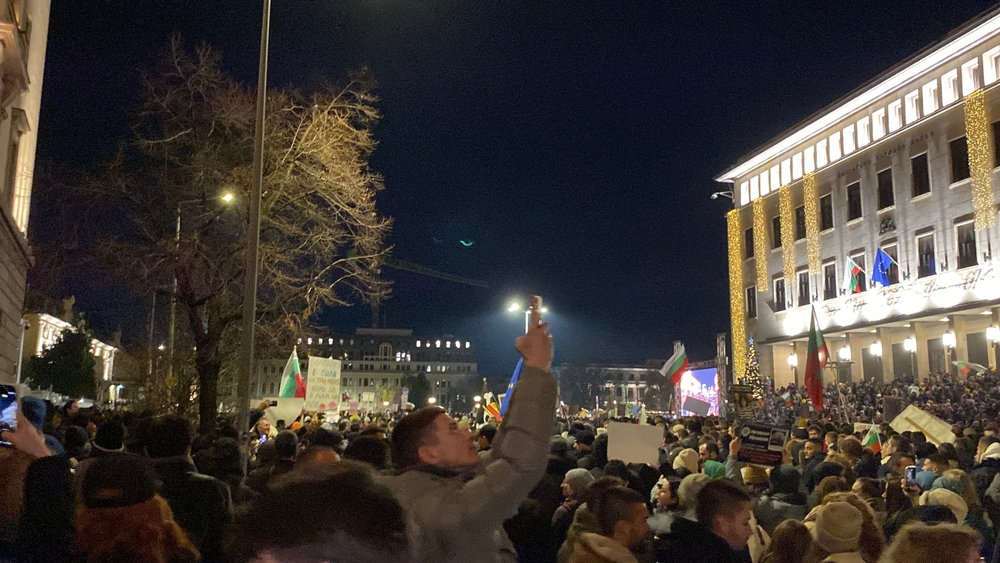
In December, a government in an EU member state collapsed under pressure from mass demonstrations led mainly by young people who organized without traditional political infrastructure. No coup occurred; no constitutional crisis emerged, and democratic principles remained intact. Elections retained their significance. Judicial systems continued to function. The state’s fundamental structures held firm. Nevertheless, a government fell, toppled by a generation that no longer equates institutional stability with political legitimacy.
This moment reflects broader generational shifts in political engagement, where traditional hierarchies and established political narratives are fundamentally challenged. Young citizens are leveraging digital connectivity and horizontal organizing strategies that transcend conventional political mobilization. Their approach represents a sophisticated understanding of political power that prioritizes collective action over institutional mediation. Moreover, these movements signal a growing demand for responsive governance that meaningfully addresses contemporary social and economic challenges.
Labeling this moment a “European Spring” would be premature. Contemporary Europe differs fundamentally from the 2011 Arab world, and Bulgaria’s context cannot be equated with transformative movements elsewhere. However, dismissing the comparison entirely would overlook the profound political insights this moment represents. These protests did not assault democracy from external forces. Instead, they disconnected the system from within, revealing a growing gap between traditional European political mechanisms and the lived political experience of its youngest citizens.
Legitimacy Rupture
The protests that brought down Bulgaria’s government were notable less for what protesters demanded than for how they mobilized. They were decentralized, digitally coordinated, and largely detached from formal political actors. Protesters did not rally behind an opposition platform or a charismatic leader. They rallied against corruption, irresponsiveness, and a political class that appeared insulated from consequence. This matters because it speaks directly to a fundamental dynamic of political systems: the distinction between dissatisfaction with specific policies and a deeper erosion of confidence in political institutions. Governments can withstand unpopular decisions as long as citizens maintain a broad, underlying belief in the system’s legitimacy and worth. What Bulgaria revealed was not anger at one policy or one cabinet but a profound deterioration of that foundational trust reservoir.
European surveys have long telegraphed this trajectory. Across the EU, younger citizens consistently report markedly lower trust in political parties and national governments than older generations, while maintaining a commitment to democracy as a conceptual ideal. Recent EU-wide polling demonstrates a generational trust gap spanning double-digit percentage points. Critical insight emerges not as a rejection of democratic principles but as a scathing critique of how those principles are currently implemented.
In Bulgaria, this accumulating legitimacy deficit finally transformed from an abstract concern to a tangible political consequence.
Why Bulgaria Cracked First
Bulgaria’s vulnerability is not mysterious. Its institutions are weaker than those of Western Europe; public trust is low, and coalition governments have struggled to govern decisively. The country has cycled through multiple governments in just the past few years, reinforcing the perception that elections change faces but not behavior.
But focusing only on Bulgaria’s weaknesses misses the deeper systemic dynamics. The protests succeeded not simply because institutions were fragile, but because traditional political intermediaries had effectively disappeared. Unlike in much of Western Europe, there were few trusted actors, robust labor unions, credible opposition parties, or substantive civic organizations capable of transforming protest energy into meaningful political negotiation.
The absence of these institutional shock absorbers meant political pressure traveled with unprecedented directness and speed. Confronted with sustained, unmediated public mobilization and minimal political insulation, the government stepped down, which was the path of least resistance. The resignation came from a fragile pro-EU coalition led by Prime Minister Nikolai Denkov, whose reformist We Continue the Chance-Democratic Bulgaria alliance depended on uneasy cooperation with Boyko Borisov’s GERB, leaving it politically exposed and unwilling to absorb prolonged street pressure. The system’s internal logic revealed its own vulnerabilities when direct citizen pressure met institutional inertia. The generational uprising represented more than a momentary political disruption. It exposed the profound erosion of traditional political mediation channels, highlighting how contemporary democratic systems must evolve to maintain genuine representational legitimacy. Digital connectivity and horizontal organizing have fundamentally altered the landscape of political engagement.
Gen Z did not overthrow the system. They exposed how thin the system’s connective tissue had become.
Elsewhere in Europe
Western Europe has seen no shortage of mass protests. France’s streets have filled repeatedly over pensions and labor reform. Germany has seen large-scale climate demonstrations. Spain and Italy have experienced waves of youth-led mobilization. Still, governments largely survived.
The reason is not political disengagement, but institutional resilience.
Robust democratic systems excel at three critical functions: they postpone systemic breakdown, strategically dissipate collective anger, and systematically transform protest into procedural political dialogue. Comprehensive social safety nets continue to provide meaningful buffering. Electoral processes retain substantive perceived significance for many citizens. Established intermediary institutions remain capable of absorbing and channeling social pressure.
Institutions can absorb pressure, but only if they adapt.
The profound distinction lies in the fundamental legitimacy of political systems. Institutions can effectively manage specific policy disagreements, but they become fundamentally vulnerable when citizens begin to question the underlying systemic integrity. When broad, diffuse support for democratic processes erodes, political stability shifts from an assumed condition to a contingent arrangement.
Adapt or Die
What distinguishes this moment from earlier protest cycles is not ideology but infrastructure. Mobilization no longer depends on parties, unions, or formal leadership. It flows through platforms that reward speed, emotion, and visibility, not compromise. Traditional democratic institutions, designed for structured negotiations, now struggle to interact with decentralized, network-driven movements. Without a single point of authority, these leaderless protests can rapidly intensify but remain unable to reach a meaningful resolution.
In Bulgaria, that mismatch produced collapse. Elsewhere, it produces paralysis, for now. This is where the “spring” metaphor matters, and where it must be handled carefully.
The Arab Spring was not one event but a pattern: youth-led, digitally amplified mobilization that spread by example rather than coordination. It targeted legitimacy more than ideology and exposed regimes that mistook control for consent.
Europe is not facing an authoritarian breakdown, but it is confronting a subtler challenge: democratic systems that function procedurally while failing experientially. Governments govern. Laws pass. Yet a growing number of young citizens feel unseen, unheard, and structurally excluded from meaningful influence. Bulgaria shows what happens when that feeling meets weak institutional mediation. Western Europe shows how long stronger systems can delay the same reckoning.
Delay, however, is not immunity.
Warning, Not Prophecy
Calling Bulgaria the start of a “European Spring” would be misleading. There is no continent-wide uprising underway, no inevitable cascade. However, Bulgaria does mark something real: the first time in this decade that a European government fell primarily because digitally mobilized youth refused to accept procedural democracy as sufficient. That should unsettle comfortable assumptions. For years, Europe has contrasted itself with regions marked by sudden political rupture. Stability became identity. However, stability without legitimacy is brittle. It holds until it doesn’t.
Bulgaria did not reject democracy. It challenged how democracy currently operates. That distinction matters. Europe still has choices. Institutions can adapt. Parties can open. Representation can be rebuilt. But that requires acknowledging that younger citizens are not disengaged; they are disillusioned. And disillusionment, when shared and networked, becomes politically potent.
Spring is not destiny. It is a signal. Bulgaria’s arrived early, not as a revolution, but as a warning that legitimacy cannot be postponed indefinitely, that stability is not self-justifying, and that a generation raised on connectivity will not wait quietly forever. Europe should listen, while it still can.