
In February elections, the Bangladesh Nationalist Party (BNP) led by Tarique Rahman secured the majority of more than two-thirds of the seats in parliament. The party now holds 212 seats compared with 77 for the Islamist Jamaat-e-Islami alliance. For many, the newly elected government symbolizes restored stability after the unrest of August 2024 and the fall of Sheikh Hasina. Indeed, the elections took place in a relatively peaceful atmosphere, especially on election day.
However, stability is not synonymous with peace and cannot prevent the recurrence of violence. In the words of Johan Galtung, the founder of peace and conflict studies, the absence of direct violence does not guarantee the absence of structural and cultural violence. To avoid the latter requires justice, judicial independence, human rights protection, and accountability.
For the last 18 months, under the interim government of Muhammad Yunus and despite ongoing reforms, Bangladesh had been trapped in a surge of mob violence spurred on by religious extremists hostile to minorities, women, secular activists, and LGBTQ+. This violence has been accompanied by the weakening of the judicial system, arbitrary detentions of thousands of journalists, political and civic activists, as well as the banning of the former ruling party, the Awami League, from participation in the elections. High levels of insecurity among minorities illustrate cultural violence, while the lack of accountability and judicial independence undergird the country’s structural violence.
The interim government focused on maintaining negative peace of relative stability. But the focus of the newly elected government should be on strengthening the structural requirements of positive peace, the only real guarantee that violence won’t return.
A Symbol of Justice
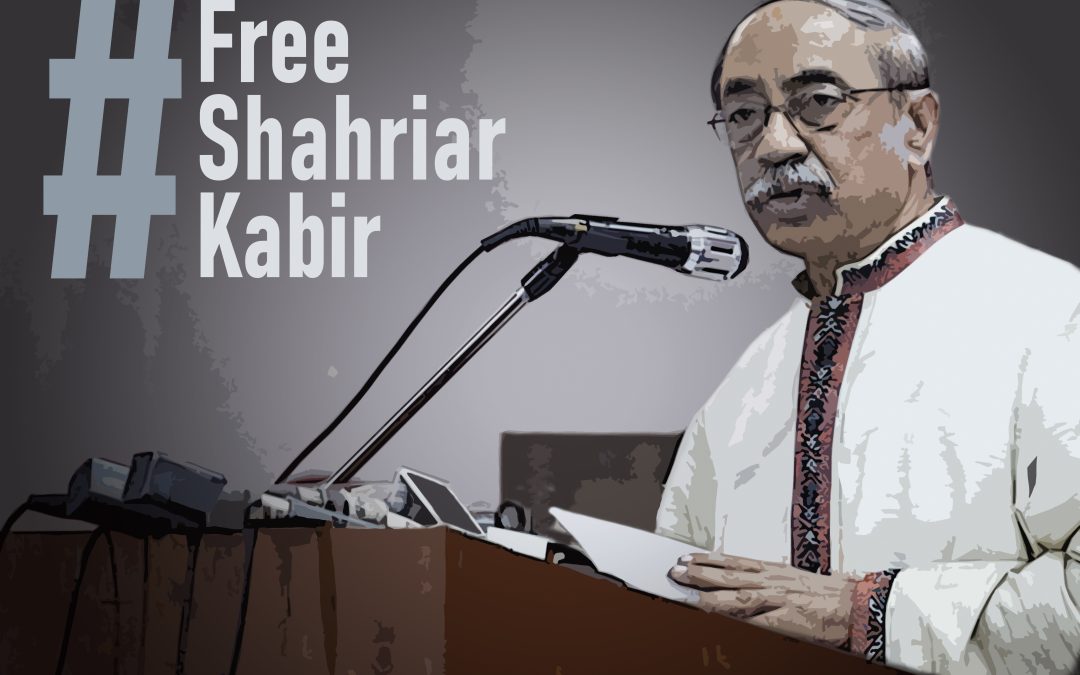
Shahriar Kabir is a secular Bangladeshi journalist, filmmaker, writer, and a children’s book author. He has long been a symbol of resistance against religious extremism in Bangladesh. Born in 1950, Kabir has dedicated his life to preserving the memory of the 1971 Liberation War and the mass atrocities perpetrated by the Pakistani army and its local collaborators. Kabir cofounded the Nirmul Committee—the Forum for Secular Bangladesh and Trial of War Crimes—a civil society movement to coordinate efforts to hold perpetrators accountable and promote religious pluralism.
The committee, founded in 1992, has been instrumental in advocating for justice for the estimated three million victims of the war. Through documenting war crimes and atrocities, seeking accountability, and promoting education and memorializations, Kabir pioneered the process of Dealing with the Past (DwP) in Bangladesh after 1971. DwP is the holistic process of addressing the needs of communities healing from war, genocide, and trauma, formally identified by the UN in 1997. This includes four pillars: the right to know, the right to justice, the right to reparations, and the guarantee of non-recurrence.
On September 17, 2024, Kabir was arrested at his home in Dhaka by plainclothed police under the interim government. He faces multiple murder-related charges linked to the July-August 2024 student-led protests that ousted former Prime Minister Sheikh Hasina’s government. He has also been charged with crimes against humanity at the International Crimes Tribunal. Ironically, the tribunal is a Bangladeshi court originally tasked with trying those responsible for the crimes of 1971. Kabir’s arrest has been widely perceived as silencing a secular activist, a journalist, and researcher who worked to hold local collaborators in 1971 war atrocities accountable, including members of Islamist groups like Jamaat-e-Islami, and to establish a secular Bangladesh.
Kabir’s arrest was marked by serious irregularities. Police raided his home at midnight without a warrant, detaining the 73-year-old activist despite his frail health. He was initially held incommunicado, denied access to family or lawyers, and subjected to verbal and physical abuse in court. In these cases, he was “shown arrested” without evidence of direct participation in his so-called crimes. Kabir was not even present at the protest sites.
In October 2025, the UN Working Group on Arbitrary Detention called for his immediate release and compensation, and the creation of an independent investigation. The opinion explicitly states that his detention violates Article 19 of the International Covenant on Civil and Political Rights, since it punishes his intent to criticize the government. His detention also prompted calls for his release from human rights and genocide prevention organizations such as Genocide Watch, the Lemkin Institute, and the European Bangladesh Forum.
At 75, Kabir suffers from chronic illnesses, and reports indicate deteriorating conditions in prison, including denial of medical care. The death of other detainees in custody has heightened fears for his safety, prompting petitions for his release on humanitarian grounds. The interim government’s refusal to grant bail, despite multiple court appearances, further erodes due process, turning detention into indefinite punishment.
The case of Shahriar Kabir symbolizes the gap between stability and positive peace and reflects a broader pattern of structural violence. Furthermore, his arbitrary detention is part of a larger, systemic crisis, as evidenced by the chilling statistics of the media purge since August 5, 2024, including over 300 physical attacks on journalists, with more than a dozen killed. Moreover, 439 journalists have been accused in politically motivated cases, 266 of them murder cases. Over 1,100 journalists were dismissed nationwide.
Getting to Positive Peace
Positive peace is not merely the absence of war and violence. It is a foundation for societies to heal, rebuild, and ensure that violence does not reoccur. Positive peace is grounded in several pillars including a well-functioning government, equitable distribution of resources, low levels of corruption, acceptance of the rights of others, good relations with neighbors, and free flow of information.
The new government in Bangladesh can implement changes to nudge the society in the direction of positive peace. To achieve the goal of a well-functioning government that upholds the rule of law—including fair and transparent laws, access to justice for everyone, and protection of human rights—the new government must review and transparently monitor, in cooperation with international actors like the UN, all cases considered politically sensitive and initiated against political opponents, journalists, secular activists, and others. Transparent governance ensures equitable resource distribution, accountability, and justice. So, the government must pursue an anti-corruption agenda that guarantees an independent judicial system, transparent investigation and monitoring.
At the moment, there are serious concerns about the situation of minorities in Bangladesh, including Hindus, Buddhists, and Christians as well as the Indigenous population in the Chittagong Hill Tracts region. The new government must guarantee the protection of religious, ethnic, and other minorities and indigenous groups, ensuring that inclusion and effective participation of all marginalized groups in rebuilding trust and institutions. It should also foster cross-border dialogue and reconciliation to reduce tensions and build trust across divided communities.
A free and independent media is also essential to protecting freedom of expression, a pluralism of opinions, and the promotion of dialogue. The government needs to review all political cases against journalists and writers, release and compensate those who have been unjustly detained.
Bangladesh is currently at a crossroads. Chaos, mob violence, and political uncertainty abound. The relatively peaceful elections and a transfer of power in 2026 provide an opportunity to move in the direction of positive peace. It can’t do this alone. International partners must provide the support necessary for Bangladesh to reckon with its past and transcend its history of violence and injustice.