
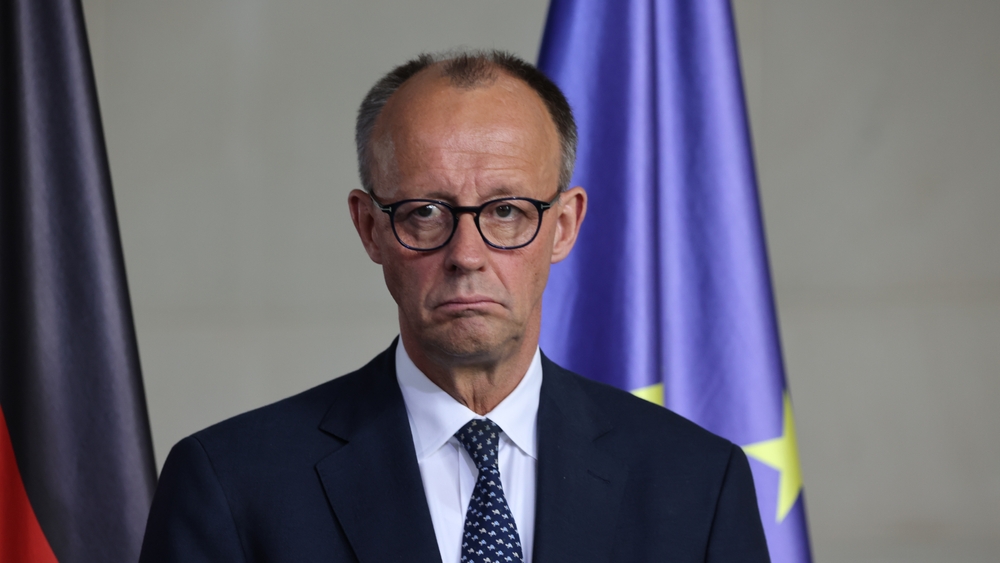
Since late December 2025, when protests over economic hardship and political repression swelled into one of Iran’s largest antigovernment movements in years, European leaders have steadily sharpened their rhetoric. None, however, went as far as German Chancellor Friedrich Merz, who declared the Islamic Republic of Iran to be in its “last days and weeks,” insisting that the government in Tehran had “no legitimacy.”
Iranian authorities certainly crossed serious lines in deploying lethal force against peaceful demonstrators, and the European Union and its member states have rightly condemned the crackdown while voicing support for human rights. But incendiary rhetoric—or tacit backing for escalation—could also unleash unintended consequences, from internal fragmentation and regional radicalization to a refugee crisis Europe is ill-prepared to manage.
In late January, the Council of the European Union adopted a new sanctions package targeting Iranian officials and entities implicated in serious abuses, imposing asset freezes and travel bans. In a landmark shift in policy, EU foreign ministers unanimously designated the Islamic Revolutionary Guard Corps (IRGC) as a terrorist organization. The move places the IRGC alongside al-Qaeda, Islamic State of Iraq and the Levant, and Hamas on the EU’s terrorism list, subjecting it to sweeping financial restrictions and prohibitions on material support.
The European Parliament reinforced this approach with a strongly worded resolution condemning Tehran’s repression and insisting that any normalization of EU–Iran relations be conditioned on measurable progress in human rights and democratic reform.
Berlin’s Rhetoric and the Question of Legitimacy
Statements emanating from Berlin over the past year suggest that Europe is abandoning any pretense of neutrality in the Middle East, aligning instead with the maximalist agenda of the United States and Israel. Roxane Farmanfarmaian, a lecturer in international politics at the University of Cambridge, argues that Merz’s prediction of the Islamic Republic’s imminent demise lacked any grounding in intelligence assessments. In her view, the cohesion of Iran’s governing institutions during the unrest belied claims of imminent collapse and reflected either wishful thinking or the broader information war surrounding the protests.
In a similar vein, Mehran Kamrava, professor of Government at Georgetown University in Qatar, says, “The German Chancellor’s heartfelt but murderous statements about Iran as Iranian civilians were being bombed, and the widespread assumption by German politicians that Palestinians are somehow subhuman as the genocide was raging, give them no right to speak about international law, human rights, or civil liberties.” He adds that Berlin’s rhetoric on Iran undermines its credibility on international law and human rights, which appear to be applied selectively.
Although Europe has often exercised caution in its dealings with Iran in the past, EU officials and member states adopted a markedly different tone following last year’s Israeli attack on Iranian targets. The EU did not condemn the strikes, and Merz openly praised them, remarking that Israel was doing Europe’s “dirty work.” As such, Europe has struggled to present itself as a credible and independent diplomatic actor.
Sanctions as Strategy—or Symbolism?
Tehran faces recurring unrest unless it improves economic conditions, particularly citizens’ livelihoods, points out Erwin van Veen, a senior research fellow at the Netherlands-based Clingendael Institute’s Conflict Research Unit. Doing so would likely require sanctions relief—which, in turn, would entail either significant nuclear concessions or deep structural reforms to curb corruption and mismanagement. Neither appears imminent.
Van Veen also argues that, given the EU’s role in triggering the UN sanctions “snapback” mechanism, Brussels currently possesses limited leverage in Tehran. Iran viewed the move as a bad-faith action, particularly in light of Europe’s perceived failure to uphold its commitments under the nuclear agreement since 2018.
Considering that Iran is already among the world’s most heavily sanctioned countries—and previous sanctions have not demonstrably altered core regime behavior—the latest measures, including the blanket designation of the IRGC, will not likely achieve different results. In addition, as Farmanfarmaian observes, additional sanctions will disproportionately harm ordinary Iranians, further shrinking the middle class, a social stratum essential to economic vitality and gradual political reform. Kamrava likewise describes sanctions as a “cheap” and politically convenient instrument for both the EU and the United States, one that plays well domestically but has failed over three decades to meaningfully change regime behavior.
Turning Point or Tactical Error?
If the IRGC functions not only as a military force but also as a central political and economic actor—and one likely to play a decisive role in any post-Khamenei transition—severing contact with it may well undermine prospects for negotiated de-escalation or political settlement. Sanctioning the IRGC and cutting channels of communication may therefore be counterproductive to Europe’s longstanding strategy of engagement, signaling a shift toward a more hard-power-oriented approach.
Rebecca Schönenbach, an independent specialist in countering terrorist financing, disagrees, arguing that listing the IRGC would significantly constrain the regime’s financial networks. She suggests that IRGC-linked financial institutions operating in Europe would feel the immediate impact. A formal designationwould also encourage major exchanges to cooperate more fully with investigators and curb the use of cryptocurrencies to evade sanctions. Additionally, EU authorities would gain stronger legal tools to counter recruitment and indoctrination activities linked to IRGC-affiliated organizations.
Simultaneously, the EU has engaged with segments of the Iranian opposition, including the controversial Mujahedin-e-Khalq and various ethnic separatist movements. Such engagement has amplified Tehran’s suspicions that Western governments ultimately seek regime change or even the territorial fragmentation of Iran.
What Does Europe Really Want?
If European rhetoric and policy implicitly encourage regime collapse, what contingency planning exists for the potential consequences — including state fragmentation, unsecured missile and nuclear expertise, regional spillover, and a large-scale refugee influx? The past decade has already demonstrated how instability in the Middle East and North Africa can generate profound political and humanitarian repercussions for Europe.
Van Veen argues that neither Brussels nor most member states are currently willing or able to pursue an independent Iran policy, particularly in light of Iran’s military support for Russia in the war in Ukraine. With transatlantic tensions, Ukraine, and China dominating the EU agenda, he doubts that additional policy bandwidth will become available soon. The result, he concludes, “is exposure to a medium-likelihood but high-impact risk scenario encompassing refugee flows, nuclear proliferation, and regional instability.”
For Kamrava, the trajectory is even more troubling. If the strategic objective is to turn Iran into a fractured state resembling Iraq, Yemen, Libya, or Syria, then current policies may contribute to that outcome. Whether such a future would serve European interests—or regional stability—remains an open and deeply consequential question.
Europe’s current stance toward Iran also reflects deeper contradictions in its foreign policy. By largely aligning with U.S. and Israeli strategic priorities while remaining selective in its condemnation of regional violence, Europe has struggled to present itself as an independent or consistently principled diplomatic actor. From Palestine to wider Middle Eastern conflicts, European silence or political support for aggressive military approaches has contributed to long-term instability. As a result, Europe now faces a credibility gap: demanding restraint from others while still navigating the consequences of policies that helped create the region’s volatility.