
The international system is having a legitimacy crisis. It has never been more obvious that the institutions charged with maintaining peace are struggling to produce it. But perhaps the problem isn’t simply that today’s institutions aren’t working. Perhaps the definitions of peace, democracy, and governance are too narrow.
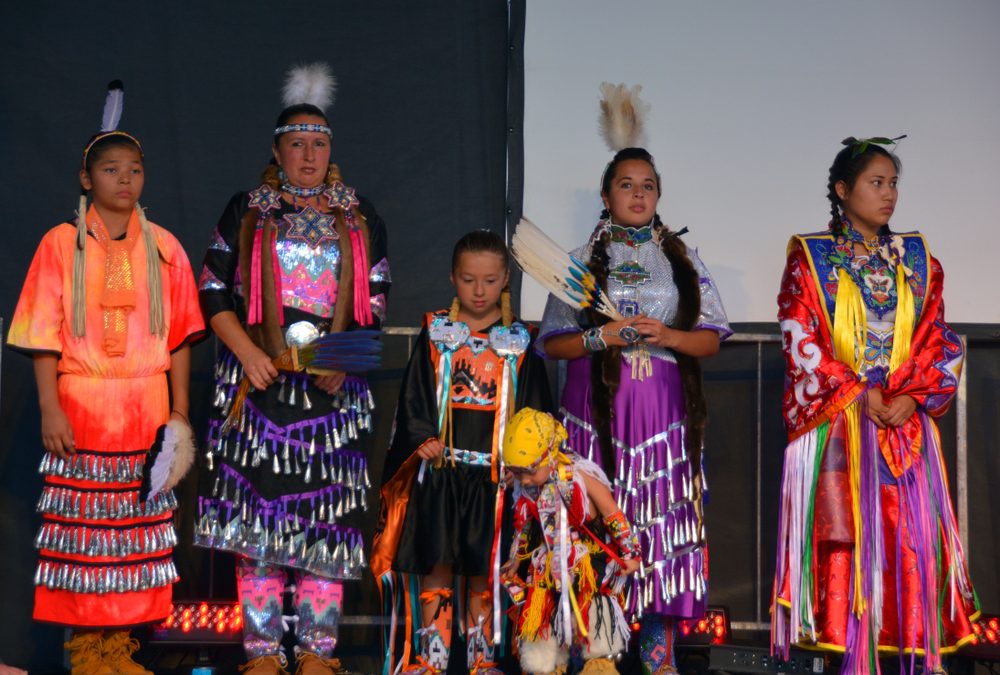
Long before the United Nations, the Haudenosaunee Confederacy developed a political system in which women’s authority was integral to governance, Clan Mothers selected and could remove chiefs, and political decisions were oriented toward the welfare of generations yet unborn.
Founded by the Great Peacemaker in 1142, the Haudenosaunee Confederacy brought together five (and later six) Native American nations—the Kanienkehaka, Onondaga, Cayuga, Oneida, Seneca, and later Tuscarora peoples—after a period of inter-tribal conflict. Through this international alliance emerged the Gayanashagowa, the Great Law of Peace, and subsequently the Haudenosaunee Confederacy, the oldest participatory democracy in the world. It continues to function today.
Governance of the confederacy centered around the “seventh generation principle.” All decisions had to be sustainable and protect people for seven generations into the future. Drawing upon the honorable status of women as life-givers, Haudenosaunee democracy granted a council of Clan Mothers the power to govern over matters of war and peace. As the ultimate victims of war and the mothers who raise the next generation, women provide the kind of guidance necessary to establish a positive international peace. The significance of Haudenosaunee women was not simply symbolic. Their political authority was institutional. Clan Mothers selected male chiefs, advised them, and could remove them when they failed to serve the interests of their people.
The Founding Fathers encountered and subverted the Haudenosaunee approach to justice and stripped it of its matrilineal foundation to establish the Supreme Court. Subservient to American political power and foreign policy objectives, the UN selectively enforces and protects state sovereignty. It recognizes the territorial sovereignty of the United States—a government born of the genocide of Indigenous Native American peoples—while rejecting claims to Indigenous sovereignty and statehood around the world, for example Palestine. This double standard—alongside its failure to achieve sustainable international peace and security—exemplifies the inability of the UN to transcend its colonial origins.
I was trained to think about international peace through the vocabulary of international relations: sovereignty, security, institutions, deterrence, diplomacy. I studied conflict resolution because I wanted to understand how societies move from violence toward peace. And yet the further I have studied the international system, the harder it has become to ignore a question at its foundation: who decided what peace was supposed to look like in the first place? As an American, that question is particularly uncomfortable. Some of the political traditions I was taught to regard as foundational to American democracy existed on this continent long before the United States, and included forms of women’s political authority that the American republic would not recognize for generations.
The failure of contemporary peace institutions may have less to do with a lack of women at the table than with the political assumptions underlying the table itself. Representation isn’t enough if women are being invited into institutions whose fundamental assumptions remain patriarchal, colonial, and state-centric. The irony is that the UN’s latest attempts to repair multilateralism increasingly point toward principles that Indigenous governance systems have long embodied: meaningful participation by women, attention to future generations, community-centered decision-making, and peace understood not merely as the absence of war but as the presence of justice.
What happens when Indigenous governance is no longer treated as historical inspiration and instead as relevant political ideas that can challenge present institutions?
The Haudenosaunee principle is deceptively simple: make decisions with successive generations in mind. The international system has only recently begun giving this idea institutional language. The UN’s 2024 Declaration on Future Generations asks governments to consider the consequences of today’s decisions for those who will inherit them.
But perhaps the question should not be whether Indigenous knowledge can be made useful to international institutions. Perhaps it is whether international institutions are finally willing to recognize that they have something to learn from people who have explored these issues before and continue to think far ahead into the future.