The carelessness with which King Abdullah conducted his Atlantic interview was a disaster that could easily have been prevented.

King Abdullah of Jordan Learns How Loaded His Gestures, Words, and Facial Expressions Are
read more

The carelessness with which King Abdullah conducted his Atlantic interview was a disaster that could easily have been prevented.

Although the breathtaking violence that attended Iraq’s descent into sectarian nightmare has been well documented in many retrospectives on the 10-year-old war, what’s often overlooked is that by far more mundane standards, the United States did a spectacularly poor job of governing Iraq.
Security officials stood by during the attacks without intervening.
Emphasis, as always, added.
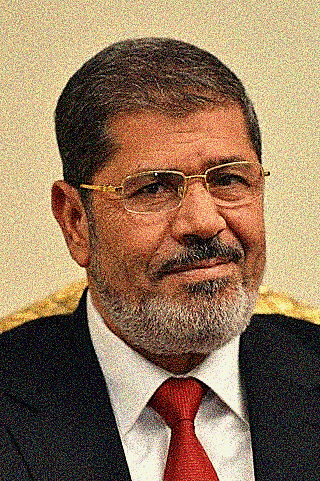
On top of everything else, workers across Egypt have been on strike.
Ten years after the Iraq War, the domination of neo-conservative ‘defense hawks’ in the Republican Party is increasingly under siege, not only because of the growing national consensus that the Iraq invasion was a major strategic debacle, but also because of the increasing popular concern – noted in a number of major polls over the past six months – that Washington simply can no longer afford the kind of imperial vision the hawks have promoted.
Will redemption be Pope Francis’s?

US troops left behind a devastated, tortured Iraq. Our real obligation, to the people of Iraq and the region and the rest of the world, is to transform our government and our country so that these resource-driven wars, shaped by lies and fought for power and for empire, whether in Iran or somewhere else, can never be waged again.
If the College of Cardinals knew that Jorge Mario Bergoglio’s election as pope would cause an uproar, why did it elect him?
While U.S. politicians Friday debated whether Sulaiman Abu Ghaith, a son-in-law of Osama bin Laden and former Al-Qaeda spokesman, should be tried in New York City, foreign policy analysts were speculating about the circumstances under which he was apprehended by U.S. authorities.