War & Peace
Our Man in Beijing?

Our Man in Beijing?

When Hu Jintao took over as the leader of China in 2002, U.S. companies welcomed his accession as a “good sign for American business.” Political analysts described Hu as a fourth-generation member of the Communist party leadership who might very well turn out to be a “closet liberal.” Playing it safe, the media tended to portray him as a pragmatic enigma. In the wake of 9/11 and high-level cooperation on counter-terrorism, Hu proved to be a reliable U.S. partner, prompting Colin Powell to remark in 2003 that U.S.-China relations were the best since 1972.

read more

Egypt’s other revolution: Modernizing the military-industrial complex

The Egyptian military produces a staggering array of manufactured goods: kitchen cutlery, flat-screen televisions, agricultural and household chemicals, refrigerators, industrial machinery, railway cars, and election booths. And while many of the military’s factory webpages make a concerted attempt to promote their wares, the careful observer gets the feeling that the production of air conditioners and gas stoves has superseded the production of guns and ammo. Although the military has been co-producing weapons systems in its factories under license from Western arms manufacturers for decades, the production lines and maintenance facilities constructing and modifying American M1A1 tanks, British armored vehicles, French Alpha Jets, and Chinese versions of Soviet MiGs are remnants of agreements originally signed in the mid-1980s and early-1990s, initiated by the now-deceased former Field Marshal (and staunch US ally) Mohamed Abdel Halim Abu Ghazala.

read more

Obama Requests Slightly Higher Aid Levels for 2013

WASHINGTON, Feb 14, 2012 (IPS) – Despite strong pressure to reduce the yawning federal deficit, the administration of U.S. President Barack Obama is asking Congress for a slight increase in funding for the State Department and foreign aid next year.

read more

Henoko and the U.S. Military: A History of Dependence and Resistance

Attention in Japan and elsewhere has focused recently on the seaside village of Henoko (Ryukyuan: Hinuku) in northern Okinawa where a powerful protest movement has stymied the Japanese and U.S. governments from building an offshore air base.1Attempting to ameliorate outrage in Okinawa after three U.S. servicemen raped a twelve-year-old schoolgirl in 1995, the governments in Tokyo and Washington announced an agreement in 1996 to close Futenma Marine Corps Air Station, located in the middle of Ginowan City. However, the agreement stipulated that a “replacement facility” be built in Okinawa “within five to seven years.” 2 Yet, after more than fifteen years and numerous bi-lateral declarations reiterating the two governments’ determination to build the base, construction has yet to begin. In 2006 they announced a related agreement to transfer 8,600 of the 18,000 Marines in Okinawa and their 9,000 dependents to Guam, but this is conditioned on relocation of Futenma MCAS to Henoko and remains on hold.3

read more
Iran: Willing to Deal

Iran: Willing to Deal

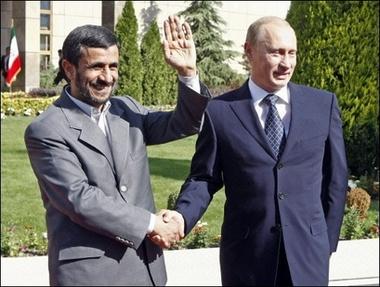
Determined to lift the economic siege and avoid a potential conflict, Iran has shown an increasing interest in reviving talks. Not only has Iran welcomed successive rounds of IAEA visit to its nuclear facilities, but it has also shown interest in engaging in substantive talks, with Turkey and Russia acting as primary interlocutors. It is high time for the West to rethink the sanctions track and craft a real strategy by finally giving true diplomacy a chance. This might be our last opportunity to avoid tragedy.

read more