The past week has seen the United States effectively relinquish its role as the key negotiator of Middle East peace as the Palestinians, ignoring President Barack Obama’s entreaties, announced their decision to pursue UN membership and be recognized as an independent state. One of the key reasons for Obama’s failure to bridge the Mideast divide has been domestic politics—the power of U.S. “pro-Israel” factions, encouraged by Israeli Prime Minister Benjamin Netanyahu, to threaten the administration’s base if he strays too far from the Israeli line.
In the End, Will Iran’s Nuclear Plans Be Decided by — Cancer?
Iran’s need for uranium for medical purposes may make it amenable to compromise over its nuclear program.
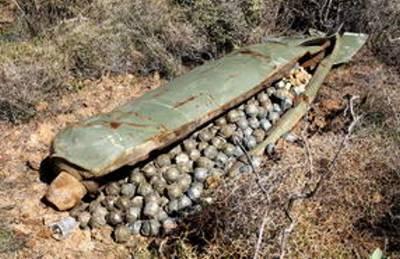
The Curse of Cluster Bombs
Laos, a small landlocked country in Southeast Asia known as “the most bombed country on earth,” fittingly hosted an international disarmament conference in November 2010. This was a follow-up to an Oslo conference in 2008 when 94 nations signed the Convention on Cluster Munitions (CCM), an international treaty to ban all cluster weapons following in the footsteps of the global campaign to ban landmines which came into force in 1999.
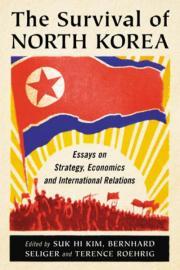
Review: The Survival of North Korea
Despite the predictions of many obituary writers, North Korea is still around. It was supposed to collapse with the Eastern European communist regimes, but it didn’t. It was supposed to crumble during the great famine of the mid-1990s, but it didn’t. The hard-line policies of the George W. Bush administration were supposed to do the trick, but they didn’t. The North Korean economy is in lousy shape, the ruling elite is a gerontocracy, and several thousand North Korean citizens vote with their feet every year. But the government in Pyongyang soldiers on.
Pentagon Still Denies Agent Orange Stored on Okinawa During the Vietnam War
The Pentagon’s refusal to acknowledge that Agent Orange was stored on Okinawa endangers the health of both local Okinawans and American service members currently stationed on the island.
Bin Laden’s Gift to Islam: Giving Muslims Religious License to Kill Each Other
Muslim soldiers, security officers, and government officials who support a tyrannical regime or an occupying force are legitimate targets for al Qaeda.
Vendetta, May 2006
I have held
my rage on a short
leash like a good,
mad dog whose bright
teeth could keep
the faces of our enemies
well lit.
Dale Carnegie of the Middle East
U.S. democracy promotion efforts in the Middle East have been based on a bizarre notion: that U.S. society can serve as a model for the region. Talk about a tough sell. Congress is a bruising rugby scrum, and the U.S. economy is a shambles. U.S. warplanes and drones target Muslims abroad, and Islamophobia permeates the political discourse at home. Washington has supported Arab dictators and stood by Israel through thick and thin. We’re telling the world about the benefits of fruits and vegetables and then turning around to sell what looks like wormy apples and rotten tomatoes. No wonder that U.S. public diplomacy has largely fallen flat in the Middle East.
Escaping Haqqanistan
Despite its brutality, corruption, and affiliation with al Qaeda, the Haqqani network is likely to inherit much of Afghanistan should the United States leave.
“Anti-Price Tag Patrol” Yet More Fuel for Israeli Right’s Fire
The Israeli right believe that anti-price tag patrols delegitimize Israel and enable the deaths of settlers at the hands of Palestinians.