Skeptics about Global Zero fail to foresee the momentum it might generate.
Nuclear Disarmament Can Be a Very Disarming Experience
read more

Skeptics about Global Zero fail to foresee the momentum it might generate.
Those who support keeping nuclear weapons as a deterrent forget that nuclear war means death by fire for millions of us.
Despite Africa’s intention to empower its continental and regional organisations, the African Union and the Economic Community of West African States have failed to propose a determined solution for the post-electoral crisis in Côte d’Ivoire. Instead the prospect of a new civil war looms on the Ivoirian horizon.

Sixty years after the conclusion of World War II in North Africa, destroyed European weaponry once again litters Libya’s coastal roads as the civil conflict there enters its second month. But Europeans are not fighting on the ground in the former Italian colony. Rather, their arms are. In Libyan hands, European-made arms are part of a proxy battle that demonstrates the unintended consequences of the international arms trade.
You might think that the poor critical reception he received for his book about tribal politics would make Robert Kaplan think twice before resurrecting the “warrior” leitmotif in relation to Gaddafi, Gbagbo, and Saleh.
Zoologists get pretty excited when they discover an unusual animal. They happily devote many hours to the task of classifying the beast and, if it qualifies as a new species, giving it a name. A great deal of money and prestige rides on these scientific endeavors. The same applies to the political sphere, where new and unusual creatures frequently turn up. When it comes to Barack Obama, however, political zoologists remain undecided whether he is a new kind of political animal and if his foreign policy represents a unique departure from the same old, same old.
There are other obstacles to nuclear disarmament than how anal states are about the number of nuclear weapons they have.
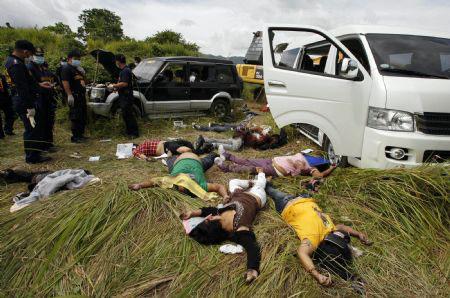
Outside the old municipal hall of Datu Piang, in the conflict-torn province of Maguindanao in southern Philippines, Lieutenant Colonel Benedict Arevalo stood on the riverbank and pointed to the marshland and hills. There, he said, was the Muslim rebels’ stronghold. In late October, the monsoon rains had swollen the river, cutting off Datu Piang’s bridge from the road on the other side. A marshy field with a lone hut, banana shrubs, and a derelict mosque lay directly across from where Arevalo stood briefing journalists on developments on the Philippine Army’s battle with the Moro Islamic Liberation Front. “This is lawlessness,” he said.
Afghanistan, Iraq, Pakistan, and now Libya. In the last decade the U.S. military has fought Muslims across the Middle East (Iraq and Libya) and South Asia (Afghanistan and Pakistan) for a number of reasons: national security, protection of vital interests such as oil supply, and humanitarian crises. Though our recent foray into Libya can be considered more nuanced than our earlier interventions in Afghanistan, Iraq, and Pakistan, our poorly defined words and actions have called into question our intent, with a mistrust of U.S. policy becoming a worldwide issue. In Libya, the U.S. lead role in the military intervention has proven that its advertised intentions and actions clash with reality on the ground.
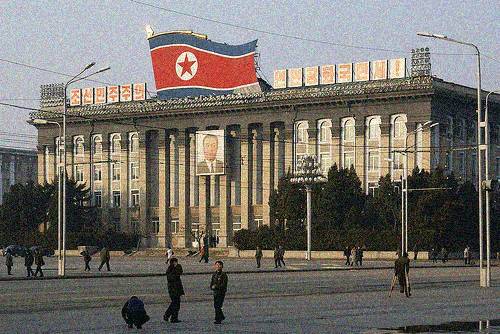
Intervention in Libya, which forfeited its nuclear weapons, has made North Korea more convinced than ever that it needs to hold on to its own nukes.