Military alliances are always sold as things that produce security. In practice they tend to do the opposite.

A New Cold War?
read more

Military alliances are always sold as things that produce security. In practice they tend to do the opposite.
For a number of years, plans have been in the works to establish a U.S. radar base on the territory of the Czech Republic. Czech politicians knew about these plans, but kept them secret from the voters until after the 2006 parliamentary elections were over. The proposed base, along with related interceptor missiles to be placed in Poland, is part of a new U.S. missile defense system in Europe, and as such represents a major stage in the emergence of a new Cold War.
The number of Americans who believe that the war in Iraq was a mistake has surpassed the number who felt the same way about Vietnam during that war. At the same time, a much quieter U.S. military build-up is underway on another continent. The ultimate objective of the two efforts is the same: securing Big Oil’s access to the regions’ oil. The impact in Africa will likely be the same as in Iraq: perpetual occupation, instability, and growing anti-Americanism.
When New York City wanted to make the biggest purchase of subway cars in U.S. history in the late 1990s, more than 3 billion dollars worth, the only companies that were able to bid on the contract were foreign. The same problem applies to high-speed rail today: only European or Japanese companies could build any of the proposed rail networks in the United States. The U.S. has also ceded the high ground to Europe and Japan in a broad range of other sustainable technologies. For instance, 11 companies produce 96% of medium to large wind turbines; only one, GE, is based in the United States, with a 16% share of the global market. The differences in market penetration come down to two factors: European and Japanese companies have become more competent producers for these markets, and their governments have helped them to develop both this competence and the markets themselves.
In May 2008, in the midst of the ongoing Taliban insurgency in Afghanistan, Islamabad concluded at least two peace agreements with Taliban and Taliban-linked groups operating in Pakistan. Although negotiations with the Taliban are necessary for any broad-based peace settlement in the region, these agreements threaten to complicate policy options for Washington and the Hamid Karzai government in Afghanistan.
Criticism has been leveled against the Pakistani government’s efforts to hold talks with militant groups. While concerns about the Taliban regrouping remain valid, it is in America’s long-term security interest not only to support the multidimensional peace plans being formulated, but refrain from words and actions that could jeopardize the process.

The Pentagon is in crisis: The war in Iraq is entering its fifth hot summer. And while U.S. troop casualties are down, the light at the end of the occupation tunnel is no closer and no brighter.
When Bush’s former press secretary admits that the administration used a “political propaganda campaign” to sell its case for war and calls the mainstream media “deferential, complicit enablers” – as Scott McClellan does in What Happened – it’s time to examine just how badly the press failed.
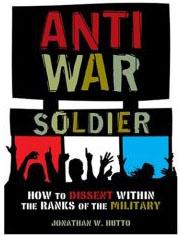
After five years of war and little end in sight, much of the anti-war movement has acquired a case of “war fatigue.” Over the last two years, some of the most energized movements opposing the war have not been those made up of civilians but those who have served on the front lines.
As the American-Israel Public Affairs Committee (AIPAC) goes around meeting with Members of Congress this week, they will be arguing for stronger sanctions against Iran. Their latest focus will be “sanctions” on refined petroleum products to Iran.