
President Donald Trump has repeatedly described Iran as a serious and immediate threat to U.S. interests, signaling a willingness to target senior leadership figures. That posture rested on a familiar assumption: remove the people at the top, and the regime weakens or collapses.
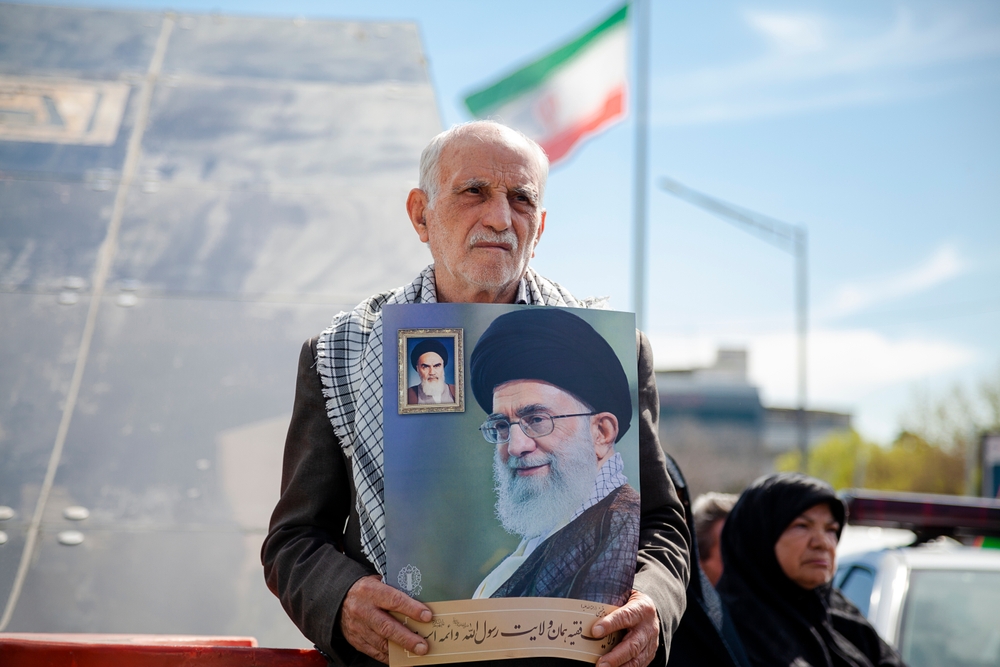
In Iran, coordinated U.S.–Israeli airstrikes killed Supreme Leader Ali Khamenei on February 28, 2026, ending his 36-year rule of the Islamic Republic. Iranian state media confirmed his death, and intense retaliation is already underway. In Mexico, security forces killed Nemesio Oseguera Cervantes, the head of the Jalisco New Generation Cartel and one of the fugitives most wanted by the United States, in a high-profile operation that provoked waves of cartel violence and upheaval across the country. And in Venezuela, U.S. forces captured former President Nicolás Maduro in January and flew him to New York to face federal charges, leaving the country under interim leadership as international debate swirls around the legality and consequences of the operation.
Each of these operations was framed as a decisive moment, a strike against a figure seen as central to a dangerous or destabilizing system. They rest on the same strategic assumption: remove the person at the top, and the structure beneath begins to unravel.
It feels decisive. It looks strong. And it makes for powerful headlines.
But history, and the aftermath of these strikes, suggest something more complicated.
Removing a leader can disrupt hierarchy and generate short-term shock. Yet it rarely dismantles the institutional, ideological, and coercive machinery that sustains power.
The Illusion of Decisive Action
Complex conflicts rooted in institutional decay, ideological rivalry, and geopolitical competition resist simple solutions. Removing a leader appears to cut through that complexity. But most contemporary political and criminal systems are not one-man operations.
Research on leadership decapitation in counterterrorism and insurgency studies shows that organizations with bureaucratic depth, financial infrastructure, and layered command structures frequently survive the loss of top leaders. Some adapt. Others decentralize. A few even become more violent as factions compete for legitimacy and control. The assumption that power collapses with the person who holds it mistakes symbolism for structure. Leaders are often the most visible part of a system, not the most essential ones.
Political regimes, militant movements, and criminal cartels are not just personalities. They are ecosystems, supported by institutions, revenue streams, security organs, patronage networks, and ideological narratives. The leader may symbolize the system, but the system rarely depends solely on the leader. Power in such systems is distributed across networks of elites, security institutions, and economic actors who share a common interest in the structure’s survival. When the top is removed, these networks reorganize new centers of gravity.
Remove the figurehead, and the machinery often keeps running. In some cases, it runs harder.
History’s Warning
Recent history reinforces the lesson.
In Iraq, the removal of Saddam Hussein in 2003 eliminated a dictator. It did not produce institutional stability. Instead, state authority fractured, sectarian violence escalated, and insurgent movements filled the vacuum. The regime fell. The system did not reorganize around democratic stability. It was fragmented.
In Venezuela, the capture of President Nicolás Maduro by U.S. forces in January did not dismantle the regime’s core structure. The governing apparatus, military leadership, ruling party networks, intelligence services, and patronage systems remain intact. The armed forces are institutionally embedded in the regime’s survival. The ruling party controls key bureaucratic and economic levers. Power has shifted internally. The structure is adaptable.
In Mexico, repeated takedowns of cartel leaders have rarely eliminated the organizations themselves. Leadership removal often produces splintering, succession struggles, and spikes in violence as factions compete for territory. Cartels evolve into networks rather than hierarchies, becoming harder to dismantle over time.
This pattern is not accidental. Systems built around coercion and patronage develop redundancy. They prepare for leadership loss. Succession mechanisms, formal or informal, exist precisely because elites anticipate vulnerability.
The individual is replaceable. The network is resilient.
The Pressure Beneath the Surface
At first glance, the Islamic Republic appears deeply tied to Supreme Leader Ali Khamenei. His constitutional authority, religious status, and oversight over the armed forces place him at the apex of the regime.
But Iran is not merely one man.
It is a layered political order composed of clerical oversight bodies, elected institutions, intelligence services, economic foundations, and, critically, the Islamic Revolutionary Guard Corps (IRGC), which possesses independent military and economic power. Authority is institutionalized through the doctrine of Wilayat al-Faqih, the “Guardianship of the Jurist,” which embeds the Supreme Leader within a constitutional and ideological framework that extends beyond personal charisma.
Through this structure, Iran’s leadership is linked to allied armed movements across the Middle East via institutional channels, shared doctrine, funding pipelines, and long-standing strategic coordination, not simply personal loyalty to a single individual.
In highly centralized systems, the leader often functions less as the entire structure and more as the force that holds competing factions in check.
Remove that force, and what follows may not collapse but erupt. Rival elites maneuver for control. Security institutions are hardened. Hardline factions consolidate. The pressure that was contained does not disappear, it is released.
Iran’s succession process involves the Assembly of Experts, clerical networks, and security elites. The IRGC’s entrenched economic and military role means that any transition would likely involve internal bargaining among powerful institutions rather than regime disintegration. Leadership removal, in such a context, could generate instability without producing systemic change. It could intensify factional competition while leaving the regime’s coercive and ideological foundations intact.
Why Personalization Persists
If the historical record is so clear, why does leader-focused strategy persist?
Because it is visible. A strike, a capture, or a public threat is measurable. It signals resolve. It creates a narrative of control and simplifies a complicated geopolitical struggle into a single dramatic act.
Structural reform offers no such clarity. Rebuilding institutions, reshaping elite incentives, disrupting financial networks, and encouraging negotiated political settlements are slow, ambiguous, and politically unrewarding. They lack spectacle. Symbolic action often substitutes for systemic transformation.
But foreign policy is not a headline cycle. It is an encounter with institutions, incentives, and power structures that survive beyond individuals.
The United States has the capability to remove leaders. The harder question is whether it understands the systems those leaders sit atop.
If policymakers mistake personalities for structures, they risk triggering instability without producing transformation. Removing a figurehead may satisfy the demand for action, but it does not automatically weaken the architecture of power. Durable change requires something far less dramatic and far more demanding: sustained institutional engagement, elite bargaining, targeted economic pressure, and long-term strategic investment.
The strike may change the headlines, but the transition will shape the future. World politics turns less on who falls than on what survives. In the months ahead, the real test will be whether the institutions in Iran harden, fragment, or adapt. History suggests that they will adapt. The question is whether policymakers in the United States and Israel are prepared for that reality.