
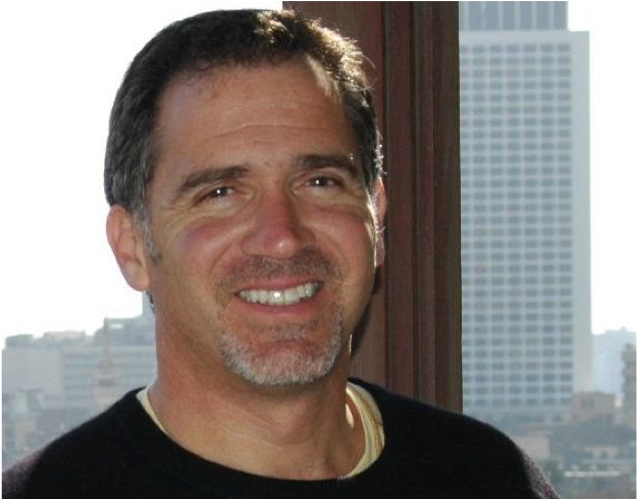
“I believe that this chapter in the long history of Palestine—this very dark chapter—can and will be brought to an end. The question is: How long is it going to last? That depends on us,” claims human rights activist Miko Peled.
The author of two books and various articles, Peled is one of the most well-known voices advocating for Boycott, Disinvestment, and Sanctions (BDS), justice for the Palestinians, and a single democratic state in Palestine that provides equal rights to all its citizens. Although Peled was born in Jerusalem to a notable Israeli family, the death of his niece to a suicide bomber in 1997 led him on a journey to discover the truth about Palestine.
Recently, I had the chance to interview Peled at his office in Washington D.C. In this interview, Peled provides crucial insights on a variety of topics, from the changes that need to be made to U.S. policy to the importance of continued activism against Israeli oppression.
Richard McDaniel (RM): You’re a tireless advocate for the liberation of Palestine, or a one-state solution. What does a one-state solution mean to you? Furthermore, is the process of decolonization always violent?
Miko Peled (MP): Let me start with the first part. I think it’s really important to come to terms with the fact that Palestine is one state. The Zionists created a single state over all of Palestine. It’s an apartheid state. If you don’t believe me, look at the apartheid report by Amnesty International. But it’s an apartheid state. It’s a single state. There is no possibility of dividing it into two states. It can’t be done. It is geographically and demographically impossible, and I don’t really know what the virtues are of separating the two sides. But it’s a theoretically mute idea and subject.
The question is: Do we accept this single state, where Israeli Jews reign supreme? To bring it up one level, it’s a white supremacist state because that’s what Zionism is. It’s white supremacy. So, if anybody accepts it and thinks that “Israel has a right to exist,” this is Israel. You have to own it. It comes with apartheid. It comes with genocide. It comes with thousands of political prisoners. It comes with torture chambers. It comes with [a] Vichy Government, which is really what the PA [Palestinian Authority] is. That’s what we have. Anybody who believes that has a right to exist, the conversation is pretty much over.
I believe that Palestine should be liberated from the apartheid state, liberated from Zionism, and return to being Palestine as it was before 1948: a rich country with a rich political life, a rich cultural life, a lot of diversity, [and] tolerance. It was very tolerant, generally speaking, until the Zionists came and started terrorizing everybody. I always think of the South African model. When the apartheid regime realized it was over because they couldn’t go anywhere, they couldn’t compete anywhere, [and] they couldn’t participate in any kind of international forums, the president stood up and said [in effect]: “We are going to free the political prisoners. We are going to unban all the banned political parties. We’re going to call for a one person, one vote election.” He set a date [for the election]. That’s how you do it.
Then, you free the prisoners. I imagine [in] Palestine, there are lots of incredible leaders that are still alive and they’re in prison, although life in prison now over there is not really life. People will form political parties. Districts will have to be created, and there you go: You have elections for the first time in history. Free and fair elections. One person and one vote. Then you have a legislature, an executive, and so on. Ideally, this will happen without violence. But that’s the reality.
Once you get to that point where you have a legislature, a government, [and] an executive that represent the people, now the work begins. Now, you need a constitution. Now, you need to talk about putting in place the steps needed to allow the refugees to return because the right of return is not just a bumper sticker. It’s not a campaign slogan. It has to materialize. So, steps have to be taken to put that together. Reparations for the Palestinians [need to be made]. There’s a lot to do, but none of that can happen until Palestine is liberated and you have [a system of] one person, one vote elections that puts in place a government and parliament that represents the people.
RM: One thing the organization that you founded, the Palestine House of Freedom, does is decode Amnesty International reports illustrating how Israeli apartheid works. How is Israeli apartheid similar and different inside and outside of the Green Line?
MP: Zionist apartheid is unique because they created not two sets of laws, but multiple sets of laws. Jews can live anywhere they want throughout the country. The same laws apply to them, and the same laws protect them. For Palestinians, there are no laws that protect them. The laws that they have to live under differ depending on where they live within Palestine.
So, you have the Palestinians who live in what used to be the West Bank—there’s no more West Bank. It’s ghettos within what used to be the West Bank. It’s completely integrated. You’ve got those Palestinians who live under military law. You have the Palestinians in [East] Jerusalem, who have their own unique status. You have the Palestinians in Gaza, and, of course, there’s a genocide. It was always a concentration camp. Gaza was created as a concentration camp.
Within 1948 [Israel proper], you have the Palestinians in the southern part of the country, the Naqab [Negev]. They live under a bureaucracy called the “Agency for the Development of the Negev.” “Development” in Zionist lingo means dispossessing Palestinians and taking their land. That bureaucracy has its own police force. [It] has its own enforcement agencies within it. They are responsible for making the lives of Palestinian Bedouins hell. There’s some 300,000 Palestinians living there. They have little to no access to water, education, roads, healthcare, jobs. Their homes are demolished at a rate that is beyond belief.
Then, you have the Palestinians of 1948 who live in the northern part of the country (in other words, the northern half). They have a different set of laws, or different bureaucracies that make sure that they live the way they do. The Israeli secret police, the Shabak, is basically in charge. If you want to be a teacher, if you want to get a driver’s license, if you want to get a mortgage, the Shabak is everywhere. They have to sign off.
I don’t know if you had the chance to go to a city like Lidd [Lod], [where] Palestinians live—it’s worse than a refugee camp, and across the street you’ve got all these wonderful developments for Israeli Jews only. So, that’s what makes this apartheid unique. There are all these different sets of laws under which Palestinians live, and it depends on where they live within Palestine.
When Israel counts its population, they only count the Palestinians within 1948, excluding East Jerusalem, the West Bank, and Gaza. But they count the Jews everywhere. That’s how they come up with a Jewish majority and a 20 percent Palestinian population because they only count 2 million out of the 7.5 million Palestinians. So, they can say: “We’re a democracy. We’re Jewish. This is a Jewish state, and we have a 20 percent minority of Arabs.” Well, that’s not true. Any Palestinian baby born in Gaza has to register with the Israeli authorities, and the same goes for everywhere else. That’s what makes it unique and very effective.
RM: Considering the changes in attitude among the American public, do you think a fundamental change to U.S. policy on Israel is imminent? What do you think U.S. policy toward Israel should look like?
MP: I think it is imminent. I think the next two elections are going to be a wake-up call for the top-tier politicians who are still spewing Zionist nonsense. We’re seeing that one of the most successful campaign slogans now is: “No AIPAC money, no money to Israel, and end the genocide.” Politicians that are running and using these campaign slogans are doing very well and get huge applause and support. So, it’s going to take a while before the top-tier politicians understand what’s happening because clearly they’re not getting it yet. I think that the next presidential elections are going to look very, very different. This whole idea of having to bow down and pledge support for Israel if you want to be elected—it’s going to be a lot like the debates that we saw with [Zohran] Mamdani. It’s going to be like that, as opposed to: “Of course, I’ll visit Israel. I’ll be there before you. No, I’ll be there before you. No, I love Israel.”
I think the entire international community needs to impose the most severe sanctions against the State of Israel. They need to impose an arms embargo. There needs to be a complete boycott, so delegations—whether it’s FIFA, the Olympics, academic delegations—need to be banned completely. Any diplomatic missions need to be closed down. That’s why the apartheid in South Africa was on its knees in the end. It has to be brought to its knees. Once it’s brought to its knees, then they’ll have no choice.
That’s not only what U.S. policy needs to be. This needs to be policy everywhere. Unfortunately, it’s going in the wrong direction. In fact, they’ve [Israel] just invented a new African country. They’re showing, on the Israeli news, Somaliland, and how they love Israel, they have the Israeli flag, and all that nonsense. Sadly, even majority-Muslim countries and Arab countries are going in the wrong direction because the pressure is so severe to normalize. But, I think the next two election cycles in this country are going to show a completely different picture.
RM: Recently, I spoke with Gershon Baskin. Baskin is very optimistic about Trump and the possibility of the so-called “International Stabilization Force” being deployed to Gaza, especially because he was so involved in manufacturing the fragile ceasefire between Israel and Hamas. How do you think the future of Gaza looks under this administration?
MP: Nothing good. There’s not going to be peace. There’s no ceasefire. There’s not going to be an international force. There’s not going to be a rebuilding. This is all to buy time to allow Israel to rebuild itself and continue with the genocide. Anybody who participates in the process is complicit with the genocide. There’s no question about that. I don’t know if you’re familiar with the organization Zochrot?
RM: No.
MP: Look them up. Zochrot means “remembering,” but it’s in the female form. It’s a wonderful organization. Their office is in Jaffa. They promote the idea of return and the remembering of the villages and towns that are no longer there. They have tours. They have a website. They have an app, and they have a map with all the towns and villages that used to be there. They have a GPS that takes you to a place that doesn’t exist [anymore]. They came out with a campaign that we’ve been sharing: “The solution for Gaza is the right of return.” Palestinians should be allowed to return to their homes and villages. That’s how you get rid of all the issues that exist in Gaza: the poverty, the overpopulation, the lack of resources.
So basically, you take apart the concentration camp, you liberate the concentration camp, and you allow people to go home. That’s the solution. That is the only way to “solve” the issue of Gaza. It’s a concentration camp that needs to be liberated. It’s like taking the concentration camps that the Nazis built and saying: “Well, let’s give them humanitarian aid. Let’s see how they behave. If they behave well, we’ll allow them a little bit more humanitarian aid.” [Meanwhile,] all the humanitarian aid is monitored by the Nazis. So, only a certain number of calories. Only a certain number of items are allowed.
That’s what’s happening in Gaza. It’s absurd. Palestine is a rich country. To send humanitarian aid from across the world, have it enter through a tiny opening in Egypt, and [be] monitored by the perpetrator of genocide who doesn’t want them to live anyway—what are we talking about? Liberate the concentration camp. Let people go and access their resources that are right there. But, they can’t live in those cities. They can’t get their resources. They can’t come out because Israel set the rules.
Well, why is Israel allowed to set the rules? The Nazis were taken out after 12-15 years. This has been going on for almost 100 years.
RM: Do you have more optimism or pessimism about the future of Palestine? Do you believe that things will get better from here?
MP: Optimism and hope—these are things we need to decide to have. They don’t come from the sky. They don’t come from nothing. You have to decide that you have hope, and you have to define what your hope looks like. Then you fight for it, and do everything you can to see it happen, to see it materialize.
I believe that this chapter in the long history of Palestine—this very dark chapter—can and will be brought to an end. The question is: How long is it going to last? That depends on us. That depends on the international community. It depends on people of conscience. [It depends on] how far we’re willing to push governments to end their relations with the apartheid state, to impose sanctions, boycott, and so forth. That depends on us. The fact that it’s going to happen, I think, is inevitable. Israeli society has collapsed. October 7 was such a shock to Israeli society. There’s no real [Israeli] society, but whatever was there, it’s now completely taken apart.
So, do I have hope? I have to have hope, otherwise I wouldn’t be doing this. I do have hope. I firmly believe that this can happen. I have no doubt that it’s going to happen. I think that our job is to push as hard as we can so that it happens quickly.