
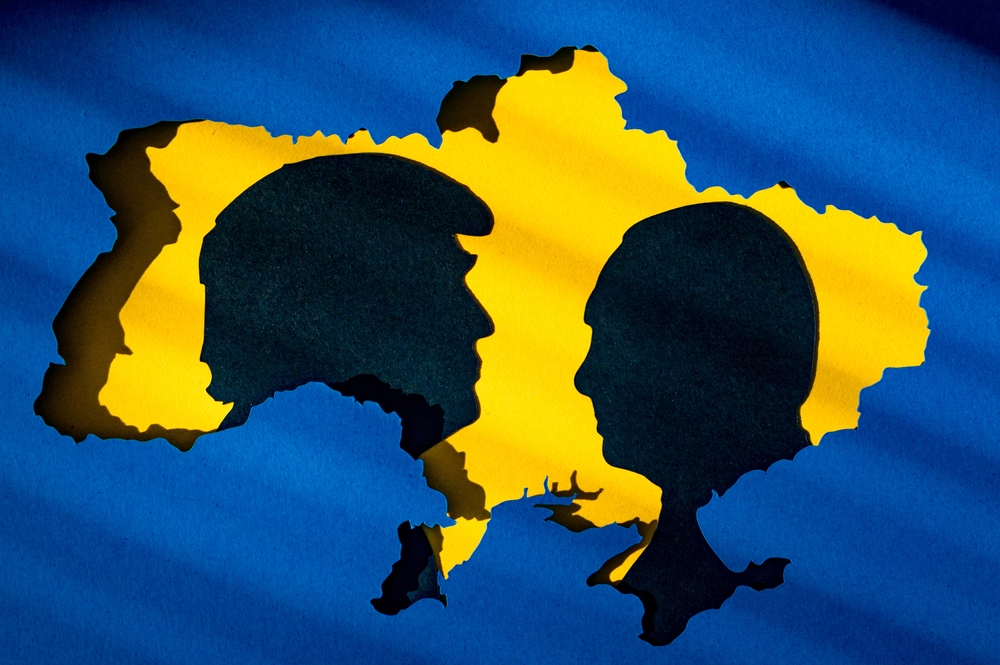
Donald Trump’s scandalous 28-point peace plan for Ukraine appeared to have a Kremlin design. Zelensky’s initial reaction was an urgent address to the nation, warning that Ukraine faced a choice between dignity and a strategic partner. Weeks later, the Ukrainian side is still discussing the plan with U.S. officials.
Can such peace negotiations succeed, or does this plan contain even a grain of truth?
Just Political Marketing
The term “political marketing,” s coined and popularized by Philip Kotler and Bernard West in the early 1980s, refers to the application of marketing principles to political campaigns. The Trump team has been successful in using marketing tools for political purposes. Similarly, in the peace negotiation process, he often represents the party that actively promotes ideas and simple solutions, while pursuing its own aims. At the same time, his idea of bringing peace to Ukraine exploits popular—even groundless—expectations and hopes.
Peace in Ukraine is a dream for millions, which makes the idea of direct negotiations attractive and easy to sell—even if such negotiations promise no tangible or long-lasting results. To legitimize an unrealistic plan, it is enough to appeal to the core beliefs of different groups. Some people, grounded in faith, believe in miracles by default. Others insist negotiations are always appropriate despite the realities on the ground because “all wars end with them.” Rationalists may think even an aggressor can be persuaded with just the right approach, as if dealing with a lone terrorist.
Trump’s persistence in pursuing an “impossible peace” between Russia and Ukraine is undeniable. But what lies behind it? Is he truly driven by a desire to find a magic bullet that can end all wars?
Ultimately, can any U.S.-backed or imposed peace plan succeed at all?
Same Old, Same Old
Trump presents himself as a “stable genius,” especially when it comes to ending wars around the world. That claim implies new and surprising approaches. Yet the idea of peace negotiations with an aggressor is not new, and this is far from the first time the international community has tried to negotiate peace with Putin.
Consider the Minsk peace process of 2014–2015 when talks were launched with Putin and his separatists after their invasion of eastern Ukraine. At first, it sounded promising, as Russia appeared genuinely interested in negotiations. Another hopeful factor was the leading role in the process of German Chancellor Angela Merkel, who had known Putin for decades. The latter gave her—as Trump now—a sense that such familiarity could offer an advantage.
At that time, Europe pursued the same goal Trump now seems to advocate: a ceasefire and then a durable peace. Putin, however, had completely different intentions. He was merely testing the ground in his effort to legitimize his covert aggression. It was an early step in his larger plan to expand Russia—at minimum to the Russian-speaking areas of the “near abroad” and, at maximum, “from sea to sea,” from the Pacific to the Atlantic. This vision is detailed in Mikhail Yuryev’s utopian novel The Third Empire: Russia That Should Be, which, according to some sources, has served as Putin’s reference book and political blueprint. Yuryev’s plot begins with Russian invasions of southern neighbors, escalates to a war against Ukraine, culminates in Russia subjugating the European Union and forcing the United States to capitulate, and ending up with the entire world divided between only three global empires: Russia, China, and the United States.
The Minsk talks achieved neither a lasting ceasefire nor durable peace, but they brought Putin international legitimization of his terrorist methods and creeping invasion tactics. It was Putin— and the leaders of the terror organizations he created who took over the eastern regions of Ukraine—who developed the drafts of Minsk agreements. The latter, with some minor changes were adopted by the parties of peace talks and then, welcomed by the UN Security Council in their resolution on Ukraine. This pattern has been repeated with Russia’s authorship of Trump’s current peace plan. The Minsk agreements helped Putin’s proxies legally occupy some districts of Ukraine and pushed Ukraine to grant them greater autonomy.
European leaders involved in the Minsk negotiations, followed by the members of the UN Security Council, skipped a crucial step: assessing the situation and the parties’ actions under international law. They failed to recognize Russia’s aggression and that of its proxies—the occupation of Crimea and the seizure of eastern Ukrainian regions—as components of a single policy directed by Putin. Negotiators treated Russia and the terrorist groups of the Donbas as unrelated actors, despite the historical absence of separatism in these areas. By not only inviting Putin’s proxies to negotiate but also treating them as equal partners drafting joint documents, the international community effectively legitimized terrorism. Putin understood that such actions would be tolerated and carry no consequences.
The Minsk negotiations produced an agreement for both sides to cease fire and withdraw from the line of contact. However, no mechanisms were put in place to ensure implementation or monitor compliance, and no consequences were planned for violations. As a result, Ukraine honored the ceasefire to some extent, but the terrorists faced no accountability, allowing the creeping Putin invasion to continue.
Queue the current negotiation process, in which Ukraine is being compelled to give up its lands, just as it was once forced to accept the loss of Crimea and the eastern areas in exchange for an ambiguous peace deal. Trump claims that Ukraine has already lost territory. However, this phrase legitimizes international aggression and forces the victim to concede defeat when there is still opportunity to restore justice.
Behind Trump’s Desire for Peace
At first glance, a mission to secure lasting peace seems noble. It raises little suspicion of ulterior motives—especially given Trump’s obsession with the Nobel Peace Prize. However, if Putin’s actions stem from imperialistic and dictatorial ambitions rather than commercial interests, why should Trump be any different?
Trump’s economic interests are clearly present here. Evidence includes the pressure on Ukraine to hand the United States control of key resources and infrastructure. The involvement in the negotiations of Trump’s son-in-law and the often informal, secretive approach toward Russia further illustrate this point. Indirectly, Trump’s history with Russian money suggests an interest in direct economic ties with Russia.
However, Trump’s motivations extend beyond economics. Like Putin, he exhibits imperial ambitions and a desire for authoritarian control. He favors concentrated capital and the elimination of social guarantees and human rights. He mirrors Putin’s political methods: propaganda, vilification of opponents, and gradual usurpation of power that undermines democratic mechanisms. Notably, Trump, like Putin, began consolidating authoritarian influence through the Supreme Court. In this respect, he stands in opposition to the values for which the Ukrainian people are fighting for: freedom, dignity, and democracy.
Trump’s pressure on Ukraine to capitulate under the guise of “peace” is of a piece with his other actions at home and abroad. Like Putin, he follows an authoritarian logic in service of an imperial design.