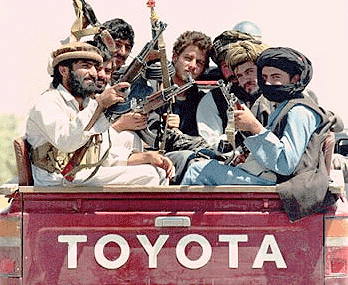
The individual or group, such as the Taliban, with more available options — harassing, pursuing or retreating — is most likely to prevail.
Memo to US — You’ve Been Out-Adapted. Go Home!
read more

The individual or group, such as the Taliban, with more available options — harassing, pursuing or retreating — is most likely to prevail.
Remember as the invasion of Iraq was about to begin, when the Bush administration decided to seriously enforce a Pentagon ban, in existence since the first Gulf War, on media coverage and images of the American dead arriving home at Dover Air Force Base in Delaware? In fact, the Bush-era ban did more than that. As the Washington Post’s Dana Milbank wrote then, it “ended the public dissemination of such images by banning news coverage and photography of dead soldiers’ homecomings on all military bases.”
Lowering the benchmark for COIN success.

As with wildfires, conflicts between states are the interplay of multiple factors which can generate manifestly different outcomes.

Ambition on the part of Gen. Petraeus may have blinded him to truth that Taliban impostor was too good to be true.

400 military bases and a mega-embassy are not the face of an impending withdrawal from Afghanistan.

Just Foreign Policy’s Robert Naiman wonders whether Gandhi’s satyagraha can work in Afghanistan.
Americans forget that the $3 billion a week it spends on Afghanistan and Iraq makes the bank bailout and stimulus look like chump change.

There is always another “strategic” battle — in Afghanistan, as in Vietnam — that’s “key” to winning a war against an insurgency. But there are millions of hills and valleys and they are as meaningless in Afghanistan as they were in Vietnam.

Even at its most successful, a military-led counterinsurgency campaign remains inherently unsustainable.