Iraq

Dismembering Afghanistan

Wars are rarely lost in a single encounter; Defeat is almost always more complex than that. The United States and its North Atlantic Treaty Organization (NATO) allies have lost the war in Afghanistan, but not just because they failed in the battle for Marjah or decided that discretion was the better part of valor in Kandahar. They lost the war because they should never have invaded in the first place; because they never had a goal that was achievable; because their blood and capital are finite.

read more

The Great Myth: Counterinsurgency

There are moments that define a war. Just such a one occurred on June 21, when Special Envoy Richard Holbrooke and U.S. Ambassador to Afghanistan Karl Eikenberry helicoptered into Marjah for a photo op with the locals. It was to be a capstone event, the fruit of a four-month counterinsurgency offensive by Marines, North Atlantic Treaty Organization (NATO) allies, and the newly minted Afghan National Army (ANA) to drive the Taliban out of the area and bring in good government.

read more

A Way Forward: Reexamining the Pentagon’s Spending Habits

The U.S. has spent a trillion dollars since 2001 on military operations in Iraq and Afghanistan. Now, it is being estimated that another $800 billion plus will be added to the tab before the wars are ended, yet it’s questionable what the return on that investment is. New ideas and new perspectives are needed to rebalance a deeply dysfunctional system.

read more
The Surge of Ideas

The Surge of Ideas

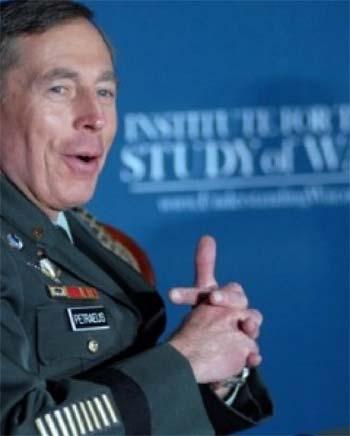
In recent years, there has been a growing tendency for think tanks and military brass to jointly pursue policy objectives, some of which are opposed by the public or the White House—take, for example, the campaigns to build support for the troop “surges” in both Iraq and Afghanistan. This trend, say critics, raises important questions about the appropriate role of the military in promoting particular policies and whether there is enough transparency and accountability in the work of policy groups. And, just as importantly, will there be a new joint campaign aimed at pressuring the Obama administration to delay troop withdrawal from Afghanistan?

read more

Are Foreign Lives of Equal Worth to Ours?

The mechanization of war has resulted in treating other nations’ citizens as less than equal to citizens of the United States. U.S. military actions kill innocent civilians in a repeated and almost routine manner. However, modern communications are informing people around the world that U.S. policies value other citizens less than its own.

read more

Congress Sends Wrong Message to Iraq

After more than 19 years of war, including seven years of occupation, the U.S. Congress still does not grasp domestic politics in Iraq. This week, the House passed a resolution asking the State Department to establish U.S. consulates in the Kurdistan region of Iraq, as well as in “other regions” in the country. This resolution isn’t binding, but it still sends the wrong message to Iraqis.

read more

Iraq: Seven Years of Occupation

On April 9, 2003, exactly seven years ago, Baghdad fell under the US-led occupation. Baghdad did not fall in 21 days, though; it fell after 13 years of wars, bombings and economic sanctions. Millions of Iraqis, including myself, watched our country die slowly before our eyes in those 13 years. So, when the invasion started in March of 2003, everyone knew it was the straw that would break the camel’s back.

read more
Iraq’s Baby Steps Toward Democracy

Iraq’s Baby Steps Toward Democracy

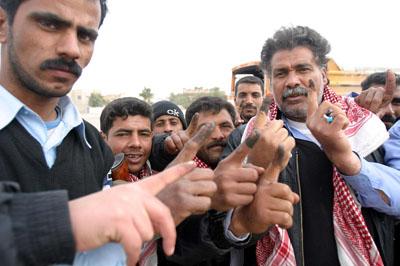
The Obama administration may finally get some good news. Iraq’s recent elections for parliament might actually result in a non-sectarian, pro-American government. This outcome would enable the Obama administration to fulfill its goal of removing all but 50,000 support troops by this August and drawn U.S. forces down to zero by the end of 2011.

read more