Since taking office, President Porfirio Lobo has opened the door to expanded American military presence in Honduras and auctioned off his country’s right to self-determination.
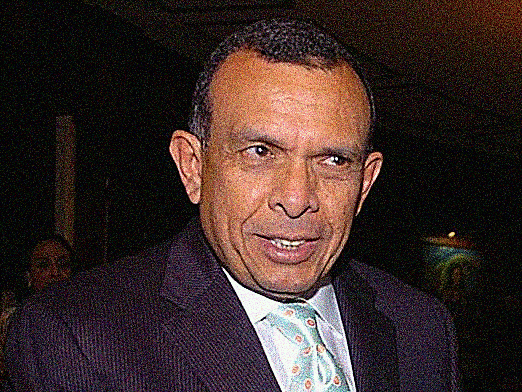
Honduras: Sovereignty for Sale
read more

Since taking office, President Porfirio Lobo has opened the door to expanded American military presence in Honduras and auctioned off his country’s right to self-determination.

The government turning its iron fist into an open hand and collaboration on music projects have helped cement a truce between rival gangs in El Salvador.

It’s happening in Buenos Aires. It’s happening in Paris and in Athens. It’s even happening at the World Bank headquarters.The global economy is finally shifting away from the model that prevailed for the last three decades. Europeans are rejecting austerity. Latin Americans are nationalizing enterprises. The next head of the World Bank has actually done effective development work.
Maybe that long-heralded “end of the Washington consensus” is finally upon us.
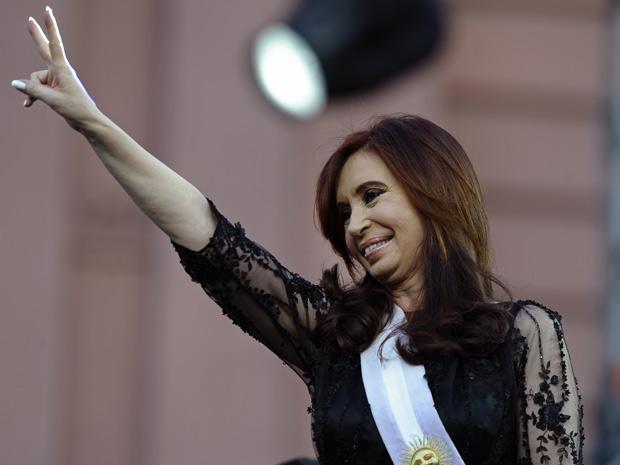
Despite being immensely popular among the people of Argentina, the Argentinean government’s decision to nationalize the YPF oil company has continued to come under attack by those who obstinately promote extractive capitalism. The measure would nationalize YPF and restore 51 percent of the company’s ownership to Argentina. It would thus end sister company Repsol’s 57.4 percent majority stake in the company.

Latin American growth has resulted from its rejection the economic model pushed by Washington and the European Union: free trade, financial deregulation, and austerity.
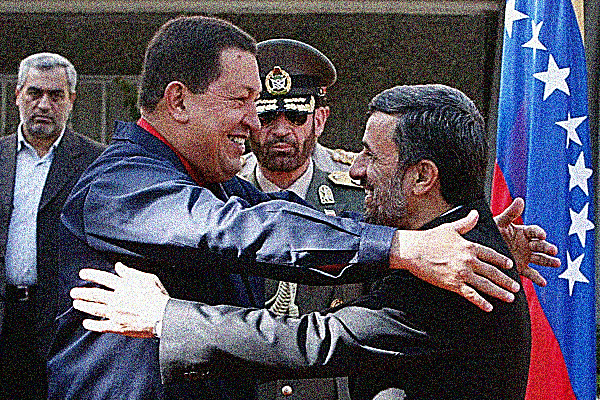
Leon Panetta has expressed a concern that Iran’s Revolutionary Guard Corps has expanded into Latin America.
Hanging from City Hall in the center of downtown Bogota is an enormous banner that reads: “To arm or to love?” [Armar or amar], advertising an initiative being carried out by the new administration of democratic leftist mayor Gustavo Petro Urrego. The initiative bans legal firearms from public places in an effort to reduce the number of homicides. The measure is also intended to strengthen the ability of the police to dismantle criminal bands and decommission illegal firearms and other weapons.
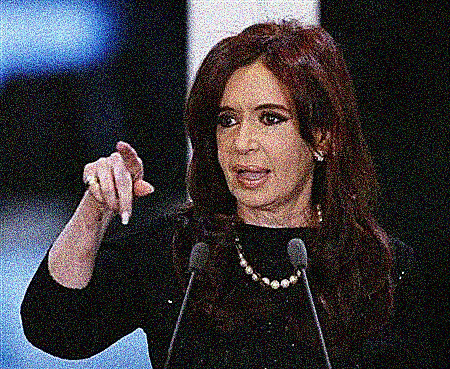
The Financial Times’s characterization of Argentina’s president as shrill and shabby is a case of a kettle trying to find a pot to call black.
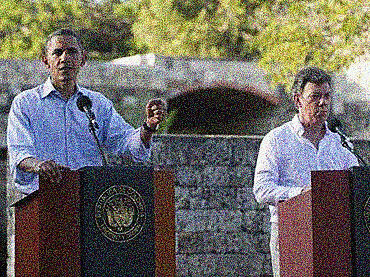
The legacy of the Cartagena summit, however, will likely be the beginning of a serious regional debate on international drug control policies.
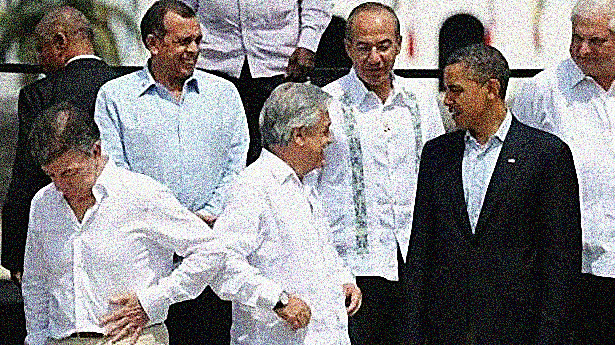
Cuban leader Raoul Castro had expressed a desire to attend the meeting but was delicately told by the host, Colombian President Santos, it that would be impossible because of President Obama’s presence.