The U.S. public wants out of Iraq. The Iraqis themselves want the occupation to be over. What’s a poor U.S. soldier to do?
No Thanks
read more

The U.S. public wants out of Iraq. The Iraqis themselves want the occupation to be over. What’s a poor U.S. soldier to do?
President George W. BushÂs vision for the Iraq War was nothing if not expansive. Liberal democracy and popular sovereignty were to supplant tyranny not only in Baghdad, but in nearby capitals as well. And the force of U.S. arms would not be needed to accomplish the latter missions. As Bush asserted to eager applause at the American Enterprise Institute on February 25, 2003, Âa new regime in Iraq would serve as a dramatic and inspiring example of freedom for other nations in the region. Democracy, the war party believed, would be contagious.
Iraq is the most dangerous place in the world for journalists. Along with names and dates, the Brussels Tribunal has listed the circumstances under which Iraqi media personnel have been killed since the U.S.-led invasion of Iraq in March 2003. This extremely credible report cites 195 as dead. If non-Iraqi media representatives are included, the figure goes beyond 200. Both figures are well in excess of the media fatalities suffered in Vietnam or during World War II.
As we enter our fifth year of occupation, and as Iraq continues to degenerate into sectarian violence and civil war, I think it important that we talk, vet to vet. Real talk, talk from the heart, as we did back in Iraq, in the Nam, in Korea, on the battlefields of Europe and the Pacific. Let us put aside, for a moment, all the bunk we have been fed over the years by those who were not there. You know who I mean. The politicians and war strategists who cavalierly make war, decide tactics, and send us off to fight, bleed, and die for a cause that is uncertain or non-existent. Self-proclaimed "patriots" who, while remaining safe at home, try to convince us that the threat to our way of life – – to America and to freedom – – is real and grave and that the disruption of our lives and the sacrifices we make, and that our brothers and sisters make, are necessary and glorious.
The Iraq War tore at the already frayed fabric of transatlantic security relations. Although European countries declared their solidarity with the United States after September 11, they were increasingly uncomfortable with Washington’s emphasis on unilateralist approaches to global problems. After President Bush took office in 2001, his administration upset many European leaders by refusing to sign the Kyoto Protocol on global warming, opposing the International Criminal Court, and killing the Anti-Ballistic Missile Treaty. In October 2001, Washington was reluctant at first to use the North Atlantic Treaty Organization (NATO) in the campaign to oust the Taliban in Afghanistan. While taken aback by U.S. reluctance, NATO leaders and Europeans generally approved of the U.S.-led operation.
Congress will soon consider another $100 billion for this year in additional war spending requested by the Bush administration. If it acquiesces, the total tab for the Iraq War will hit nearly half a trillion dollars.
The failures of Iraqi democratization as advocated by the Bush administration should not be blamed primarily on the Iraqis. Nor should they be used to reinforce racist notions that Arabs or Muslims are somehow incapable of building democratic institutions and living in a democratic society. Rather, democracy from the outset has been more of a self-serving rationalization for American strategic and economic interests in the region than a genuine concern for the right of the Iraq people to democratic self-governance.
Throughout most of the past four years, Republicans imposed a moratorium on substantive debate that caused the vaulted chambers of Capitol Hill to function as little more than an echo chamber for the Administration’s Iraq policy. Democrats, cowed by fears of being portrayed as undercutting the troops, were largely silent. The few Democratic initiatives seeking to limit or otherwise interfere with President Bush’s dreams of unending war were routinely silenced and reconstruction oversight languished.
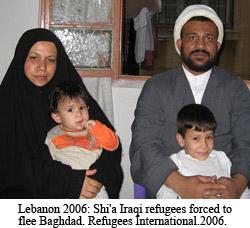
With the violence in Iraq showing no sign of slowing down, civilians increasingly suffer. The UN estimates that 2.6 million Iraqis have fled violence in their country since 2003 and at least 40-50,000 more Iraqis are leaving their homes every month. Two million have fled to surrounding countries, while some 1.8 million have vacated their homes for safer areas within Iraq. Middle Eastern countries, Syria and Jordan in particular, have shown great generosity in welcoming Iraqis in the past three years, but that welcome is wearing thin. Other countries throughout the Middle East, including Egypt, Lebanon, Yemen, Iran and Turkey are also seeing increased flows.