Van Pao’s “secret army” was financed by the CIA as part of the war against North Vietnam. Is the U.S. also tolerating and empowering drug lords in Afghanistan?
U.S. nuclear-war policy has always been poised between deterrence — riding out a nuclear attack before responding — and launch on warning — an itchy trigger finger.
Recently, there has emerged a cadre of high-profile individuals from the Greater Middle East who, unlike Chalabi, have turned against Islam and embraced their lives in the West. In doing so, they have adopted views strikingly similar to some of the more hawkish factions in U.S. politics.
Just as 2010 ended, the American military’s urge to surge resurfaced in a significant way. It seems that “leaders” in the Obama administration and “senior American military commanders” in Afghanistan were acting as a veritable WikiLeaks machine. They slipped information to New York Times reporters Mark Mazzetti and Dexter Filkins about secret planning to increase pressure in the Pakistani tribal borderlands, possibly on the tinderbox province of Baluchistan, and undoubtedly on the Pakistani government and military via cross-border raids by U.S. Special Operations forces in the new year.
It’s becoming more and more difficult to interest young officers and scientists in nuclear weapons.
Due to the economy, the time is rapidly approaching when real cuts to defense spending will become possible. Progressives need to start staking out their positions on doctrine and technology now.
“Gaza Youth Breaks Out” set an example by pointing a finger at oppression across the political spectrum.
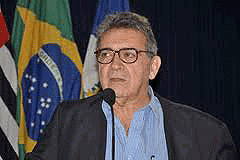
Outgoing Brazilian President Lula isn’t too optimistic about U.S.-Latin America relations.
Believe it or not, the year offered some outright clear-cut progressive wins.
This past September, U.S. Secretary of State Hillary Clinton drew criticism for comparing the current situation in Mexico to “Colombia 20 years ago.” Most of that criticism questioned whether the analogy was appropriate or whether the statement was an unnecessary affront to a close U.S. ally, the Mexican government of Felipe Calderón. But the more significant part of Clinton’s comments was her enthusiastic praise for Plan Colombia—the massive U.S. military aid package started by her husband in 1999—and her insistence on the need “to figure out what are the equivalents” for other regions, particularly Mexico, Central America, and the Caribbean.