In December, when Obama decided (for the second time in 2009) to add tens of thousands of additional American forces to the war, he also slapped an 18-month deadline on the military to turn the situation around and begin handing security over to the bedraggled Afghan National Army and police. Speaking to the nation from West Point, Obama said that he’d ordered American forces to start withdrawing from Afghanistan at that time.
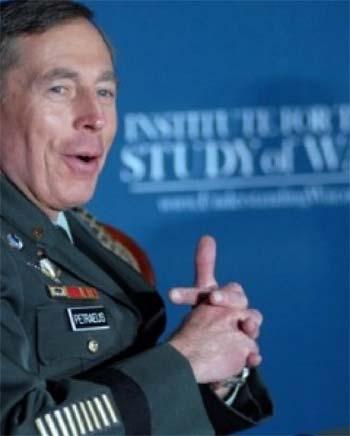
Patraeus Circles Two Camps
Nearly a week after the abrupt departure of Washington’s top commander in Afghanistan, United States strategy for reversing the flood of bad news that has been recently pouring out of that strife-torn country remains as unclear as ever.
U.S. Hijacks ICC conference
The United States managed to foil the International Criminal Court’s (ICC) adoption of the crime of aggression as part of its mandate during this month’s review conference in Kampala, Uganda. But the U.S. presence at the conference demonstrates a new engagement with the ICC, and the Obama administration’s interest in helping to shape international law.
Sri Lanka’s Wartime Abuses
Sri Lankan President Mahinda Rajapaksa was in India earlier this month making promises to resettle the war-displaced Sri Lankan Tamil minority one year after his government’s forces won a crippling victory over the Tamil Tiger insurgency. But can he deliver on his pledge and begin the healing of Sri Lanka’s deep ethinc wounds?
The Surge of Ideas
In recent years, there has been a growing tendency for think tanks and military brass to jointly pursue policy objectives, some of which are opposed by the public or the White House—take, for example, the campaigns to build support for the troop “surges” in both Iraq and Afghanistan. This trend, say critics, raises important questions about the appropriate role of the military in promoting particular policies and whether there is enough transparency and accountability in the work of policy groups. And, just as importantly, will there be a new joint campaign aimed at pressuring the Obama administration to delay troop withdrawal from Afghanistan?
Anti-Base Movements in South Korea: Comparative Perspective on the Asia-Pacific
Recent scrutiny of U.S.-Japan base realignment and Okinawan anti-base opposition has overshadowed U.S. military issues in South Korea. As others have argued, the struggle in Okinawa represents only one facet of the larger global struggle against U.S. bases.3
Donating to Haiti and Beyond
Media coverage of humanitarian crises appears to influence charitable giving. Using internet donations after the 2004 Indonesia tsunami as a case study, Philip Brown and Jessica Mintyof The William Davidson Institute at the University of Michigan, show that media coverage of disasters has a dramatic impact on donations to relief agencies. According to Brown and Minty, an additional minute of nightly news coverage increases donations by 13.2 percent of the average daily donation for the typical relief agency. Similarly, an additional 700-word story in The New York Times or Wall Street Journal raises donations by 18.2 percent of the daily average.7
Call the Politburo, We’re in Trouble: Entering the Soviet Era in America
Gorbachev had dubbed Afghanistan “the bleeding wound,” and when the wounded Red Army finally limped home, it was to a country that would soon cease to exist. For the Soviet Union, Afghanistan had literally proven “the graveyard of empires.” If, at the end, its military remained standing, the empire didn’t. (And if you don’t already find this description just a tad eerie, given the present moment in the U.S., you should.)
Poking a Stick Into the Honor Killing v. Domestic Violence Debate
Is it wise to sweep honor killings under the general heading of domestic violence? Does something get lost in translation?
Lethal Force on the Border
Sergio Hernandez Guereca’s short life revolved around the U.S.-Mexico border that ultimately led to his death. On June 7, at approximately 6:30 p.m., a U.S. Border Patrol agent shot the 15-year-old Hernandez in the face in Mexican territory between Ciudad Juárez, Chihuahua, and El Paso, Texas.