Anti-union crimes are widespread and remain a tremendous concern for people who object to the U.S.-Colombia FTA.
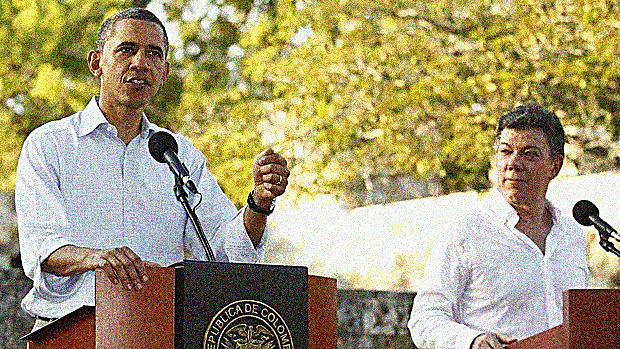
Free Trade Agreement Ignores Colombian History of Violence Against Trade Unions
read more

Anti-union crimes are widespread and remain a tremendous concern for people who object to the U.S.-Colombia FTA.
Somewhere, there must be an investigate journalist who will link the violence of the likes of Khalid Sheikh Mohammed to abuse they may have suffered as children.
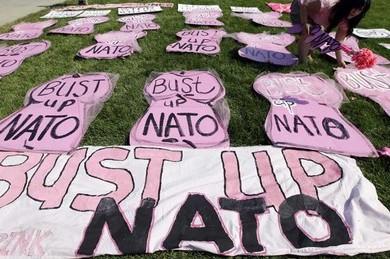
America has a problem with portion control. U.S. restaurants serve enormous entrees, convenience stores sell “Big Gulp” cups of soda, and Americans routinely compete to see who can eat the most hot dogs or pizzas or chicken wings in ten minutes. It’s not just the quantity. It’s also the quality. Americans get as much as one-third of their calories from junk food. No wonder that Americans are fatter than citizens of any other developed country, with the obesity rate twice that of many European nations. The Pentagon has the same problem with portion control.
If FARC profits from the drug trade again, it may confront the government rather than work with it.

Despite what Christian fundamentalists wish, religion and politics are unlikely to become one in the United States.
Despite Bahrain’s authoritarian rule, Washington still sells it military equipment.
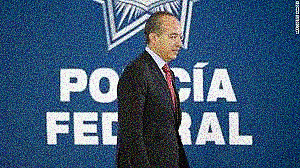
The next president should reject current President Felipe Calderón’s profligate use of the military, and should make protection of human rights a cornerstone of a policy to back the power of traffickers.
The United States sides with a state with an illegal nuclear weapons program over one without one.
Conservatives and Tea Partiers don’t understand that the rich — including U.S. corporations — don’t see themselves as Americans.
Foreign Affairs contributor Patrick Clawson clings to the hoary old myth of democracy promotion as a means to regime change in Iran.