Invading Libya is about the oil, Syria — eliminating the only Russian naval base in the Mediterranean and weakening Hizbollah.

Shifting Targets: From Iran to Libya and Syria (Part 1)
read more

Invading Libya is about the oil, Syria — eliminating the only Russian naval base in the Mediterranean and weakening Hizbollah.

Are we being dragged into a war whose means violate the Geneva Conventions and whose end violates the UN resolution that protects civilians?
The messaging used to sell the invasion of Libya to the American people — that NATO was taking up the ‘responsibility to protect’ — painted a thin veneer over lurking geopolitical motives.

Coming to terms with NATO’s intervention in the Libyan civil war is a little like wresting a grizzly bear: big, hairy, and likely to make one pretty uncomfortable no matter where you grab a hold of it. Is it a humanitarian endeavor? A grab for oil resources? Or an election ploy by French President Nicolas Sarkozy?
With Libyan government forces advancing towards the rebel capital of Benghazi, the time for possible military intervention by the U.S. and its NATO or other allies appears to be running short.
The United States is helping Bulgaria develop its military capabilities to pave the way for the new EU member to deploy to various battlefields of the war on terror.
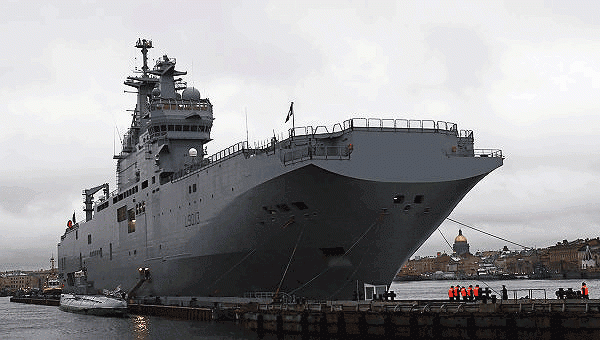
Amid concerns over losing even more ground to NATO military power, Russia is set to engage in a large-scale military overhaul.

400 military bases and a mega-embassy are not the face of an impending withdrawal from Afghanistan.

Too bad that the Torkham border was re-opened: the United States could have used an indefinite halt to the convoys as a pretext to leave Afghanistan.
Pakistan seems to be in a double bind: Resist the United States and NATO and open the door to seizure of its nuclear-weapons program — or cooperate and suffer the same results.