Film poster for A Schoolgirl’s Diary. Photo by Nicholas Bonner.
As part of our China Focus, we asked two leading scholars to reflect on the tensions and possibilities in U.S.-China relations. Bonnie Glaser is a senior associate at the Center for Strategic and International Studies. James Nolt is a senior fellow at the World Policy Institute. We asked them first about the potential for a strategic security partnership between the United States and China, then about their economic relationship.
Time Magazine in its July 8 issue makes a rather bold statement declaring “The end of cowboy diplomacy” of George W. Bush. These type headlines are seen during the slow news season of August or September in Washington when the U.S. Congress is in recess and not much is happening. But there is no lack of high drama right now.
Even though North Korea’s long-range missile turned out to be a dud, Pyongyang has nevertheless achieved its aim by getting the world’s attention. Governments around the world have rushed to condemn Pyongyang. Japan and the United States want to bring the full weight of the United Nations against the country. North Korea, meanwhile, has argued that it would consider comprehensive sanctions an act of war. It’s threatening a nuclear strike if attacked.
Headline news about the threat of nuclear terrorism and the concerns about the nuclear capabilities and ambitions of Iran and North Korea regimes has led some Washington policy makers and pundits to conclude that the nuclear nonproliferation system has failed. A new strategy, they say, must be developed to replace it, or, perhaps, we must even accept that the spread of nuclear weapons is inevitable.
Daryl Kimball contends that I and my former boss, Ted Galen Carpenter (vice president of defense and foreign policy studies at the Cato Institute), are "like the Bush policy team" because we advanced "the proposition that aggressive and erratic regimes with nuclear weapons are a threat to their neighbors, while nuclear arsenals in the hands of stable, democratic, U.S. allies are not."
Those crazy North Koreans. They’ve promised in principle to give up their nuclear weapons, but they insist on generating nuclear power for peaceful purposes. With Pyongyang and Washington at loggerheads over this point, the Six-Party Talks to resolve the nuclear crisis in Northeast Asia have taken a recess after two weeks of promising discussions.
The song speaks of “those lazy, hazy, crazy days of summer.”
The prevailing sentiment, less “laid back,” refers to “the dog days of summer” from which the rich and well-connected have historically sought relief by getting out of town. Indeed, one can easily picture Caesar Augustus—in whose honor the Roman Senate renamed and lengthened the sixth month in the Julian calendar—abandoning Rome in the same way Congress and the president flee Washington.
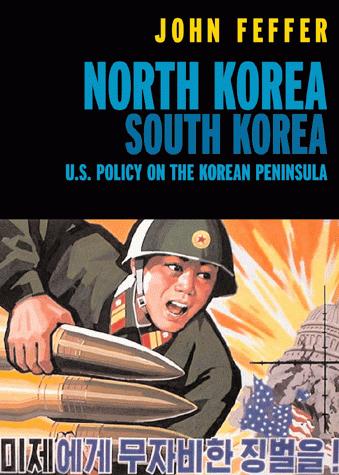
War is looming on the Korean peninsula. North Korea has declared that it possesses nuclear weapons. The United States is tightening an economic noose around the country in an attempt to force a regime change. The Bush administration is also keeping a military option on the table, a prospect that terrifies all the countries of East Asia, particularly South Korea. A terrifying spiral of tensions has resulted. The aggressive stance of the U.S. government has hardened North Korea’s position and threatened rapprochement between North and South. North Korea, meanwhile, is desperate to develop a deterrent that will prevent the Bush administration from following the Iraq scenario with a campaign of aerial bombing.