Even the Department of Defense has had enough of the Department of Energy’s refusal to downsize its nuclear-weapons laboratories.
Negative Nostalgia: Nuclear-Weapons Labs a Throwback to Cold War
read more

Even the Department of Defense has had enough of the Department of Energy’s refusal to downsize its nuclear-weapons laboratories.
Israel insists that Fordow, Iran’s nuclear-enrichment facility, remain vulnerable to attack.

Elections are decided by economics. Voters respond to pocketbook issues and are swayed by the huge sums that candidates lavish on advertising. Foreign policy issues, by contrast, are what the British call “noises off,” those sounds from off-stage that you hear occasionally to punctuate the main actions, sounds like exploding bombs and the distant cries of suffering people. According to recent polling, global issues barely register at all with Americans right now. Far below the economy, jobs, health care, the budget deficit, and gas prices, you’ll find Afghanistan at 6 percent (CNN), terrorism at 1 percent (Bloomberg), and, most distressingly, no global issue at all (CBS/New York Times).
The United States, as the world’s undisputed nuclear weapons superpower, should finally ratify the Comprehensive Test Ban Treaty.
It’s difficult to determine whether or not the Institute for Science and International Security is driven by politics.
According to Iran’s Supreme Leader Khameini, nuclear weapons are a “big sin.”
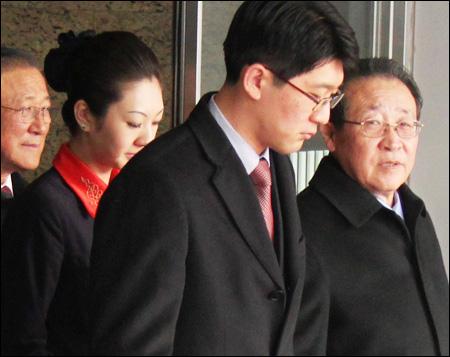
After three years of frozen relations between North Korea and the United States, the two longstanding adversaries are on the verge of a thaw. In what has been called the “leap day deal,” North Korea has pledged to stop uranium enrichment and suspend nuclear and missile tests. The United States, meanwhile, will deliver 240,000 metric tonnes of food to the country’s malnourished population.

History repeats itself, Marx famously warned, first as tragedy and then as farce. In the case of U.S. torture psychologists, the ” tragedy” occurred half a century ago when CIA-funded psychological research on electroshock treatment, sensory deprivation and the like found its way into the Agency’s counterintelligence interrogation manual. The 1963 KUBARK Manual and its later iterations were used widely by U.S. intelligence and disseminated to other governments in Latin America and Southeast Asia. The “farce” was played post-9/11, as psychologists became involved once again in aiding counterintelligence interrogators.
Apparently, national security is like money: you can never have too much.

On February 24, representatives from the United States and North Korea will meet for the first time since talks halted following the death of Kim Jong-il in December. Shortly after talks broke off, the two sides were reportedly close to brokering a deal that would have seen the DPRK halt uranium enrichment in return for much needed food aid. Such a deal would have represented a major diplomatic breakthrough, particularly in light of the tumultuous events of the last year and a half and a major step towards restarting the Six Party Talks. However, the death of Kim Jong-il prevented finalization of the agreement as North Korea inevitably shifted all its focus to ensuring the stability of the regime now centered on Kim Jong-il’s third son and heir, Kim Jong-un.