Yemen
Embassy Protests and Middle East Unrest in Context

Embassy Protests and Middle East Unrest in Context

It seems bizarre that right-wing pundits would be so desperate to use the recent anti-American protests in the Middle East—in most cases numbering only a few hundred people and in no cases numbering more than two or three thousand—as somehow indicative of why the United States should oppose greater democracy in the Middle East.

read more

Target: Africa

An informal competition took place during the Bush years for the title of “second front” in the war on terror. Administration officials often referred to Southeast Asia as the next major franchise location for al-Qaeda, with the Philippines in particular slated to become the “next Afghanistan.” Then there was the border between Brazil, Argentina, and Paraguay, which State Department officials termed a “focal point for Islamic extremism in Latin America.” Worried about the spread of al-Qaeda operatives in North Africa, the Bush administration also developed the Pan-Sahel Initiative, which became the Trans-Sahara Counterterrorism Initiative before finally being folded into the Pentagon’s new Africa Command.

read more
Poets Stand Up

Poets Stand Up

In Paris, poets staged a flash mob outside the Louvre Museum. In North Carolina, they sent poems to their state legislators, calling on them to restore arts education funding to the decimated state budget. In Vancouver, BC, poets cleaned up a beach before their reading. There was a reading in solidarity with the people of Tibet in Pasadena, California, events throughout Mexico City demanding an end to violence, and “an exorcism of fear and helplessness” in Norman, Oklahoma. Poets gathered in Fez, Morocco, and Jalalabad, Afghanistan and Sharjah, United Arab Emirates.

read more

U.S. Escalates War Against Al-Qaeda

“Every time civilians are killed, you almost always do more harm than good,” agreed Carnegie’s Boucek. “You turn off the Yemeni people from wanting to co-operate; you turn off the government, because it looks like they’re facilitating it. It breeds further radicalization and makes it appear that Americans only care about terrorism, which is a pretty small issue compared to the challenges that Yemen faces and that lead to state failure or collapse,” he added. 

read more

Bunkum and Debunk ‘Em

Scratch the surface of any story and you’ll find rumors, hoaxes, and conspiracies. The conspiracy theory is the most intriguing of them all, for it combines total skepticism with total credulity. The same person will challenge every assertion made by the government or the mass media about Roswell or the Kennedy assassination, and then proceed to embrace the most cockamamie theory without even doing a minimum of legwork to test it.

read more

60-Second Expert: Yemen

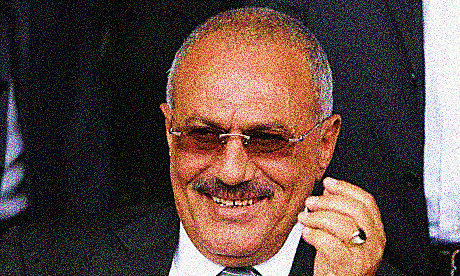
Despite major demographic and infrastructural differences, the Yemeni people face with the same fundamental problems that the successful insurgents of the Arab world have sought to eradicate through collective action this year. The 32-year-old regime of Ali Abdullah Saleh has systematically denied basic political and economic rights to the country’s majority, controlling the population through a combination of “bribe-a-tribe” cronyism and outright political repression.

read more
Winners and Losers in a New Middle East

Winners and Losers in a New Middle East

The Middle East faces a moment of truth as country after country rises up against its authoritarian leaders. No government is secure against the people-powered protest movements sweeping the region. These dramatic events will likely be the greatest U.S. foreign policy challenge over the next decade. The regional security framework — with new roles for Egypt, Saudi Arabia, Turkey, Iran, Syria, Israel, and the likely Palestinian state (or states) — is evolving, and Washington must reexamine how it defends its regional interests in a new way.

read more
Yemen on the Edge

Yemen on the Edge

Since Obama came to office in January 2009, U.S. security assistance to the Yemeni regime has gone up 20-fold.  Despite such large-scale unconditional support, however, the 32-year reign of autocratic President Ali Abdullah Saleh may finally be coming to an end. Yet the Obama administration has been ambivalent in its support for a democratic transition in this impoverished but strategically important country.


read more