
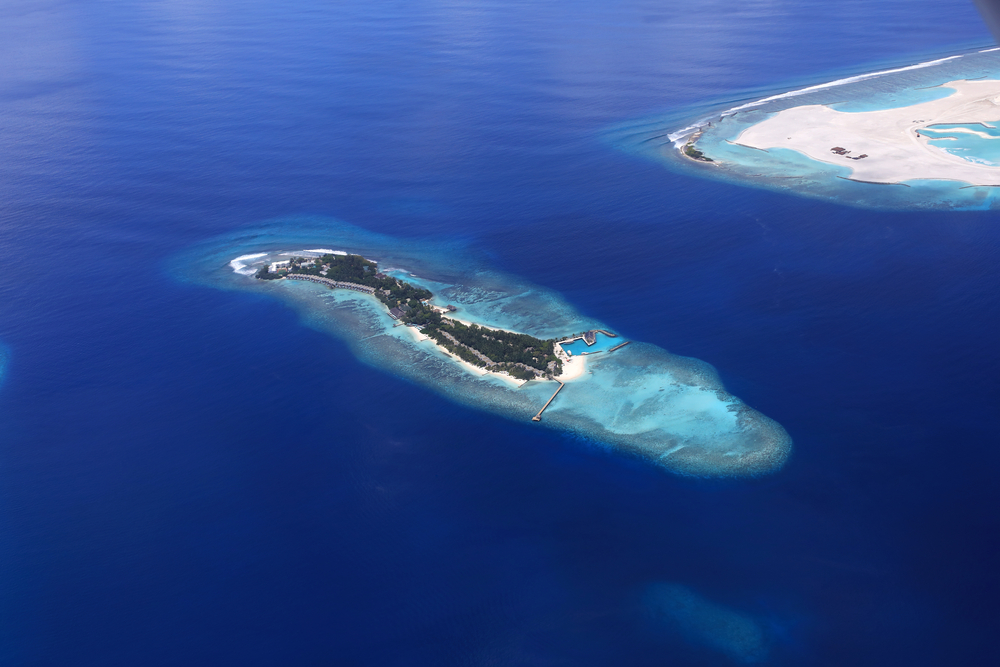
A prime example of the existential risks posed by climate change is the Maldives, a republic of 1,192 coral islands dispersed around the Indian Ocean. The Maldives, which have an average height of only 1.5 meters above sea level, are particularly susceptible to catastrophic weather events and increasing sea levels.
Rising sea levels, projected to increase by up to one meter by the end of the century, could submerge significant portions of the country. Approximately 80 percent of the islands are less than one meter above mean sea level, leaving them at risk of being entirely submerged or rendered uninhabitable due to saltwater intrusion into freshwater supplies and agricultural lands.
Storms and surges are examples of extreme weather phenomena that have increasingly damaged towns and infrastructure. Though not caused by climate change, the 2004 Indian Ocean tsunami brought to light the Maldives’ susceptibility to similar calamities, resulting in a considerable death toll and extensive damage. The Maldives’ vital tourist sector, which contributes about 28 percent of its GDP, and its fisheries sector, which is the second-largest contributor to the economy, are under growing threat as climate change increases the frequency and intensity of storms.
Coral bleaching, caused by increasing sea temperatures and ocean acidification, significantly endangers the marine ecosystems of the Maldives. The condition of coral reefs is vital not just for biodiversity but also for coastal defense and the livelihoods of communities reliant on fishing and tourism. Recent bleaching incidents have caused the destruction of extensive areas of coral, threatening both the ecosystem and the economy.
The displacement of populations is another emerging concern. Given the restricted land available for relocation, even minor evacuations caused by flooding or erosion pose considerable social and logistical difficulties. For instance, in 2007, the island of Hathifushi experienced a devastating storm surge that rendered it uninhabitable. The Maldivian government subsequently relocated the entire population to Hanimadhoo, demonstrating the challenges and necessity of resettling communities within different islands to ensure their safety and sustainability in the face of climate-induced risks.
Lessons from Other SIDS
Although the vulnerabilities of various small island developing states (SIDS) to climate change are similar, the precise effects and reactions differ. Sea-level rise and storm surges pose similar threats to Pacific island nations like Kiribati and Tuvalu. However, adaptation attempts are sometimes more difficult due to their smaller numbers and geographic isolation. Unlike the Maldives, these nations lack significant tourism industries to fund mitigation and adaptation initiatives, relying heavily on international aid.
Caribbean SIDS, such as Dominica and Antigua and Barbuda, experience frequent hurricanes that devastate infrastructure and disrupt economies. In contrast to the Maldives, the closeness of these nations to bigger markets in the Americas provides certain benefits in terms of disaster response and recovery. Nevertheless, their economies, which heavily depend on agriculture and tourism, are also at risk from climate-related changes.
The Maldives stands out for its proactive international advocacy on climate issues. The nation has played an outspoken role in international climate talks, stressing the immediate necessity for bold mitigation actions and funding for adaptation This leadership stands in contrast to certain SIDS, which find it difficult to enhance their presence on the global platform because of restricted diplomatic resources.
Redefining Security: Beyond Realism
As an unconventional security threat, climate change questions traditional notions of security. Traditional realist frameworks emphasize military strength and state sovereignty, concentrating on external dangers from other nations. Nonetheless, unconventional threats such as environmental deterioration, pandemics, and economic instability cross national boundaries and necessitate collaborative, multilateral responses.
For the Maldives, climate change is not a remote or theoretical problem but a direct danger to its survival as a nation. Rising seas, extreme weather events, and ecosystem collapse endanger territorial integrity, economic stability, and the well-being of its citizens. These difficulties emphasize the shortcomings of realist approaches, which frequently neglect non-military dangers and the interrelated aspects of global security.
Constructivist theories offer a pertinent perspective, highlighting the social construction of security threats and the importance of discourse in presenting topics such as climate change as vital to both national and global security. The Maldives has been proactive in securitizing climate change, presenting it as a fundamental threat to attract global attention and assistance.
The experience of the Maldives highlight the pressing necessity for worldwide measures to reduce greenhouse gas emissions and assist adaptation initiatives. Despite many common challenges among the SIDS, the Maldives’ active strategies and specific vulnerabilities emphasize both the similarities and distinctions within this group.
Addressing nontraditional security threats like climate change requires a fundamental shift in how security is conceptualized. Transitioning from the realist paradigm to adopt wider, more inclusive frameworks is crucial for safeguarding vulnerable nations and promoting global resilience in response to common challenges.