
In March 2025, a Florida supermarket chain refused to decorate a cake with a Canadian flag, offering only a note stating “Can’t do other flags. Just American flag.” This small incident at the Publix store perfectly illustrates the profound deterioration in U.S.-Canada relations that has unfolded since 2017. What appears trivial on the surface—a simple cake decoration—represents something far more significant: the collapse of what was once described as “the world’s most successful bilateral relationship.”
As a Canadian who has spent significant time in the United States—studying at an American university, maintaining close friendships with Americans, and spending winters in Florida—I’ve witnessed this deterioration firsthand. The relationship that once seemed unshakable has been fundamentally altered by an American political realignment in ways that appear irreversible.
Beyond Economic Metrics
When discussing US-Canada relations, American politicians frequently focus on trade deficits, particularly the $67.9 billion goods trade deficit recorded in 2023. What they consistently omit is crucial context: this deficit is primarily driven by energy imports, particularly crude oil from Alberta’s oil sands.
The Canada Energy Regulator reports that Canadian energy exports to the United States were valued at approximately $163 billion in 2023. Most significantly, if energy trade is excluded from the equation, the United States actually maintains a trade surplus with Canada. The substantial imports of Canadian energy products represent not just commercial transactions but a strategic asset for American energy security—a stable supply from a trusted ally that reduces dependence on less reliable regions.
Yet this context is consistently absent from political rhetoric that characterizes the relationship as unfair to American interests.
The Sovereignty Red Line
Although Canadians have weathered numerous disputes with the United States over trade and tariffs, the recent challenges to Canadian sovereignty represent a fundamental crossing of a line. President Trump’s repeated suggestions about Canada potentially becoming “the fifty-first state,” coupled with tariffs justified on questionable “national security” grounds, have generated unprecedented anxiety among Canadians.
These aren’t mere theoretical concerns. A March 2025 poll by the Angus Reid Institute found that 54 percent of Canadians believed President Trump was serious about his annexation rhetoric—up from 32 percent just two months earlier. The polling revealed overwhelming opposition (approximately 90 percent) to joining the United States, with concern transcending political divisions.
By implicitly positioning Canada—a steadfast ally in every major conflict of the last century and a half—as a potential security threat, the United States has shattered the foundation of trust upon which the bilateral relationship was built.
The deterioration extends beyond abstract political and economic forces to impact real people. The Publix cake incident prompted me to permanently relocate my sailboat from Florida to Mexico, redirecting my annual $24,000 contribution to the Florida economy elsewhere. I’m not alone—Canadian tourism to the United States has fallen significantly, with economic consequences for businesses that once relied on Canadian visitors.
More profound than the economic losses is the transformation in how Canadians see the United States. Canadian national identity, historically defined partly by close alignment with American values, has increasingly positioned itself in contrast to American policies. The American University notes that U.S. actions “appear to have spurred a strengthening of Canadian national identity… fostering a sense of collective resolve and a renewed focus on Canadian interests.”
A Strategic Pivot
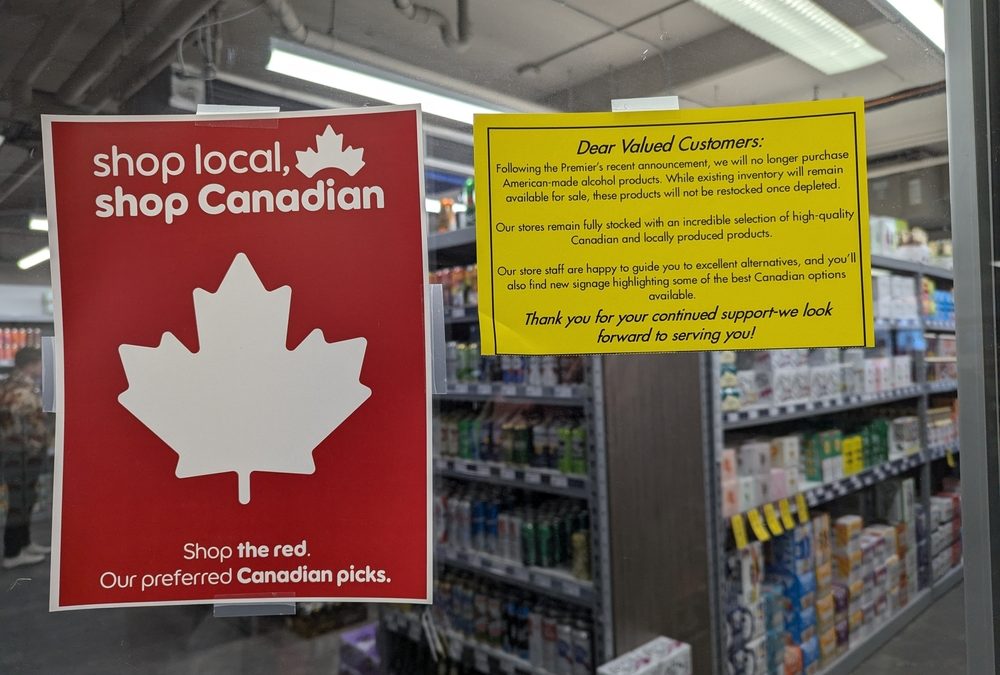
In response to these shifts, Canada has begun actively pursuing economic diversification strategies to reduce its historical over-dependence on the U.S. market. This has meant developing trade agreements with partners in Europe and the Asia-Pacific region and building domestic capacity in critical industries to reduce supply chain vulnerabilities, It has also pushed the Canadian government to create alternative export markets for key Canadian products.
This new economic reality has influenced Canadian domestic politics, with Mark Carney’s election as prime minister signaling a potential shift in approach to relations with the United States.
More striking are the legal preparations to resist potential U.S. annexation attempts through Canadian courts—a measure that would have seemed absurd just a decade ago but is now deemed necessary by serious policy analysts.
Tourism Tensions
The tourism sector between Canada and the United States has experienced significant disruption following the political and economic tensions that emerged post-January 2025. Data from early 2025 reveals a pronounced downturn in cross-border travel, with Canadian residents’ return trips by automobile from the United States declining by 23 percent year over year, and air travel decreasing by 13.1 percent compared to February 2024.
Land crossings have dropped to levels not seen since the pandemic-era travel restrictions. This shift can be attributed to multiple factors, including increased costs from tariffs, political tensions stemming from U.S. rhetoric about potential annexation, and growing Canadian nationalistic sentiment. According to one poll, 62 percent of Canadians plan to avoid the United States for at least the next year amid these political tensions. Projections for the remainder of 2025 suggest a further deterioration in cross-border tourism, particularly regarding Canadian travel to the United States. Tourism Economics forecasts that Canadian visits to the US will plummet by 20 percent in 2025 , while the U.S. Travel Association warns that even a 10 percent reduction could result in 2.0 million fewer visits, $2.1 billion in lost spending, and 14,000 job losses in the U.S. tourism sector.
Flight Centre Travel Group Canada has reported a 40 percent drop in leisure bookings to U.S. destinations in March 2025 compared to the previous year, with one in five customers cancelling U.S. trips in the preceding three months, and advance bookings between Canada and the United States for summer 2025 have plummeted by over 70 percent.
Adding to these challenges, new U.S. policies requiring foreign visitors staying longer than 30 days to register with American authorities, effective April 11, 2025, may further deter Canadian travel. This significant decline in cross-border tourism represents another dimension of the collateral damage resulting from the deteriorating relationship between these historically close allies.
Security Implications
The deterioration in U.S.-Canada relations threatens to undermine one of the most successful binational military collaborations in modern history—the North American Aerospace Defense Command (NORAD). Established in 1957 and formalized in 1958, NORAD has served as the cornerstone of continental defense for over six decades, operating with equal responsibility to both governments and drawing staffing from both nations’ militaries.
Despite official statements from both governments consistently reaffirming their commitment to NORAD and its ongoing modernization efforts, significant concerns have emerged about the sustainability of this vital security partnership. In April 2025, General Gregory Guillot, Commander of NORAD and U.S. Northern Command, explicitly warned that the escalating bilateral tensions could impact NORAD’s operational effectiveness, stating that Canadian withdrawal would “severely under-resource the crucial northern approaches to North America, leading to a significant degradation in domain awareness capabilities.” This vulnerability is particularly concerning given Canada’s substantial commitment to NORAD modernization—a $38.6 billion investment over 20 years announced in June 2022, including critical collaborations with Australia on Over-the-Horizon Radar technology for enhanced Arctic surveillance.
Prime Minister Carney’s declaration that the “centuries-old U.S.-Canada relationship” is now “over” signals a profound shift in political sentiment that could have far-reaching implications for security cooperation, potentially compelling Canada to pursue alternative strategic partnerships beyond North America.
The persistent American rhetoric questioning Canadian sovereignty—including suggestions about potential annexation—fundamentally undermines the foundation of trust essential for effective security collaboration, raising troubling questions about the future of continental defense.
Permanent Break
What troubles me most about these developments is not just their geopolitical implications but their permanence. The evidence suggests that U.S.-Canada relations have crossed a threshold from which there is no return to the pre-2017 status quo.
For Americans assessing these developments, it is crucial to recognize that standard economic metrics capture only a fraction of the actual consequences. The full accounting must include the permanent damage to what was once the world’s most successful bilateral relationship.
When nations lose the ability to disagree respectfully without threatening fundamental aspects of identity and sovereignty, both sides ultimately lose. As John F. Kennedy once observed in an address to the Canadian Parliament: “Geography has made us neighbors. History has made us friends. Economics has made us partners. And necessity has made us allies. Those whom nature hath so joined together, let no man put asunder.”
Unfortunately, what nature and history joined, politics has now severed—perhaps irreparably.