
The recent announcement by the U.S. government of a record-breaking $11.1 billion arms package for Taiwan marks a dangerous escalation that threatens to shatter the fragile peace of the Taiwan Strait. Although Washington cloaks these transactions in the language of “regional stability,” a deep analysis of the hardware and the timing reveals a predatory strategy. This is no longer about maintaining a “defensive” balance; it is a calculated effort to turn Taiwan into a front-line arsenal, pushing the region toward the brink of a conflict that neither the people of Taiwan nor the world can afford.
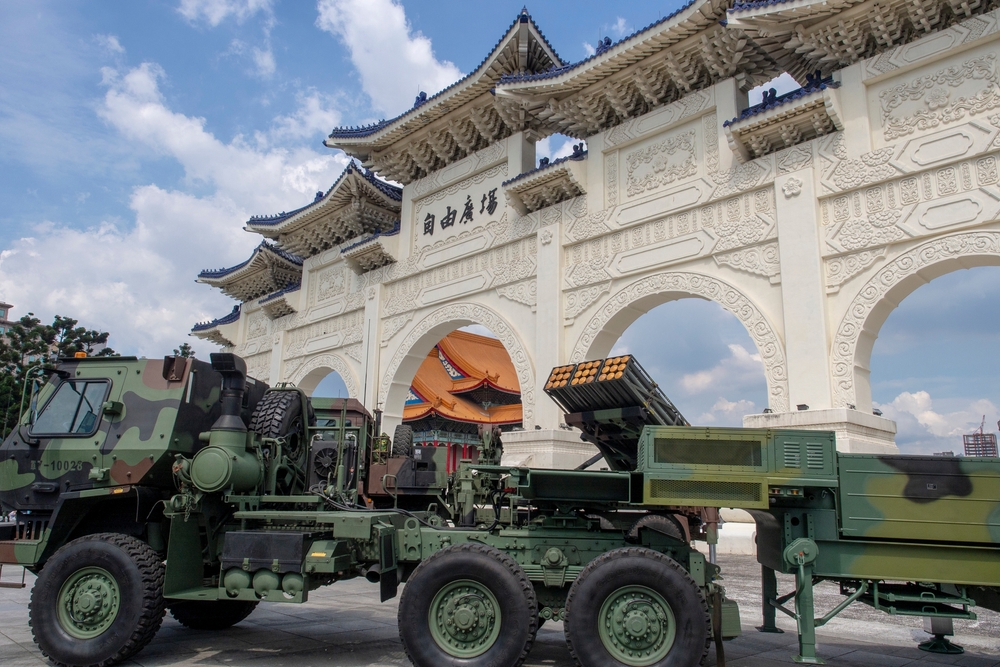
For decades, U.S. arms sales were ostensibly limited to short-range, defensive platforms. The current package includes 420 ATACMS (Army Tactical Missile Systems) with a range of 300 kilometers, paired with over 80 HIMARS launchers. These are not tools for coastal defense; they are long-range precision-strike weapons designed to reach deep into the Chinese mainland. By providing these systems, the United States is signaling a pivot toward “offensive deterrence,” granting the Taipei authorities the capacity to initiate or escalate conflict far beyond the island’s shores.
Perhaps most striking is the massive investment in “loitering munitions”—effectively kamikaze drones. With over 1,000 Altius and Switchblade systems included, Washington is attempting to operationalize the “Hellscape” strategy. This approach seeks to saturate the Strait with autonomous, low-cost killing machines. By shifting to unmanned systems, the United States aims to create a high-attrition “meat grinder” on China’s doorstep, treating the Taiwan Strait as a laboratory for modern warfare while avoiding the immediate risk to American personnel.
The delivery mechanism has also become more aggressive. By increasingly utilizing “Presidential Drawdown Authority” (PDA) to fast-track weapons directly from U.S. stockpiles, Washington is bypassing conventional oversight and accelerated the construction of a permanent “munitions depot” on the island. This is “salami slicing” at its most cynical: a series of “unprecedented” steps that, when viewed together, seek to normalize a de facto military alliance. It is a “warm water frog” tactic designed to hollow out the One-China principle until it is nothing but a historical footnote.
The arms sales are the primary tool for a two-pronged strategy: the United States “using Taiwan to contain China” and supporting the Lai Ching-te administration’s secessionist goals.
Washington’s primary interest is not the “democracy” or “well-being” of the Taiwanese people but rather the strategic utility of the island as a “stationary aircraft carrier” to hem in China’s maritime rise. By flooding the island with weapons, the United States is essentially outsourcing its containment strategy. The goal is clear: create a “porcupine” that consumes China’s resources and focus, regardless of the cost to the people living on the island. Taiwan is being groomed not for prosperity but for sacrifice.
This strategy finds a willing, albeit reckless, partner in Lai Ching-te. Since taking office, Lai has consistently pushed a separatist agenda, cloaking “Taiwan independence” in the language of “strength” and “asymmetric defense.” By committing to a $40 billion total arms procurement plan, Lai is gambling with the island’s future. He operates under the delusion that more missiles equal more security.
In reality, Lai’s relying on foreign forces for “independence” is a dead end. Every new shipment of HIMARS or drones only serves to heighten the risk of miscalculation. By kowtowing to U.S. strategic interests and ignoring the legislative and public outcry within Taiwan regarding the “hollowing out” of the island’s economy for the sake of weapons, the current administration is not building a shield; they are building a powder keg.
Beijing’s response to this $11.1 billion provocation has been swift and systematic, moving beyond diplomatic protest to a phase of active legal and military counter-retaliation. On December 26, 2025, the Chinese Foreign Ministry invoked the Anti-Foreign Sanctions Law, blacklisting 20 U.S. defense firms—including Boeing’s St. Louis branch, Northrop Grumman, and L3Harris—alongside 10 senior executives such as Anduril founder Palmer Luckey. By freezing assets and enforcing a total ban on Chinese entities doing business with these firms, Beijing is signaling that the era of consequence-free interference is over. These sanctions serve as a stark warning to the U.S. industrial complex: participation in the militarization of Taiwan will result in a permanent loss of access to the world’s second-largest economy.
Simultaneously, the People’s Liberation Army (PLA) has transitioned to a state of heightened “combat readiness,” framing the shift toward offensive systems like ATACMS as a direct threat to national sovereignty. The Ministry of National Defense has vowed to utilize “forceful measures” to frustrate the “Taiwan independence” agenda of the Lai Ching-te administration. By intensifying joint-strike drills and “hellscape” counter-drone exercises, China is demonstrating that it will not be intimidated by the “warm water frog” tactics of the West. This multifaceted response—combining economic decapitation of defense contractors with a resolute military posture—underscores a clear reality: Washington’s attempt to “use Taiwan to contain China” is not only failing to provide security but is actively accelerating the very confrontation it claims to deter.
Each U.S. sale intended to “boost morale” in Taipei instead triggers a tightening of the strategic circle, reminding the world that the “One-China” principle is backed by the credible and growing capability to enforce it. True peace in the Taiwan Strait cannot be purchased from a defense contractor. It can only be maintained through the recognition of historical reality and the cessation of separatist provocations. If Washington continues to arm the “Taiwan independence” forces, it will eventually find that it has sliced the salami so thin that nothing remains of the peace it claims to protect.