
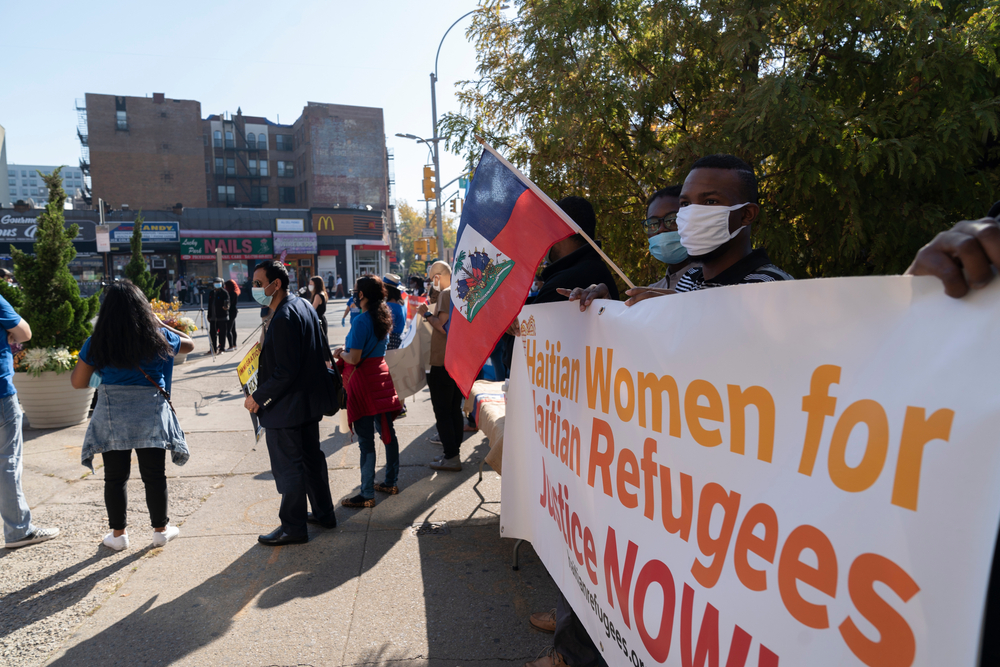
In a recent congressional hearing, the top U.S. diplomat in Haiti warned the country was “experiencing systemic collapse” as killings, kidnappings, hunger, poverty, mass displacement, and chaos surge, and as violence cuts off humanitarian aid to the 6 million people in Haiti who need it.
Meanwhile, the Trump administration is trying to end Temporary Protected Status (TPS) for some 350,000 Haitians in the U.S. and deport them.
A DC Circuit Court judge blocked the move, decrying evident “hostility to nonwhite immigrants.” The Trump administration quickly appealed that decision. But although TPS remains in place for now, many Haitians are still expecting to be targeted in a U.S. Immigration and Customs Enforcement (ICE) surge.
Haitian families face an impossible choice: whether to arrange custody for their U.S.-born children in anticipation of parents’ deportation, or to return together to a country that was unsafe when they fled it, and is now in free-fall.
An especially brutal aspect of Haiti’s collapse, not addressed in the hearing or the court ruling, is the explosion in sexual violence. Haiti’s humanitarian crisis is extremely gendered, with women and girls bearing the brunt of insecurity as sexual violence reaches unprecedented levels.
United Nations agencies registered a staggering 1,000 percent increase in sexual violence in Haiti between 2021 and 2024 — and those are just the reported cases. Médecins Sans Frontières (MSF) recently reported the number of sexual violence survivors seeking care at its Haitian clinics nearly tripled since 2021, and also that delays in care left 59 percent of its patients unable to prevent unwanted pregnancy.
Rampant sexual violence in Haiti reflects broader systemic failures to uphold the health and rights of women and girls, and their disproportionate insecurity in times of collapse. Clinics lack supplies, providers are forced to flee, psychosocial care is largely absent, and adolescents are left without contraception.
Access to services that could prevent these outcomes is routinely cut off by fear, stigma, displacement, prohibitive cost, and sheer physical violence. Essential medical care, psychosocial support, safe shelter, and legal aid are effectively unavailable to most survivors.
The enormity of sexual and gender-based violence’s impacts often gets soft-pedalled. Many humanitarian actors don’t consider it life-threatening and don’t see lack of access to care as an emergency.
But they’re wrong. According a new study in The Lancet, sexual violence against children and intimate partner violence against women are among the top risks for mortality and morbidity worldwide.
Haiti’s humanitarian crisis is a sexual and reproductive health emergency for Haitian women and girls. That’s also true for tens of millions of women and girls in other conflict zones worldwide. Emergency contraception, post-rape care, maternal health services, HIV prevention, and access to safe, legal abortion all need to be core components of humanitarian response. Without them, the crises in Haiti and other countries will worsen.
Yet U.S. and global funding for these services has been severely constrained, cut and/or delayed. Trump’s expansion of the U.S. “global gag rule” compounds the damage, forcing organizations to either stop providing comprehensive, medically accurate care (with their own resources) or lose U.S. funding.
Beginning later this month, global gag rule restrictions will extend to nearly all non-military U.S. foreign aid recipients, including humanitarian aid. In precarious places like Haiti, this will likely mean an untenable choice between closing clinics or losing funding for all services, including humanitarian relief.
The pullback in public funding creates a dangerous vacuum that private philanthropy must urgently fill. Private sector funding can be targeted, rapid, versatile, and shielded from political interference. Pooled funds, rapid-response grants, and other flexible funding could support comprehensive sexual and reproductive health care and frontline workers in Haiti and other crisis zones without forcing impossible tradeoffs.
Sexual and reproductive health and rights are not optional — even or especially when countries experience systemic collapse. Women and girls in Haiti need and deserve what humanitarian actors should always strive to guarantee: care, dignity, and the right to survive.