
The smoldering wreckage of an American F-15 fighter jet in the Kuwaiti desert offers a grim, physical testament to the escalating costs of President Donald Trump’s latest Middle Eastern venture. Just 48 hours into Operation Epic Fury, the loss of advanced American hardware—and the precarious safety of its pilots—signals that the air campaign against Iran is not the one-sided surgical strike many in Washington had anticipated.
Instead, the images of smoke rising over Tehran and the orange glow of interceptors over the Persian Gulf suggest a familiar script: a high-stakes military gamble intended to reshape the region through sheer force now meeting a reality of sophisticated, asymmetric resistance. As the conflict enters its third day, the most consequential drama is not occurring in the Iranian skies but in the corridors of power in Washington, Jerusalem, and New Delhi.
For decades, the conventional wisdom in Washington was that a “maximum pressure” campaign, if pushed to its logical conclusion, would cause the Iranian clerical establishment to shatter along its internal fault lines. On February 28, 2026, President Trump, acting in close coordination with Israeli Prime Minister Benjamin Netanyahu, attempted to prove this theory by authorizing strikes that resulted in the death of Supreme Leader Ayatollah Ali Khamenei. The strategic calculation was clear: decapitate the leadership, exploit internal dissent, and trigger a spontaneous domestic collapse.
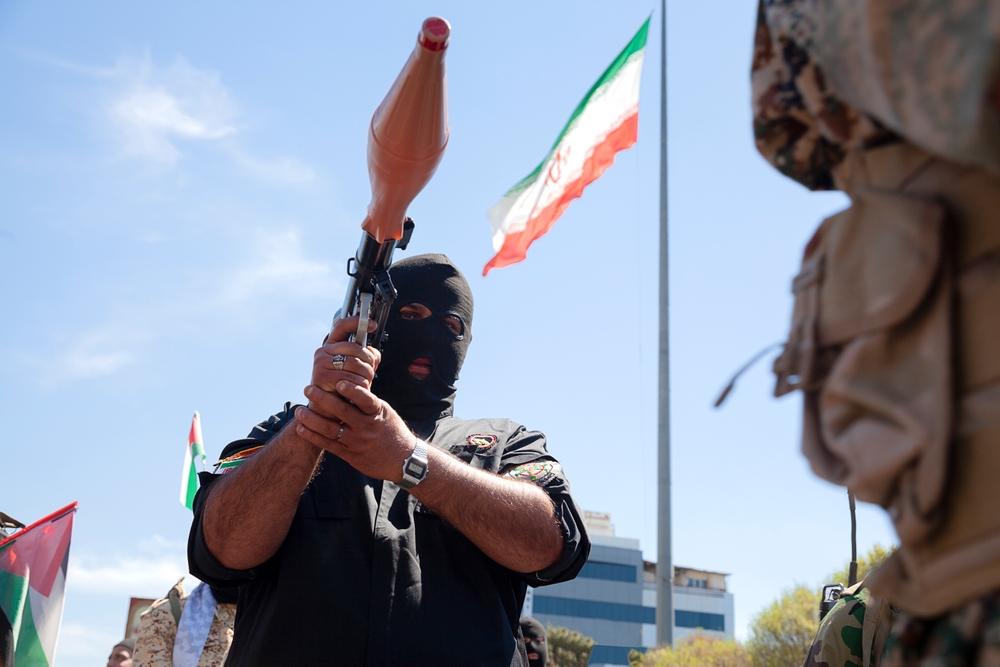
However, that calculation appears fundamentally flawed. The Iranian leadership had clearly prepared for this eventuality, swiftly activating a pre-arranged interim council—comprising President Masoud Pezeshkian, Chief Justice Mohseni-Eje’i, and the cleric Alireza Arafi—that has kept the security apparatus loyal and the streets under tight control. Although Washington may have expected a popular revolt, the immediate reaction on the ground has been a surge of nationalist indignation. State media reports and growing crowds in Tehran suggest that the killing of Khamenei has triggered a “rally-around-the-flag” effect. Many Iranians who are otherwise critical of the government now view the strikes as a violation of national sovereignty, vowing revenge rather than seeking liberation.
Domestic reactions in Tehran remain a complex tapestry of grief and cold pragmatism. Although state-run media broadcasts massive crowds mourning Khamenei in Enqelab Square, the reality is more fractured. Though the January 2026 protests had already pushed the regime’s legitimacy to a breaking point, the presence of American B-2s over Iranian soil has, for the moment, complicated the opposition’s narrative. Many citizens who were chanting against the IRGC just weeks ago now find themselves in the uncomfortable position of defending a sovereign territory under foreign bombardment, fearing that “liberation” by F-35s will only mirror the chaotic aftermath of Baghdad or Kabul.
The swiftness of Tehran’s succession suggests a regime that had already stress-tested its survival. By early March 3, the newly formed Interim Leadership Council had not only assumed control but issued a unified call for “sacred retaliation.” Washington bet on a vacuum, but the Council has effectively neutralized immediate power struggles by framing the strikes as an assault on the Persian nation itself, rather than just the clerical elite.
The fundamental flaw in the current strategy is the assumption that airpower alone can induce a stable political transition. The administration’s rhetoric suggests a dangerous overconfidence in the speed of this collapse. Even General Dan Caine, chairman of the Joint Chiefs of Staff, has signaled the need to “finish this war quickly and decisively” to avoid a protracted regional meltdown.
Yet, this push for a rapid conclusion ignores the reality of Iranian resilience. Decapitation strikes often lead to fragmentation and regional chaos rather than a stable transition to democracy. As Iranian proxies mobilize and the interim leadership in Tehran continues to target U.S. assets and Gulf neighbors, the “ultimate victory” promised by the White House seems increasingly distant.
This resilience puts President Trump in a precarious position, both internationally and domestically. By launching a major military campaign without the mandatory approval of Congress, he has bypassed the constitutional norms that govern American war-making. There is no evidence of an imminent Iranian threat to the U.S. mainland that would justify such unilateral action. Consequently, a bipartisan coalition led by Senator Tim Kaine is already moving to invoke the War Powers Resolution. If this conflict persists for another two weeks without a clear political resolution, the president may find himself fighting a constitutional battle at home that is just as fierce as the military one abroad.
The fallout is already being felt in global markets, where oil prices have surged following threats to the Strait of Hormuz. For the Gulf monarchs, the initial silence has turned into quiet panic as they realize that the American security umbrella may now be a lightning rod for Iranian missiles. They find themselves caught between a revisionist Iran with nothing left to lose and a Trump administration that appears to have launched a war without a “day after” plan. In Jerusalem, Netanyahu may see a strategic opening, but for Washington, the lack of a clear successor in Tehran and the absence of a domestic uprising suggest that Epic Fury has achieved tactical success at the cost of strategic disaster.
The coming days will test the limits of Trump’s “America First” doctrine. If the president prioritizes his domestic narrative of “total victory” over the stability of his regional alliances, the Middle East could face a decade of vacuum and violence. For now, the silence in Tehran is not the silence of a collapsed state, but the quiet preparation for a long and expensive retaliation.