
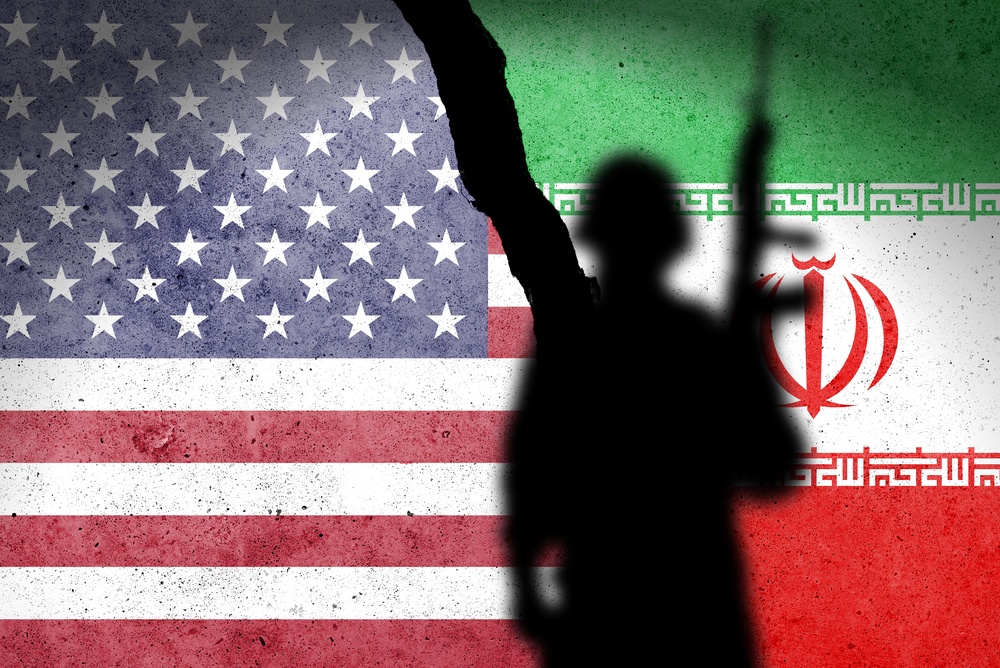
A war between the United States and Iran appears increasingly plausible. Both sides still hope to avoid conflict, yet it remains unclear how they can do so, as diplomacy has not yet succeeded. Although President Trump appears to be giving diplomacy additional opportunities in the hope that war can be avoided, the Trump administration has threatened not only targeted strikes against Iran but a more prolonged military engagement.
The military balance in the Middle East is changing rapidly as the United States deploys additional aircraft carriers and warships to the region in preparation for possible conflict. Iran is also following its war-planning procedures. According to reports from inside the country, both the Iranian Army and the Islamic Revolutionary Guard Corps (IRGC) are on heightened alert. Iran is reportedly sending more military equipment to border areas, adding short-range missiles to the western regions, and attempting to replace missile launchers and defensive systems that were destroyed during the 12-day war with Israel.
That 12-day war served as a test of Iran’s defensive and offensive capabilities, closely monitored by both U.S. and Israeli forces. However, Iran did not necessarily reveal the full extent of its capabilities, which would make prediction easier for its opponents. Israel managed to sustain several days of intense strikes while also conducting espionage and targeted operations on the ground even though Iran is 75 times larger than Israel. Nevertheless, Iran’s missiles frustrated Israel during the war, demonstrating that Tehran can increase the costs of a prolonged conflict.
However, a key question is how Iran would respond to the extensive network of U.S. military bases across the region and the large deployment of battleships and aircraft carriers, particularly since a determined war could draw additional actors into the conflict.
Iranian Responses
Iran, China, and Russia began joint naval exercises in February 2026 in the Gulf of Oman and the Strait of Hormuz—the critical artery through which much of the region’s oil reaches global markets—as a show of force directed at U.S. military presence. The “Maritime Security Belt” drills include vessels from all three countries and are intended to enhance intelligence cooperation in the event of a conflict between Iran and the United States. These two partners of Iran do not appear to have plans to become directly involved in a war, but they may be willing to strengthen Iran’s counterintelligence and defensive capabilities.
U.S. military strength is immense, yet it is not without vulnerabilities. Iran’s large size makes it a difficult target in war, especially if airstrikes are not followed by ground operations. The country’s scale and topography present serious challenges for invading forces. The Iranian Army and IRGC would likely resist fiercely, potentially prolonging any conflict. Iran also possesses a wide network of missiles, drones, and other weapons distributed across strategic locations, many of them in mountainous terrain, as well as fast-attack boats equipped with short-range missiles. These systems are designed to fit within Iran’s limited defense budget by emphasizing relatively low production costs combined with operational effectiveness. The IRGC’s decentralized structure, divided into multiple regional commands capable of operating independently if central command is disrupted, further complicates efforts to neutralize its forces. Iranian regional proxy groups also retain operational capacity, particularly in Iraq, and some reportedly maintain underground storage sites containing large numbers of inexpensive drones, rockets, and missiles.
Iraqi powerful Shia cleric Ali al-Sistani, along with other Iranian clerics, may issue a religious ruling (fatwa) calling for jihad against the United States. Such a fatwa could mobilize Shia militias and individuals in Iran, Iraq, and Lebanon, as well as former members of the Zaynabiyoun Brigade from Pakistan and the Fatemiyoun Brigade from Afghanistan—most of them designated as terrorist groups—to target U.S. interests and potentially U.S. citizens in the region and beyond.
Scenarios
There is little doubt that the United States possesses overwhelming material superiority relative to Iran and remains the most capable military power in the international system. Israel could also contribute to U.S. operations through intelligence support, technological assistance, or covert activity. However, raw capability alone does not determine outcomes. Although U.S. forces are extensive in scale, technology, and global reach, this superiority does not automatically translate into a quick or decisive victory if the opponent can absorb losses and prolong the conflict.
One possible outcome is a tense standoff in which both the United States and Iran possess the ability to impose serious costs on the other. The United States can inflict overwhelming military damage through airpower, naval strength, and advanced technology. However, Iran retains the capacity to make any conflict costly. It can escalate regionally, target U.S. bases and allies, disrupt maritime traffic in the Strait of Hormuz, launch missile and drone attacks, and rely on asymmetric tactics.
These consequences would not be confined to the battlefield. Disruptions to energy markets and global shipping routes would create wider economic and political pressures, affecting not only the two adversaries but also the broader international system. As the anticipated costs of war increase on both sides, the incentive to initiate a full-scale conflict correspondingly declines.
A second possible outcome would be a short and decisive campaign in which one side achieves clear dominance. In purely conventional terms, the United States holds overwhelming military superiority over Iran. Its advanced airpower, precision strike capabilities, naval strength, and global logistics far exceed Iran’s capabilities. However, military superiority alone does not automatically guarantee a quick or decisive victory. Iran’s strategy is not built on matching U.S. power directly, but on increasing the cost of confrontation and demonstrating a willingness to endure significant losses. Its political structure, security institutions, and ideological narratives—particularly those emphasizing sacrifice and martyrdom—are designed to sustain internal cohesion during periods of external pressure. This creates a strategic imbalance: one side possesses far greater material power, while the other relies on resilience, endurance, and cost-imposition. Such asymmetry makes outcomes difficult to predict and reduces the likelihood that any conflict would be as rapid or straightforward as raw military comparisons might suggest.
A third possible outcome is a prolonged and costly war in which neither side can secure a quick victory. The United States has the financial resources, military infrastructure, and global reach to sustain extended operations. At the same time, Iran’s defensive depth, vast geography, mountainous terrain, decentralized command structure, and asymmetric capabilities could prevent rapid defeat. In such a scenario, the conflict would likely become drawn out and increasingly expensive. A long war would impose heavy military, economic, and political burdens on both sides without guaranteeing decisive gains. While some within Iran—including segments of the opposition—might initially view war as a potential path to regime change, public sentiment could shift if the conflict drags on and suffering intensifies. Prolonged instability often erodes early enthusiasm and replaces it with fatigue and frustration.
A final possibility is the limited and coercive use of force designed not to achieve outright victory but to pressure the opponent into concessions. In this scenario, similar to the 12-days war, military action would serve as a tool of leverage rather than conquest. The objective would be to raise the costs of resistance to influence the other side’s behavior.
However, such an approach carries significant risks. Efforts to increase pressure can also intensify uncertainty, miscalculation, and mistrust. What begins as a controlled attempt to signal resolve may escalate beyond initial intentions, particularly if either side fears future vulnerability or doubts the other’s commitments. In that sense, limited force can sometimes trigger the very conflict it was meant to prevent.
A degree of uncertainty surrounds these scenarios, making decisions about war particularly difficult. This uncertainty stems from the risk of miscalculating and misunderstanding the opponent’s resilience, as well as the potential regional consequences if the conflict escalates. This concern has also been echoed by Gen. Dan Caine, chairman of the Joint Chiefs of Staff, who reportedly expressed caution regarding a major military operation against Iran. Caine warned of significant risks, including potential U.S. casualties and a prolonged conflict.