
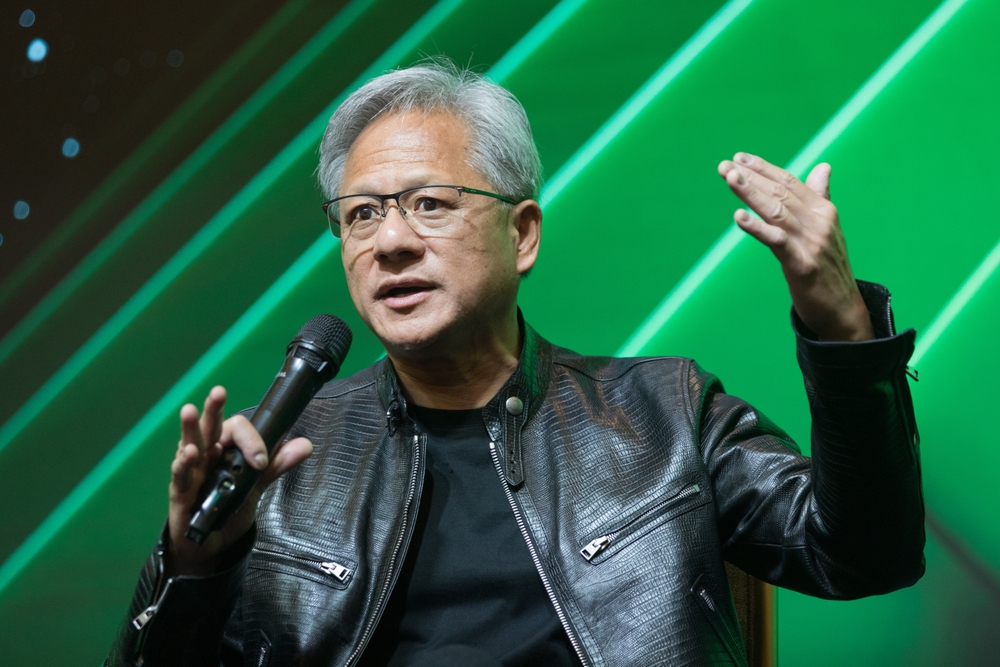
The odd thing about the espionage affair now wrapped around Jensen Huang is how little espionage it actually contains. Eleven days have passed since The New York Times reported that American intelligence agencies regard Alice Huang, a senior executive at the Singapore cloud company Megaspeed, who was seen at Nvidia’s chief executive’s side in Taiwan more than once, as a Chinese asset.
In that time nobody has been charged, no stolen design has surfaced, and the Times itself reports that President Trump was briefed on the intelligence roughly a year ago and chose to do nothing. Nvidia calls the contacts routine, with its spokesman John Rizzo noting that Huang meets “thousands of customer executives every year.” Beijing calls the story groundless speculation, and Singapore has denied investigating Alice Huang’s alleged intelligence links while confirming that its separate probe into Megaspeed goes on.
None of this has stopped the affair from climbing the steps of Capitol Hill. A day after their party lost both chambers in the midterms, three Republican chairmen, Brian Mast, John Moolenaar and Rick Crawford, asked Huang to a closed-door briefing on November 18.
Washington has framed the whole imbroglio as a loyalty test. Was the most important man in the AI supply chain compromised, and did the White House look the other way?
Those are fair questions for intelligence committees, but they muffle a more expensive one. Whatever comes out of that briefing room, the affair has already raised the marginal cost of financing America’s AI build-out through three channels, namely key-person risk, compliance friction and the unpredictability of export controls. It has also done so in the very year that build-out stopped paying for itself.
On Borrowed Money
For most of the AI race, the giants paid their own bills. That era ended this autumn.
According to the Carson Group, the combined free cash flow of Microsoft, Alphabet, Amazon, Meta, and Oracle turned negative in the third quarter for the first time on record, with Microsoft the only one still in positive territory. Alphabet burned through $9.07 billion in the quarter. Meta announced a $95 billion share sale, its first new stock since 2013, and Nvidia, AMD, and Broadcom, the very companies whose chips Meta is buying, have expressed interest in taking up to $5 billion of it. Microsoft returned to the bond market with a $25 billion deal on the same Thursday the Times story broke. By late July, Goldman Sachs had already counted $489 billion of AI-related bonds and loans for the year, against its estimate of $322 billion for the whole of 2025.
In plain words, America’s AI build-out is now being paid for with other people’s money, and other people charge for uncertainty.
The giants can absorb a little more of it; Microsoft’s bonds drew more than four times the demand on offer. The newer and smaller players cannot. CoreWeave, the best known of the so-called neoclouds that rent out Nvidia chips for AI applications, carried $35 billion of debt by the end of June, and its biggest loan this year won an investment-grade rating largely because it was backed by Meta contracts rather than by CoreWeave’s own credit.
Further down the ladder, operators borrow on the strength of Nvidia’s own promise to rent back whatever capacity they fail to sell, commitments that stood at $36 billion in July. Nvidia has quietly become the guarantor of last resort for a whole tier of the industry, which means that any shock to its standing in Washington flows straight into the borrowing costs of firms most Americans have never heard of.
Three Channels, One Bill
The first channel runs through Huang himself. He has led Nvidia since co-founding it in 1993, maintains more than 60 direct reports, and has never named a successor. Until last month, key-person risk at Nvidia was an actuarial worry about one man’s age and health.
It has now acquired a political edge, because Huang is also Nvidia’s chief negotiator in Washington, and a busy one. Before 2025, The Times notes, he seldom visited Washington and stayed out of politics. Then the restrictions started to bite. In April 2025 he attended a $1 million-a-head dinner at Mar-a-Lago, and within days the White House shelved H20 controls that had been months in preparation.
That reprieve lasted less than a week. Nvidia lobbied against Biden’s AI diffusion rule, which had restricted the practice of buying chips in bulk for Southeast Asian data centers that serve Chinese clients, and Trump rolled it back. After Huang met the president in July, the H20 ban was lifted within days. In August, Trump told reporters that he had asked for 20 percent of Nvidia’s China sales and that Huang had bargained him down to 15.
December brought the largest gains. On the day Huang called on Trump and lawmakers, Congress dropped the GAIN AI Act, which would have made chipmakers serve American buyers before Chinese ones. The White House had pressed lawmakers to kill it. Huang called the bill “even more detrimental to the United States than the AI Diffusion Act.” Five days later, Trump cleared the H200 for China against a 25 percent fee. Elizabeth Warren traced that decision to a “backroom meeting” and to Nvidia’s donation to the White House ballroom, which The Times puts at no less than $20 million. Nvidia’s federal lobbying bill for 2025 came to almost $5 million.
Laid end to end, those dates show export controls that loosened each time Huang reached the president. The Times also reports the view from inside government. Current and former officials say that Huang’s closeness to Trump impeded efforts to clamp down, and they describe Commerce investigations and proposed sanctions involving China or Nvidia as having ground to a halt. That access is what lenders to a backstopped neocloud have been underwriting. A chief executive whose name turned up in intercepted intelligence traffic—and who may spend part of the winter answering questions in a secure room on Capitol Hill—has compromised that access. Rules that bent with his standing can bend back as it fades.
The second channel is compliance friction, and here the Megaspeed misadventure lands on ground that was already soft. The Times reported back in 2025 that Megaspeed was under scrutiny for possibly helping Chinese buyers get around American controls, and The Hill now reports that firms tied to Alice Huang kept buying Nvidia chips. In March, after prosecutors charged a Supermicro co-founder over servers packed with Nvidia chips and shipped to China, Senators Jim Banks (R-IN) and Elizabeth Warren (D-MA) asked Commerce to pause licenses for China and for intermediaries in Malaysia, Thailand, Vietnam, and Singapore, warning that regulators could no longer rely on “assurances from executives who have a financial stake in the outcome.”
For Southeast Asian governments that spent a decade selling themselves as neutral ground for data centers, this is an unwelcome promotion to the rank of suspected smuggling corridor. For anyone lending against a GPU cluster with a Southeast Asian address, it means more end-user checks, slower license reviews, and tighter loan terms, all of which cost money even if nobody is ever found guilty.
The third channel, the erratic course of export controls, may prove the costliest. Washington blocked Nvidia’s H20 chip for China in April 2025, at a projected cost to the company of $5.5 billion, and then approved H200 sales in December under what Commerce called “controlled conditions.” Within four months, senators wanted those licenses frozen.
Today, the rulebook is being reopened by a newspaper story and a letter whose signatories will surrender their gavels in January, since Democrats won both chambers on November 3. That pressure is likely to outlive the change of hands, given that Warren co-signed the March letter. Nvidia’s rent-back commitments typically run six years. A lender can live with a strict rule for six years; what it cannot price is a rule that shifts with every leak.
An Old Reflex
There is something familiar about all this. In July 1987, after the Toshiba-Kongsberg affair revealed that Japanese and Norwegian machine tools had helped the Soviet Union build quieter submarine propellers, members of Congress gathered on the Capitol lawn to smash a Toshiba radio with sledgehammers, and Representative Duncan Hunter called the sale “an act of treason and treachery.” The Senate then voted to ban Toshiba from the American market for at least two years.
In 1987, at least, the machines had actually reached Leningrad. In 2026, nobody has shown that anything left Santa Clara, and the theater has arrived anyway.
By the Times‘ account, the White House sat on the intelligence for roughly a year without warning Huang, approved H200 sales to China in the meantime, and seated him at the state dinner it gave Xi Jinping in September. There may have been sound reasons for the silence, since a warning could have tipped off Alice Huang to the surveillance. But the leak has now done everything a warning would have done, in the week of the midterms and at a time when the AI trade was already asking how it would pay its bills. What began as a counterintelligence file has been released as a market event, and the levy on American AI is being collected from bondholders and lenders by a government that, it seems, could not decide for 12 months whether its own intelligence mattered.
None of this means that the suspicion should be waved away. If Beijing did cultivate Huang, Congress has every right to ask what he was told and what he said. But vigilance does not have to be conducted by leak and letter.
Two steps would muffle the damage before November 18 without anyone having to settle whether Alice Huang was a spy. Nvidia’s board should publish a succession framework that tells markets who runs a $5 trillion company if its founder is tied up in hearings for months. Commerce, for its part, should turn end-user verification for Singapore, Malaysia, Thailand and Vietnam into a published rule with a fixed review date, so that license conditions stop changing with each indictment and each headline.
The committees want Huang behind closed doors on November 18, the day after Nvidia reports its quarterly results. Whatever he tells them, Beijing has already collected something from this affair without stealing a single file: an American AI industry that now pays a little more for every dollar it borrows, courtesy of Washington’s own suspicions.