
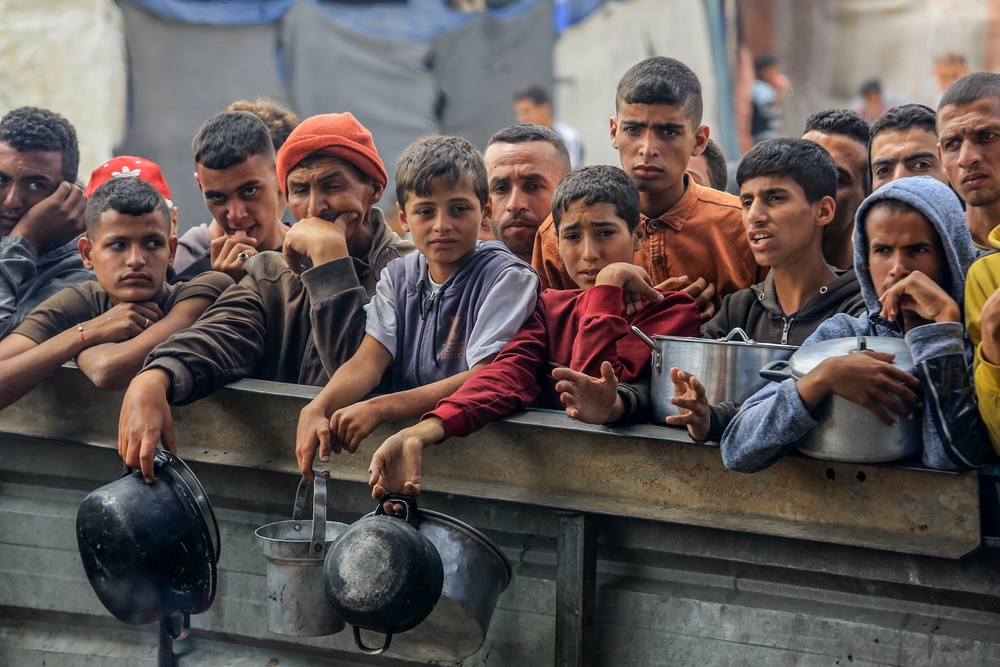
On February 19, 2026, President Donald Trump hosted the first official meeting of his so-called “Board of Peace.” Framed as a mechanism to oversee Gaza’s reconstruction and presented as a new international tool for conflict stabilization, the inaugural session in Washington brought together representatives from roughly two dozen countries. At the meeting, Trump announced that the United States would contribute $10 billion toward rebuilding Gaza. An additional $7 billion in relief funding was pledged by nine nations: Kazakhstan, Azerbaijan, the United Arab Emirates, Morocco, Bahrain, Qatar, Saudi Arabia, Uzbekistan, and Kuwait. Meanwhile, major Western powers such as the United Kingdom, France, Germany, Italy, and Canada declined formal membership or limited their participation.
The board has been portrayed as a new instrument for addressing conflicts in volatile regions around the world. Yet several key U.S. allies, along with UN officials and other critics, have raised concerns that the initiative could undercut the role of the UN, an institution to which the United States still owed nearly $4 billion in arrears at the time of the meeting. At a moment when multilateral cooperation is already fragile, constructing parallel diplomatic structures risks weakening rather than reinforcing the legitimacy required for sustainable peace.
Those concerns were echoed at the 2026 Munich Security Conference, where EU High Representative Kaja Kallas stated that the Board of Peace does not reflect the relevant UN Security Council resolution. She noted that the resolution provided for a Board of Peace for Gaza that was limited in time until 2027, required Palestinian participation, and was explicitly tied to Gaza. By contrast, she observed that the statute of the current Board of Peace makes no reference to those limitations or conditions. The gap between the multilateral mandate and the structure now being implemented deepens questions about legitimacy and scope.
Even more troubling is the composition of the board and its related structures. Participants range from established governments to leaders whose commitments to human rights and democratic norms are deeply contested. Israel, represented by Prime Minister Benjamin Netanyahu, is included despite ongoing international scrutiny over its actions in Gaza. Figures such as Jared Kushner and former British Prime Minister Tony Blair reportedly sit on executive committees shaping its direction, raising further questions about governance and accountability.
Notably, despite the meeting’s focus on Gaza, there was only one Palestinian speaker at the opening: Ali Shaath, head of the U.S.-backed National Committee for the Administration of Gaza. His presence underscored the limited role afforded to the people most directly affected. When a body tasked with shaping the political and physical future of Gaza includes a single Palestinian voice at its launch, it suggests that Palestinians are being positioned more as recipients of decisions than as authors of their own political destiny.
To be clear, reconstruction and humanitarian relief are urgently needed. But reconstruction cannot substitute for political resolution.
The contradictions extend beyond representation. The United States is simultaneously positioning itself as a leader of a new peace architecture while sanctioning International Criminal Court officials. It has singled out Francesca Paola Albanese, the UN Special Rapporteur on the situation of human rights in the Palestinian territories occupied since 1967 for pursuing investigations into alleged war crimes and crimes against humanity involving Israel. It has also repeatedly voted against ceasefire resolutions at the Security Council, blocking or diluting calls for an immediate halt to hostilities. One cannot credibly champion peace while penalizing accountability mechanisms and resisting ceasefire efforts within established multilateral forums. Accountability is not a barrier to peace. It is a foundation for it.
This initiative also unfolds against a backdrop of escalating realities on the ground. On December 21, 2025, Israel’s Cabinet approved a proposal for 19 new Jewish settlements in the occupied West Bank, accelerating expansion in territory widely recognized under international law as occupied. Such moves further erode the viability of a contiguous Palestinian state and undermine the framework of a negotiated two-state solution
Political rhetoric has intensified these concerns. In a recent interview with right-wing commentator Tucker Carlson, U.S. Ambassador to Israel Mike Huckabee responded to a question about biblical claims to land in the region by stating, “It would be fine if they took it all,” before clarifying that Israel is not actively seeking expansion and has a right to security in the territory it legitimately holds. Regardless of later clarification, invoking expansive theological claims in discussions of modern territorial disputes blurs the line between religious narrative and international law. Peace processes cannot rest on scriptural entitlement. They must rest on legal principles and negotiated agreements.
Any genuine transition in Gaza must place Palestinians firmly in the driver’s seat of their own political future. While the United States and Israel move to shred Hamas’s governing legitimacy, the group continues consolidating its grip by embedding loyalists in government roles and controlling revenue and salaries. Although Hamas claims it would allow a technocratic committee under the National Committee for the Administration of Gaza to assume governance responsibilities, Israel has not granted the committee access to the territory. At the same time, Hamas’s continued placement of loyalists in key positions raises serious doubts about how legitimate any U.S.-backed transitional administration would be in practice. There is no defeating Hamas while Palestinians remain sidelined from shaping their own governance. Sustainable change requires credible Palestinian leadership and genuine political agency.
International law is clear. The right of peoples to self-determination is enshrined in Article 1 of the United Nations Charter and reaffirmed in Article 1 of both the International Covenant on Civil and Political Rights and the International Covenant on Economic, Social and Cultural Rights. These instruments recognize that all peoples have the right to freely determine their political status and pursue their economic, social, and cultural development. That right is not contingent on donor conferences, geopolitical convenience, or reconstruction contracts. It is foundational.
The people of Gaza and Palestinians more broadly do not need a rebranded administrative mechanism that promises redevelopment without political agency. That approach simply manages symptoms while leaving the political disease untouched. As much as Netanyahu has attempted over the years to fragment or sideline Palestinian political institutions, any serious discussion about Gaza cannot be divorced from the broader question of Palestinian statehood and the systematic marginalization of the Palestinian Authority. Reconstruction without a credible political horizon only deepens instability. Ignoring statehood does not neutralize it as an issue; it ensures that the conflict remains unresolved.
The complex post-conflict transitions in places like Bosnia, Iraq, Afghanistan, Libya, and South Sudan have proven that reconstruction and political transformation are profoundly complicated processes that demand legitimacy, patience, and sustained engagement. In each of these cases, externally driven frameworks that moved faster than political consensus or sidelined local ownership produced fragile institutions and enduring instability. They cannot be treated as vanity projects or branding exercises. Durable peace requires humility, credibility, and a commitment to inclusive political settlement rather than externally engineered management.
Until those elements become central to the process, any so-called board of peace risks becoming a structure that manages instability rather than resolving it. Any initiative that avoids serious negotiations toward two viable states rooted in human rights, defined borders, equitable land arrangements, and mutual security is not peacebuilding but, rather, a bandage over a festering wound.