
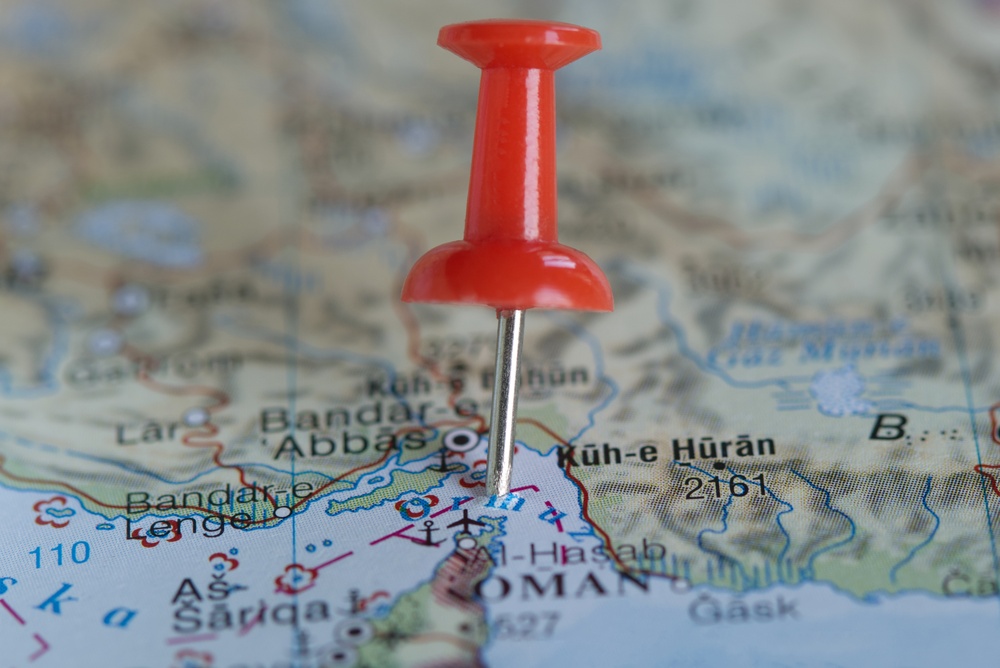
The June ceasefire did not produce a postwar order in the Strait of Hormuz. It produced a pause. And now that pause has given way to renewed U.S. strikes, Iranian retaliation across the Gulf, and another collapse in commercial confidence. By July 9, tanker traffic was at a near standstill. Only two tankers were publicly recorded crossing in the early hours, while other vessels switched off tracking systems or waited outside the waterway.
That sequence should end a familiar Washington illusion: that maritime security can be restored by demonstrating military superiority. The United States can destroy radar sites, missile stores, and coastal defenses. It can retaliate after an attack on a ship. What it cannot do by force alone is make crews sail, insurers write policies, or energy markets believe that the next exchange of fire will not begin tomorrow.
Hormuz is too important for that distinction to remain abstract. In 2024, roughly 20 million barrels of oil per day moved through the strait, about one-fifth of global petroleum liquids consumption. Around one-fifth of global liquefied natural gas trade followed the same route, and more than four-fifths of the crude, condensate, and LNG passing through Hormuz was bound for Asian markets. Alternative pipelines can soften an interruption, but they cannot replace the waterway.
The latest fighting also reinforces the argument Imran Khalid has made that Iran emerged from the first phase of the war with more bargaining leverage than the conventional military balance suggested. Washington and Israel damaged expensive, visible parts of Iranian power, but they did not eliminate Tehran’s ability to impose uncertainty with dispersed missiles, drones, mines, small craft, and control over routes along its coast. The relevant measure of power is no longer simply how many targets the United States can hit. It is whether those strikes can produce a political outcome that survives contact with the next tanker.
So far, they have not. U.S. Central Command said it struck about 90 Iranian military targets in the latest round of attacks. Iran answered by attacking U.S. military infrastructure in Gulf states. Commercial shipping, caught between the two, again became both the stated reason for escalation and one of its first casualties. The cycle is circular: attacks on vessels bring airstrikes; airstrikes bring retaliation; retaliation makes the strait still less insurable.
The numbers reveal the gap between official claims and commercial reality. Before the war, roughly 125 to 140 ships crossed Hormuz each day. During the partial reopening, traffic recovered to about 40 daily transits, still far below normal. After the latest escalation, some war-risk underwriters advised shipping companies to pause voyages, and several tankers turned back. By mid-July, traffic remained depressed, vessels increasingly sailed “dark,” and insurance costs climbed again. A destroyer on the horizon does not cancel those calculations.
Iran’s leverage, however, should not be confused with a legitimate right to dictate passage unilaterally. Threatening ships that use routes Tehran has not approved is not a durable security system. Neither is Washington’s claim that bombing coastal targets can guarantee freedom of navigation. One side can disrupt the strait; the other can punish the disruption. Neither can create rules that shipping companies, Gulf states, and energy importers trust.
This is why the argument over who “controls” Hormuz is ultimately misplaced. The waterway borders Iran and Oman, serves the export lifelines of the Arab Gulf states, and supplies economies from India and China to Japan and South Korea. Its security cannot rest on an American naval monopoly, an Iranian veto enforced by missiles, or an improvised arrangement that lasts only until one party believes it has been cheated.
The immediate need is narrower and more practical than a grand regional settlement. Washington should return to mediation and seek an interim maritime compact before pursuing another broad ceasefire. Iran, the Gulf Arab states, Oman, the United States, and major Asian energy buyers should agree to a no-strike zone for commercial vessels, ports, and energy infrastructure; a shared incident hotline; mutually notified transit procedures; and an independent mechanism to investigate attacks. Insurers and shipping companies should have a formal seat in that process because their risk assessments, not government communiqués, determine whether the strait is functionally open.
Such a compact would not settle every dispute over sanctions, enrichment, regional alliances, or the legal status of proposed fees. It would create a barrier between those disputes and the physical safety of merchant crews. It could also provide a foundation for a wider Gulf maritime forum in which outside powers support surveillance, demining, rescue, and information-sharing without claiming command over the region’s political order.
The energy consequences make delay costly. The International Energy Agency says the conflict and the de facto closure of Hormuz have already delivered a major shock to gas and oil markets. The burden is not limited to oil companies or governments. It reaches electricity bills in import-dependent countries, transport costs, food prices, and the livelihoods of sailors and coastal communities. Every failed truce shifts those costs outward to people who had no role in starting the war.
Washington therefore faces a choice. It can continue treating each maritime incident as a test of credibility, answering every disruption with another round of strikes. Or it can recognize that credibility is not measured by how quickly the United States can retaliate but by whether it can help build an arrangement that makes retaliation less necessary.
The collapse of the ceasefire does not prove that the United States needs more control over the Strait of Hormuz. It proves that no state has enough control to secure it alone. Iran has demonstrated the power to obstruct. The United States has demonstrated the power to destroy. The missing power is the ability to establish rules that neither side can overturn with a missile. Until that changes, the strait may reopen from one day to the next, but it will not be secure.
Michael Harrison is an independent writer focusing on politics, history, and global affairs.