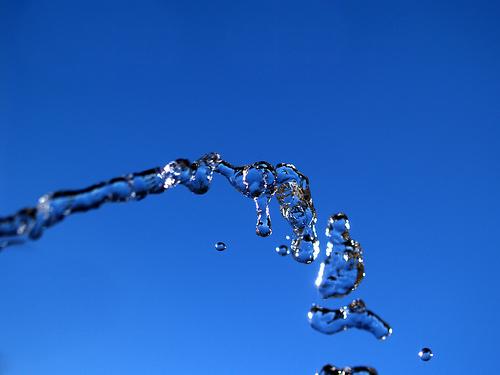
After years of grassroots pressure, the UN General Assembly will debate a resolution July 28th on the right to safe and clean drinking water and sanitation.
U.S. Special Envoy for Climate Change Todd Stern traveled with Assistant Secretary of State for Western Hemisphere Affairs Arturo Valenzuela to Chile, Peru, and Ecuador last week, to discuss climate change with his government counterparts and civil society. Deepening bilateral and multilateral cooperation to increase economic growth, cutting greenhouse gasses, and helping climate-vulnerable populations were on the official program.
Big oil spills are no longer news in Africa. The Niger Delta, where the wealth underground is out of all proportion with the poverty on the surface, has endured the equivalent of the Exxon Valdez spill every year for 50 years by some estimates
Spills, leaks and deliberate discharges are happening in oilfields all over the world and very few people seem to care.
At a time when the United States should be creating a new Manhattan Project for safe, clean, green energy from the sun, wind, and tides, the Obama administration is trying to recreate the old Manhattan project, training our best and brightest to continue to wreak havoc on the planet with nuclear know-how.
In the wake of the environmental disaster caused by the 20 April explosion of BP’s Deepwater Horizon oil rig, the oil multinational was immediately pressured into providing adequate compensation by the US government. This is an experience palpably not shared by Nigerian people in the face of another multinational, Shell, in the country’s Niger Delta, writes Alex Free.
President Morales called the alternative climate summit following the failed United Nations Climate Change conference in Copenhagen, COP15, in 2009. Morales, in his opening address in Bolivia, urged individual lifestyle changes, with flagrant consumerism relying on disposable products and plastics to be replaced with new standards of living in harmony with the earth. Venezuelan President Hugo Chavez was among the dignitaries and participants from 150 countries. Although originally 5,000 to 10,000 people were expected, ultimately there were 30,000 at the gathering held April 20–22 in Cochabama, Bolivia.
Just weeks before today’s Earth Day, and for the second time in little more than a year, environmental groups have teamed with governments to create massive new marine protection areas across wide swaths of the world’s oceans. Both times, however, there’s been something (pardon the pun) fishy about these benevolent-sounding efforts at environmental protection.
Without much fanfare, U.S. legislators last December unveiled a new climate bill that just might succeed in breaking the political gridlock that has blocked action on global climate change. The bill, co-sponsored by Senator Maria Cantwell (D-WA) and Susan Collins (R-ME), is a sharp departure from the cap-and-trade bill that passed the House of Representatives last June but subsequently died in the Senate.
Matt Ryan, the mayor of Binghamton, New York, is sick and tired of watching people in local communities “squabble over crumbs,” as he puts it, while so much local money pours into the Pentagon’s coffers and into America’s wars. He’s so sick and tired of it, in fact, that, urged on by local residents, he’s decided to do something about it. He’s planning to be the first mayor in the United States to decorate the façade of City Hall with a large, digital “cost of war” counter, funded entirely by private contributions.