Though not iron-fisted like his father, the hand that Syrian President Bashar al-Assad cracks down with is heavy.

Hey, Syrians, What Are You Complaining About? At Least Deraa Is Not Hama
read more

Though not iron-fisted like his father, the hand that Syrian President Bashar al-Assad cracks down with is heavy.

For three years, critics of AFRICOM have charged that it serves to militarize U.S. foreign policy in the region, as opposed to aid and diplomacy.
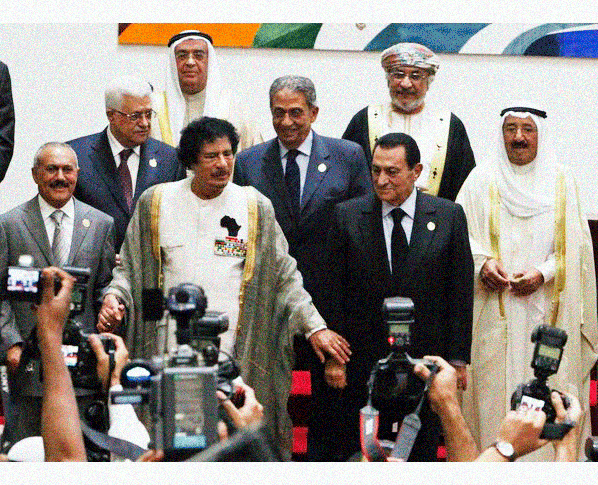
Arab leaders are concerned about criticism for green-lighting Western military action in Libya, should it backfire.
In its threat to use force against the Libyan government, the international community put Muammar Gaddafi into what chess aficionados calls zugzwang. This clever gambit traps the opponent so that any move worsens his or her position. Thus, if Gaddafi continued to battle the opposition in Benghazi, several air forces were at the ready to bombard his army. And if the Libyan leader pursued a ceasefire and political negotiations, he risked a further outbreak of protests in Tripoli from an emboldened population. Along either path lay probable checkmate.

As Japan’s nuclear crisis deepened, Gaddafi revealed that he would cancel oil contracts with Europe and sign up instead the BRIC countries.

In our special focus on Islamophobia, Farid Panjwani talks about the relationship between religion and citizenship, the impact of Sharia law, and the role of Muslim faith schools.
However different the two, Libya could still end up like Iraq today: a nation deeply divided not by sect and language but by geography and tribe.

Chevron’s claim that it didn’t get a fair shake from the Ecuadoran legal system is laughable since it was the one that insisted on moving the case from U.S. jurisdiction to South America.
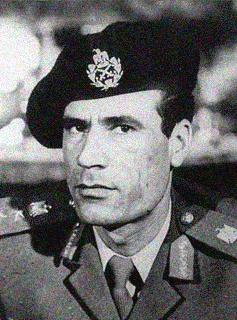
Unless the world is prepared to stand by and watch Libyans massacred, there is clearly a need for intervention.
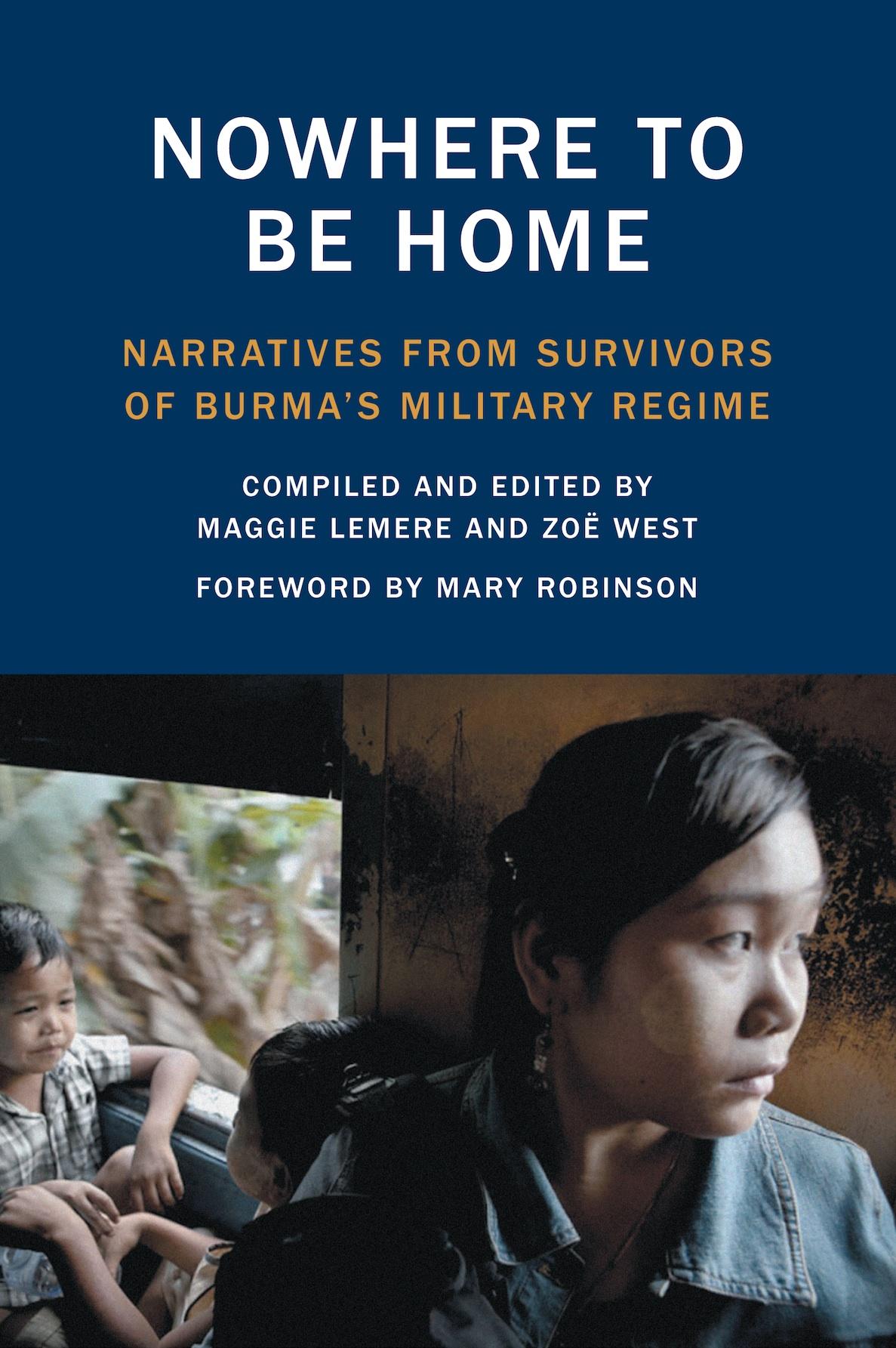
When I was in the army, I thought the guerillas were trying to break my country, to destroy my country—this is how I used to think. Not now, now I’m not the same. I don’t know why people join the military. As for myself, I was forced to be a soldier. If I had stayed with my family, I would not have been a soldier. I think the army takes children because they need to strengthen their forces, increase the number of soldiers. I think there is a reward for each soldier who catches a child. Any time a soldier recruits someone to join the force, they get a lot of money. Older soldiers told me that if they recruit someone, then they can quit the army.