
Few political systems are as intricately engineered as Lebanon’s. Power is constitutionally divided among a Maronite Christian president, a Sunni prime minister, and a Shia speaker of parliament, an arrangement known as the “three presidencies.” Parliamentary seats, meanwhile, are split evenly between Christians and Muslims, and cabinet posts are parceled out by sect. This design reflects Lebanon’s extraordinary religious and ethnic diversity, and this heterogeneity carries through to its parliament: more than a dozen blocs and a cluster of independents share the 128 seats, a majority takes 65, and no single party comes anywhere close. In fact, no party in Lebanon’s history has ever held more than roughly a quarter of the seats.
Power must therefore be assembled through shifting sectarian coalitions rather than won outright, which produces serious gridlock. Given Lebanon’s geographic positioning, small size, consistent attacks from Israel, and entanglement with Hezbollah, it might ordinarily be forced into a hardline foreign policy that capitulates to Iran. Instead, Lebanon has operated under a model of “disassociation.” This commitment to stay out of regional conflicts was adopted as the Syrian civil war threatened to pull the country back into sectarian violence.
Remaining aloof through disassociation is particularly difficult when foreign actors not only influence the government but undermine foreign policy alignments by adopting a warring posture against their host nation’s desires. This, unfortunately, is the case for Lebanon.
Foreign powers have long meddled in Lebanon. The Saudis, for instance, have played a hand in backing Lebanon’s Sunni populace. Syria, meanwhile, occupied the country from 1976 until 2005, retaining allied factions even after the assassination of Rafik Hariri triggered the Cedar Revolution and forced its troops out.
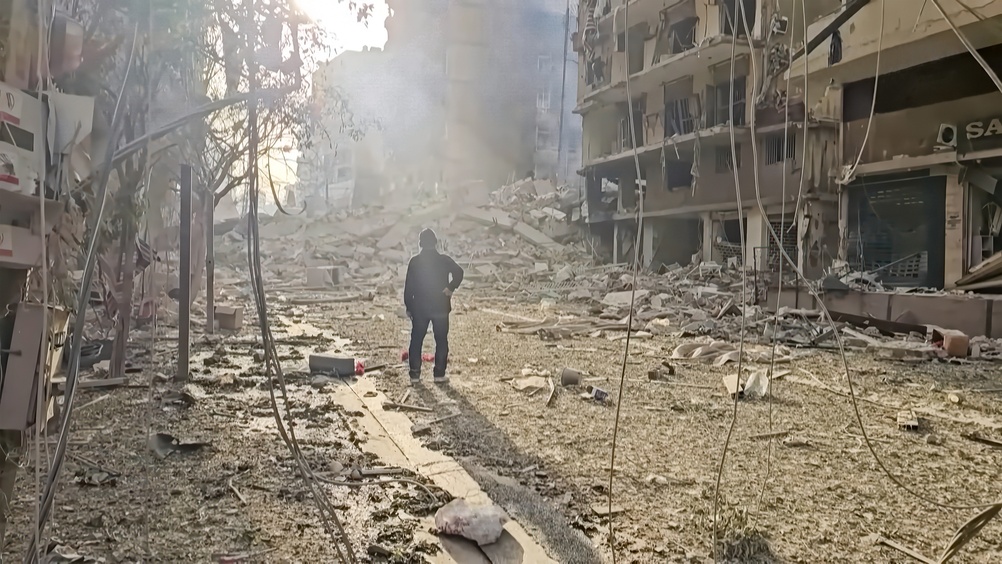
Most notably, however, the Iranian-backed Hezbollah has done the most to damage disassociation. Almost immediately after the doctrine was adopted through the Baabda Declaration of 2012, Hezbollah responded to the dictates of Tehran, rather than Beirut, by entering the war in Syria on the side of the government of Bashar al-Assad. It has, since then, been responsible for importing jihadist car bombings and incursions across the border by groups like the Nusra Front and ISIS onto Lebanese soil. Again following Tehran’s orders without Beirut’s consent, Hezbollah dragged Lebanon into a war with Israel that began with cross-border exchanges in October 2023 and escalated into full-scale war in 2024.
In this regard, Hezbollah injures Lebanese foreign policy by maintaining its own armed force and its loyalty to Iran, which lets it commit the entire country to conflicts it repeatedly enters. Despite the Lebanese government’s official aversion to these decisions, the world has treated Hezbollah’s actions as Lebanon’s, both because they originate on Lebanese soil and because Hezbollah has held seats in parliament and the cabinet.
So, although much of the country and its divided parliament resents Hezbollah, Lebanon cannot credibly claim a single, unified foreign policy, because one faction answering to Tehran overrides the state’s declared neutrality at will, and the country as a whole shoulders the brunt of the blame as well as the consequences, which include a rupture with the Gulf states, frequent Israeli shelling, and serious security challenges for residents of southern Lebanon. Even without Hezbollah, though, Lebanon’s confessional power-sharing system prevents a genuine national identity or a unified foreign policy from forming.
Lebanon is not alone in the region in its pursuit of a strategy of disassociation. Sometimes the policy works and sometimes it does not. Oman is perhaps the best model of success. The small Gulf state follows a posture of active neutrality, a state-centric doctrine rather than ideological sympathy for any side or sect. It keeps open channels to everyone, which is why it has spent years as the back channel between Washington and Tehran.
Iraq is the example of when conditions, very similar to Lebanon’s, cause disassociation to fail. Iraq is split among Shia, Sunni, and Kurds. It hosts Iranian-backed Shia militias, the Popular Mobilization Forces, that function much like Hezbollah, holding weapons outside the regular army and answering in part to Tehran. Its official policy is to stay out of regional wars and avoid becoming, quite literally, a battleground between the United States and Iran. Just like Lebanon, that declared neutrality is repeatedly undercut when the militias act on their own, firing on U.S. forces or Israel regardless of the wishes of Baghdad and the Iraqi people.
It is because of this fragmentation, amplified by Tehran’s influence, that Lebanon’s policy of disassociation fails. But this might, at last, be starting to change, because of the weakening of Hezbollah, the death of the movement’s leader, Nasrallah, and the fall of Assad. Since taking office in early 2025, President Joseph Aoun and Prime Minister Nawaf Salam have moved to reclaim the state’s monopoly over force and foreign policy. This shift offers the first real prospect of making disassociation viable.