
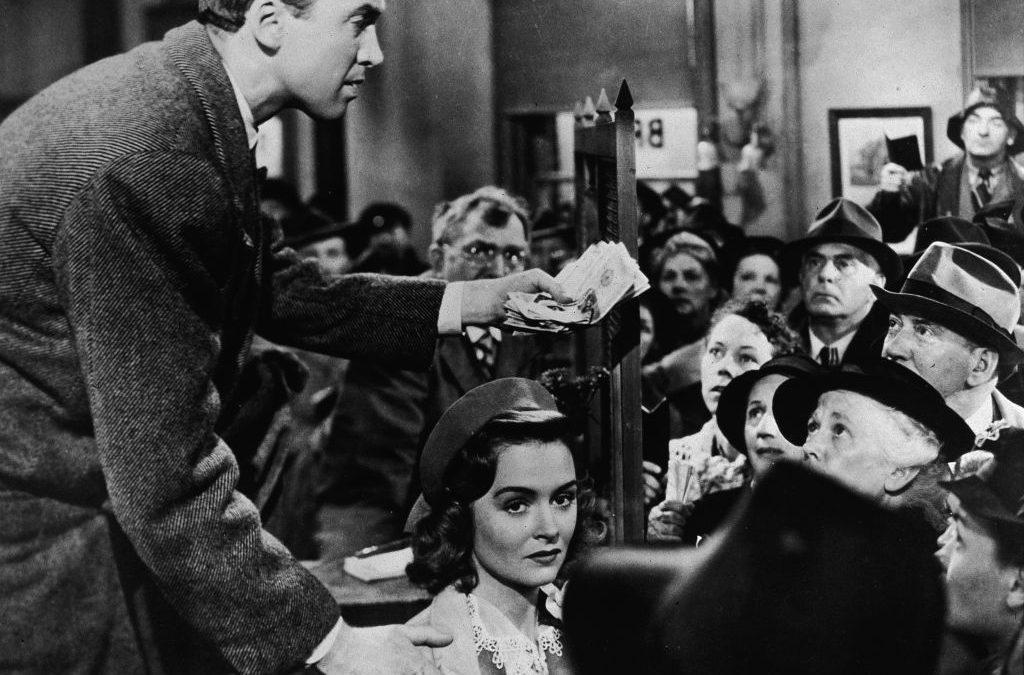
Frank Capra’s It’s a Wonderful Life is remembered for its faith in institutions, community, and public trust. Paraguay’s recent banking crisis offers a darker sequel. The collapse of Ueno Bank exposed not simply the failure of a financial institution but the consequences of a political system in which power, influence, and economic interests had become increasingly intertwined.
But the banking crisis did not create Paraguay’s underlying problem. It exposed something that had been developing for years: the growing capture of political and economic institutions by a powerful political machine centered on former president Horacio Cartes and his political protégé, Santiago Peña who became Paraguay’s president in 2023.
Paraguay’s banking crisis is not important merely because a major institution failed. It is important because it illustrates a recurring foreign-policy temptation: mistaking strategic or ideological alignment for evidence of democratic resilience.
The familiar bank-run scene in Capra’s film offers a useful point of comparison. Panic spreads, depositors demand their money, and George Bailey explains that the money is not sitting in a vault but invested throughout the community. The institution survives because people trust both the system and the people running it.
Paraguay’s crisis turned that premise on its head. The question many Paraguayans began asking was not merely where the money had gone. It was whether key institutions had come to serve a political elite rather than the public.
The problem was not simply that Washington missed warning signs. It was that many policymakers viewed Paraguay primarily through the lens of strategic and ideological alignment.
Paraguay’s standing in Washington rested on several factors. It remained one of Taiwan’s few diplomatic partners, maintained close relations with Israel, and increasingly aligned itself with influential conservative political movements in the United States. These attributes made Paraguay attractive as a geopolitical and ideological partner. But they also had an unintended consequence: governance concerns were increasingly overshadowed by other priorities. Evidence that would have prompted greater scrutiny elsewhere was often viewed through the assumption that a friendly government was also a healthy one.
The financial sector provided some of the clearest warning signs.
During Peña’s presidency, public funds increasingly flowed toward Ueno Bank, associated with Peña, and Banco Basa, long linked to Cartes. Government financial data showed an extraordinary concentration of public deposits and financial instruments in those institutions, while Paraguay’s social security system approved major purchases of Ueno bonds despite growing concerns about conflicts of interest. The developments prompted an obvious question: Why was the state directing so much public money toward institutions associated with the country’s most powerful political figures?
In October 2024, when a reporter asked Peña whether investments involving Ueno represented a conflict of interest, he angrily denounced the allegation as a “nefarious lie.” Nor were those concerns difficult to find in official U.S. assessments. The U.S. Department of State’s 2024 Investment Climate Statement warned that “unchecked corruption, impunity, and graft continue to hinder Paraguay’s economy.” Peña disputed the report, while senior Paraguayan officials dismissed it as inaccurate.
During this period, I observed a widening gap between how many Paraguayans understood their country’s trajectory and how it was often perceived in Washington. Conversations with journalists, civil-society leaders, businesspeople, and governance specialists frequently returned to concerns about the growing concentration of political and economic power around Cartes and his allies.
Among some policymakers and congressional observers in Washington, however, anti-corruption efforts were viewed less as responses to governance risks than as politically charged interventions. As a result, evidence of institutional deterioration was frequently filtered through ideological assumptions rather than evaluated on its own terms.
Yet Washington increasingly shifted attention away from governance concerns and toward geopolitical and ideological priorities. Sanctions were lifted, support for democracy and civil-society programs diminished, and anti-corruption efforts lost momentum. Whatever the rationale, the cumulative effect was to signal that institutional concerns were no longer paramount.
The collapse of Ueno finally exposed Paraguay’s crisis.
What appeared to be a banking scandal revealed a political system in which patronage networks, conflicts of interest, financial influence, and political authority had become deeply intertwined. The consequences were not abstract. Ueno’s failure left millions of customers unable to access their savings and disrupted payments and wages, while raising serious questions about the management of hundreds of millions of dollars in public deposits. For ordinary Paraguayans, the crisis was a deeply personal reminder of what happens when the institutions entrusted with protecting their financial security become entangled in political and economic power.
For years, Paraguayan cartoonists portrayed Peña as Cartes’ puppet. The caricature reflected a widely held perception that Peña’s political fortunes depended on the political machine Cartes built and continued to influence. When Cartes signaled support for Peña’s removal, the president’s political position unraveled with astonishing speed. Yet the larger lesson extends beyond any individual leader. The real issue was not the puppet but the system holding the strings.
Peña’s removal did not dismantle the machinery that had produced him. Pedro Alliana, who succeeded Peña as president, was one of Horacio Cartes’ closest political allies and had served as Peña’s vice president. Antonio Barrios, chosen to replace Alliana as vice president, had longstanding personal and political ties to Cartes. Although the transition altered the names at the top of the government, it did little to change perceptions that the same power structure remained firmly in place.
Paraguay matters not because it is unique but because it illustrates a temptation that recurs throughout American foreign policy. Policymakers naturally prefer partners who share their geopolitical priorities and ideological instincts. The danger comes when those affinities become substitutes for evaluating the strength of democratic institutions.
This is not just a Latin American story. Democracies rarely erode because leaders openly announce their intention to weaken institutions. More often, warning signs are rationalized away because the people benefiting from institutional decline are viewed as allies. Loyalty begins to outweigh accountability, and political convenience begins to outweigh democratic standards. By the time the consequences become impossible to ignore, many of the safeguards have already weakened.
Capra’s story endures because George Bailey reminds us that institutions are only as valuable as the communities they serve. Paraguay’s crisis tells the opposite story: what happens when institutions increasingly serve those who control them rather than the public that depends on them.
The dark sequel to It’s a Wonderful Life was never really about the bank. It was about the institutions behind it and the extent to which they had become vulnerable to political capture. Paraguay’s crisis should remind policymakers of a simple principle: strategic alignment and democratic resilience are not the same thing. When the former is allowed to obscure the latter, the consequences eventually become impossible to ignore.