
The Trump Doctrine in the Americas has prioritized addressing China’s expanding regional influence. Over the last decade, Chinese investment in South America has increased dramatically. China is the leading economic partner of many of its countries and has signed free-trade agreements with Chile, Ecuador, and Peru over the last 20 years.
Chinese investment in South America has centered around several key natural resources, including lithium, a key ingredient in the rechargeable batteries found in everything from cell phones to electric vehicles. The Lithium Triangle of Argentina, Bolivia, and Chile is home to over 75 percent of the world’s supply, and Chinese investment in the region has led to several Chinese partial acquisitions of Western companies in the extraction of lithium, along with significant investment and construction of transportation routes between the region and China.
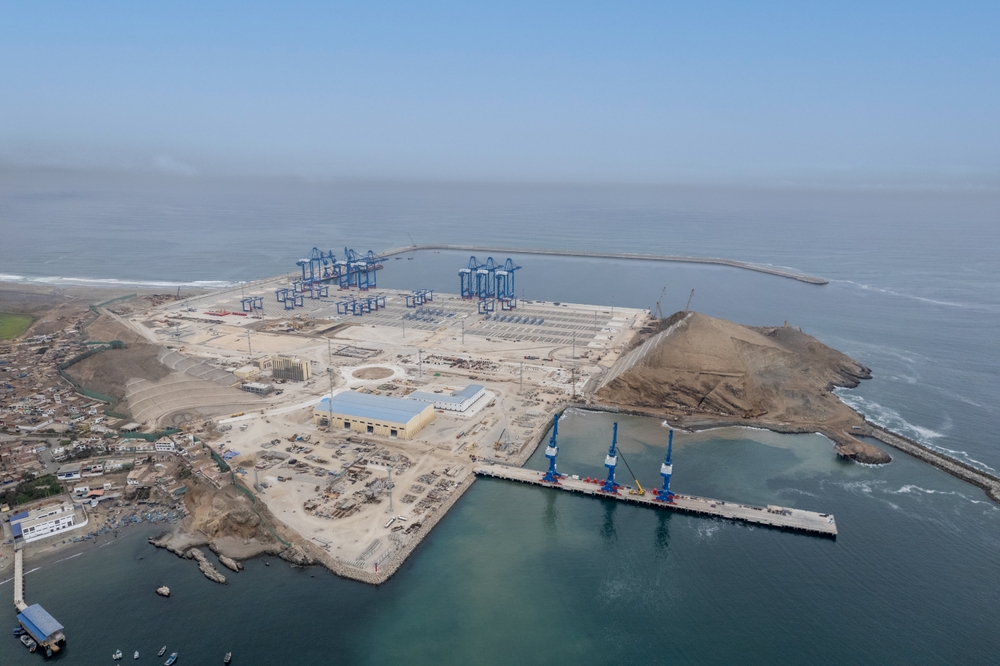
Central to Chinese infrastructure investment is Peru. Located on the central Pacific coast of South America, Peru has had long historical ties with China, and it is home to the largest Chinese population in Latin America. In the twenty-first century, Chinese investment in Peru has expanded in the areas of mining, energy, and transportation sectors, with the Chancay port being the most prominent development. Located north of the capital, Lima, and completed in 2024, the Chancay port is designed to substantially increase Chinese-South American connections. The importance of the port in China’s relations with the continent cannot be overstated. According to recent estimates, Chancay could become the third largest port in Latin America within the next few years.
The Chancay port has also been at the center of recent controversies between the region and the United States. U.S. authorities have sounded alarms, arguing that Chinese investment such as Chancay could allow for Chinese spying and military operations. As such, the United States has attempted to influence Peru through its unstable political system. Peruvians on April 12 went to the polls to elect a new president. The current election results show a runoff election between right-wing Keiko Fujimori and left-wing Roberto Sanchez. Like the 2021 elections between Keiko Fujimori and Pedro Castillo, the June runoff is expected to be highly polarized and may lead to ongoing political and social instability. Whoever ends up winning will be Peru’s ninth president in 10 years, with no president finishing their term since 2016.
On April 17, Congresswoman Maria Elvira Salazar (R-FL), who chairs the House Foreign Affairs Subcommittee on the Western Hemisphere, declared that the United States will “help Peru take the port back” from Chinese control. This follows recent Peruvian rulings that COSCO, the Chinese shipping company that oversees the Chancay port, does not have to be regulated or supervised by Peruvian authorities since it is considered a private port designed for public use.
However, any potential U.S. attempts to challenge Chinese investment have been undercut because of declining U.S. soft power in the region following the dismantling of USAID in 2025. The reduction of U.S. aid and assistance in the region has potentially allowed newer opportunities for the growth of Chinese influence. If the United States loses ground to Chinese soft power in the region, it could be years, if not decades, before Washington can regain the trust and impact it took decades to develop.
Although the Trump administration might use strong-arm tactics with Peruvian authorities to close or reorganize the Chancay port, it’s more likely that the next Peruvian president will try to balance the two powers—for two important reasons. First, one of Peru’s few bright spots has been its steady economic growth despite large-scale political and social instability. China has been Peru’s leading trading partner for several years, and the relationship with China is vitally important to Peru’s future economic growth.
Second, the next Peruvian president will take office on July 28. The incoming president may attempt to ride out any conflict with the Trump administration until the November midterm elections. Recent by-elections have shown significant Democrat gains, leading to the possibility of a “blue wave” of Democrats taking the House and, possibly, the Senate. If the Democrats control Congress, U.S. foreign policy is likely to be affected by congressional investigations, increased oversight of executive power, and, possibly, attempts to impeach Trump. This change may reduce burdens on Peruvian authorities and re-open the potential for U.S. soft power efforts.
China will likely remain an important economic player in South America for the indefinite future, and in Peru even more so. Although some claim China’s involvement in Peru and South America serves geopolitical aims, their partnership is fundamentally driven by economics and likely to remain so.