A headline for a recent McClatchy news story suggests that the decision of Afghan presidential candidate Abdullah Abdullah not to contest the second round of the Afghan presidential election will have a major impact on whether the Afghan government is perceived as legitimate: “Challenger’s pullout leaves Afghan government of dubious legitimacy.”
Why the Afghan Surge Will Fail
Before the Obama administration buys into General Stanley McChrystal’s escalation strategy, it might spend some time examining the August 12 battle of Dananeh, a scruffy little town of 2,000 perched at the entrance to the Naw Zad Valley in Afghanistan’s southern Helmand province.
Underlying Causes of Insecurity in Afghanistan
As Iraq slowly moves into stability and democracy, much attention has turned to Afghanistan, and on Obama’s yet-to-be-made decision on troops. Public opinion has also slowly turned sour, in part to rising U.S. casualties. October 2009 was the deadliest month for the United States in Afghanistan since the invasion in 2001. But what does the war look like from the eyes of Afghans? A recent poll by the Asia Foundation looked at Afghan public opinion on reconstruction, security, U.S. presence, governance, and the role of women in society. FPIF spoke with Mariam Nawabi, an attorney, activist, and founding member of the Afghanistan Advocacy Group, to better understand Afghan public opinion on the conflict, and how the country can move towards a stable democracy. Nawabi also previously worked at the Embassy of Afghanistan as Commercial and Trade Counsel, and has also traveled to Afghanistan.
UN Report Misleading on Afghanistan
As President Obama and his advisors debate future troop levels for Afghanistan, a new report by the UN Office on Drugs and Crime (UNODC) muddies the water on one of the most important issues in the debate — the effects of Afghanistan’s drug production.
A Call for Clarity on the Afghanistan War
While President Barack Obama reviews his strategy on Afghanistan, a perfect moment to send a strong unified message to end the war is slipping through our fingers. Whether it’s because we seem to have bought into the lies about the goals of this war or because we mistakenly feel that a Democratic president is going to come to the right conclusion on his own, one thing is clear: There’s no debate within the Democratic Party or in the White House about whether to end the war. The only thing being debated is how to continue the war.
Setting Out the Conditions for ‘Success’ in Afghanistan
President Obama is right to be deliberate in contemplating General Stanley McChrystal’s request for a troop surge in Afghanistan, as that decision may determine the outcome of the eight-year U.S. engagement in Afghanistan and perhaps even the broader state-building process.
Swing Region
In the game of geopolitics, South Asia is the big swing region. It commands the very center of the vast Eurasian heartland, which the founders of geopolitics identified as pivotal to control of the globe.
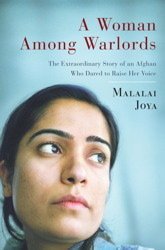
Interview with Malalai Joya
There are currently more than 100,000 foreign troops in Afghanistan, about 65,000 of which are American. U.S. General Stanley McChrystal is asking for more, perhaps as many as 45,000 soldiers. However, there is rising opposition to the war in the United States and several NATO countries. The Taliban now have a permanent presence in 80% of Afghanistan, up from 72% in November 2008, and are spreading their influence to the north. The recent elections have been marred by fraud, and it is still unclear how and when the problems will be resolved. Obama has a lot on his plate and hears many conflicting voices on what should be done. But what do Afghans actually think?
Strategic Dialogue: Afghanistan
These pieces are part of a strategic dialogue on Afghanistan, as part of our new South Asia focus. You can read Ed Corcoran’s piece here and Erik Leaver’s piece here.
Losing the Moral High Ground
On the eighth anniversary of the launch of Operation Enduring Freedom in Afghanistan, the spotlight is on the Obama administration’s evolving war strategy in a nation long known as the "graveyard of empires."