Enough surface-to-air missiles have disappeared in Libya to turn all of North Africa into a no-fly zone.

The Price of the Libya Intervention: Surface to Air Missiles for All
read more

Enough surface-to-air missiles have disappeared in Libya to turn all of North Africa into a no-fly zone.

The political causes of famine in the Horn of Africa are completely absent from the rhetoric of Bono’s ONE campaign.
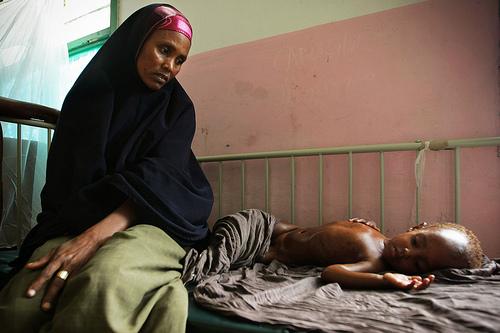
Political instability within Somalia and the actions of the international community are closely connected. By supporting regional actors inside Somalia, instead of supporting the federal government, the international community is contributing to the centrifugal forces that keep the country weak, violent, and in a prolonged humanitarian crisis.

Despite the efforts of the United Nations’ largest active peacekeeping force, several peace agreements among the belligerents, and a temporary six-month ban on mining earlier this year, conflict in the eastern Democratic Republic of the Congo (DRC) persists after nearly 15 years. It has been—and continues to be—a destructive conflict. More than 5.4 million perished in the region between 1998 and 2003, and an estimated 45,000 continue to die monthly due to malnutrition, disease, and violence.

For the past couple of months, the National Association of Manufacturing, the U.S. Chamber of Commerce, and their public relations hoplites have launched a campaign to invalidate Section 1502 of the Dodd-Frank Act. The legislation, which was passed July 21, 2010, ostensibly requires public corporations to practice supply-chain due diligence. If a U.S. company gets its minerals from Democratic Republic of Congo (DRC), it must be able to verify that it did not buy them from militias or warlords.
Contrary to what international relations types may think, leaders seldom do a rigorous cost-benefit analysis of the results before waging war.

In order to mine its resources a Texas-based firm sought to sign a 49-year lease for land in South Sudan for a paltry $25,000.
A call to Congress for a cease-fire in Libya, issued by U.S. Non-Governmental Organizations that support human rights and democracy in Africa.
Come October, Atlas won’t be shrugging, he’ll be groaning as global population passes the 7 billion mark. Until very recently, demographers predicted that these numbers would peak in 2050 at just over 9 billion and then start to decline. The latest research, however, suggests that despite declining fertility across much of the world, population will continue to rise through this century to over 10 billion people. With famine spreading in Somalia, another food crisis gripping North Korea, global food prices near a record high, and climate change threatening to reduce future harvests, the question continues to nag: are we outstripping our capacity to feed ourselves?

In 2005, President Bingu Wu Mutharika of Malawi embarked on an innovative five-year solution to promote Malawi’s agriculture sector by increasing farm subsidies and allocating 10 percent of the national budget to the agriculture sector to help promote infrastructure and farm training. Despite concerns from the World Bank and the UN, President Mutharika promoted Malawi’s agriculture sector and decreased poverty from 52 percent to 40 percent while turning Malawi into a food basket not only for its people but also for export.