Could Japan and China — the number two and three largest economies in the world — really get into a punch-out over five tiny islands covering less than four square miles?

Japan v. China: Smoke or Fire?
read more

Could Japan and China — the number two and three largest economies in the world — really get into a punch-out over five tiny islands covering less than four square miles?

Actress Sandra Oh has taken on a new starring role: North Korean adoption activist. In a new ad, Oh pulls heartstrings for the rescue of North Korean children who have escaped and who “are living alone and without family in foreign lands” like China. “They need us,” she says against a backdrop of fleeting images of emaciated children. But who are these children?

A year ago, Secretary of State Hillary Clinton signaled a major transformation in U.S. foreign policy in an article titled “America’s Pacific Century,” which announced the U.S. “pivot” toward Asia, the Pacific, and the strategically important Indian Ocean. The expansion comes at a price for the region’s people.
If a state like Pakistan considers tactical nukes a viable battlefield weapon, the entire world is in trouble.

On September 2, Dr. Imok Cha, a 51-year old San Francisco-based pathologist boarded a plane headed to Jeju Island, South Korea, where she was to present new findings at the World Conservation Congress of the International Union for Conservation of Nature (IUCN), the world’s oldest and largest environmental organization. But Dr. Cha’s journey to the IUCN was cut short at Incheon International Airport.

Would that the Chinese rich were addicted to designer drugs instead of ivory.

It’s election time in the United States, and once again Washington doesn’t care about Korea. I realize that this is a difficult pill for Koreans to swallow. Koreans naturally believe that, since Korea is at the heart of East Asia and East Asia is at the heart of the global economy, American politicians and voters care deeply about what happens on the peninsula.

Japan has always had a reputation for organizational prowess and efficiency, which in the past earned it the nickname “Prussia of the East.” That image, along with its post-World War II prosperity, has been seriously shaken by its stinted recovery from last year’s natural and nuclear disasters.
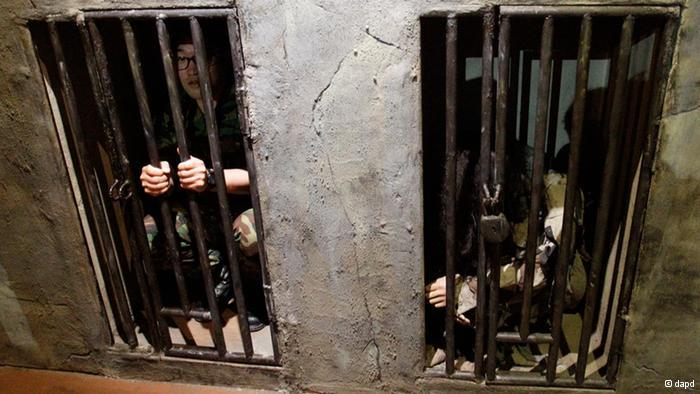
The Committee for Human Rights in North Korea is a DC-based nonprofit that studies these issues in gripping detail. I spoke recently with David Hawk, a lead researcher for the Committee, about North Korean camps, defectors, and the networks of merchants and sympathizers who operate in the shadows.
The United States continues to give short shrift to removing unexploded bombs from Laos.