Much as the United States needs to withdraw from Afghanistan, it needs to keep in mind the effects that our military standdown would have on India.
Would a U.S. Withdrawal From Afghanistan Drive India Into China’s Arms?
read more

Much as the United States needs to withdraw from Afghanistan, it needs to keep in mind the effects that our military standdown would have on India.

Prime Minister Kan is on board with the U.S. military presence in Okinawa, but the island’s residents and politicians are considerably less sanguine about it.
By sleeping with their students, Eastern and Western Buddhist teachers have trashed not only young souls but their own traditions.

The word Oceania typically conjures up images of reclining with a fruity cocktail under a canopy of palm trees while gazing out at the blue waters of the Pacific, whose waves softly embrace the pristine white sand beaches of what surely is paradise. However, this paradise is an illusion that hides a dark truth: villagers evicted from their ancestral homes after nuclear fallout, whole nations slowly sinking due to global warming, staggering unemployment and material deprivation. Unfortunately the rest of the world, which is quite content to continue policies of exploitation, ignores these problems and many others that plague the islands of the Pacific.
World attention through the early months of 2010 focused on the tiny hamlet of Henoko in Northern Okinawa as Prime Minister Hatoyama struggled to find a way to meet his (and the Democratic Party of Japan’s) electoral commitment to see that no substitute for the existing Futenma Marine Air Station be constructed in Okinawa. Confronted by adamantine pressures from the US government, and surrounded by uncooperative (some would say even traitorous) bureaucrats who insisted there was no other way but to submit to the US-Japan agreement to construct a new base negotiated by the former LDP government.

Even sending Bill Murray to negotiate with North Korea is preferable to Obama’s Bush-like hard line, complete with sanctions.

This is shaping up to be the toughest year for Futenma Air Station since one of its helicopters crashed into a nearby university six years ago. That accident cemented calls to move the Marine Corps base from its current location in crowded Ginowan City to Henoko, a less populated area in the north of Okinawa Island, Japan’s southernmost prefecture. As details slowly emerged of underhanded construction deals and the potential destruction of Henoko’s ecosystem, though, public dissatisfaction with the plan grew. The opposition Democratic Party of Japan took advantage of this mood when they came to power last year on a platform to scrap the proposed relocation and move the base elsewhere.
India attempts to get a handle on overpopulation by offering rural newlyweds cash if they delay having children.
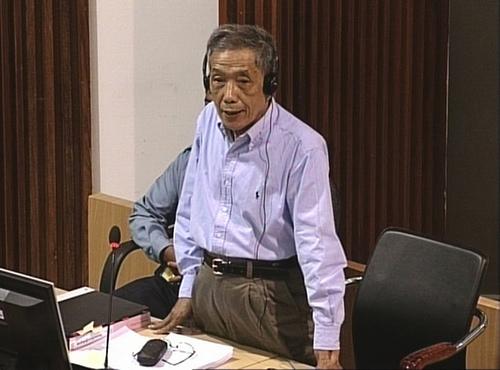
The Khmer Rouge Tribunal delivered its first verdict in July against Kaing Guek Euv, alias “Duch,” the director of the notorious S-21 prison, a torture and extermination center under the rule of Cambodian dictator Pol Pot. After a 77-day trial, the five judges — two international and three Cambodian — unanimously convicted Duch of committing crimes against humanity. He was sentenced to 35 years in prison.
In the raging currents of world history, the framework of Cold War-style “alliance diplomacy” has reached its limit. In particular, the mechanism of the US-Japan alliance that has become fixed by inertia and vested interests in the 65 years since the end of the war has clearly begun to squeak, and the need for the rejuvenation of this alliance is becoming sharply visible.