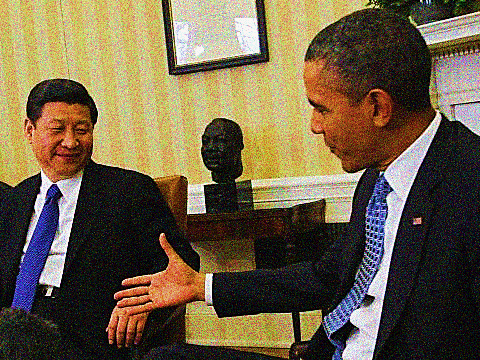
During their recent summit, Presidents Obama and Xi Jinping made strides to reduce their production.
Hydrofluorocarbons: Finally, Something the U.S. and China Can Agree On
read more

During their recent summit, Presidents Obama and Xi Jinping made strides to reduce their production.
This week’s relatively informal and unscripted summit between the presidents of the United States and China on a private estate in southern California is being welcomed by most analysts here as a virtually unprecedented opportunity for each side to gain a better understanding of the strategic aims of the other.
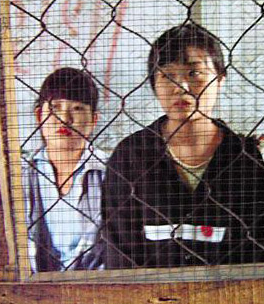
The trafficking of North Korean women throughout Northeast Asia is a process whereby women are commoditized. They are sold to Chinese men as brides, or forced into prostitution to pay off debts accumulated while escaping North Korea. In many ways, North Korean women are inheritors of the suffering of Japan’s “comfort women.”
Army hard-liners in Burma are resisting President Thein Sein’s opening to the West.
Nuclear weapons vastly complicate foreign policy.

From the eight-lane Nairobi-Thika highway built by Chinese construction companies to the ubiquitous Chinese restaurants around town, the signs of China’s activity are everywhere in Kenya—right down to the friendly nihao called out by Kenyans as I walk down a Nairobi street. Elsewhere on the continent, however, the seams of this tight relationship are becoming stretched.
Against the backdrop of Chinese territorial assertiveness, the year started off with the bang of big-ticket U.S. arms sales to treaty allies and strategic partners across the region, including an expanded package of sophisticated military hardware featuring state-of-the-art anti-missile systems and warplanes. On top of this, Washington has also stepped-up its joint military exercises with Asian allies perched on the forefront of ongoing territorial spats.
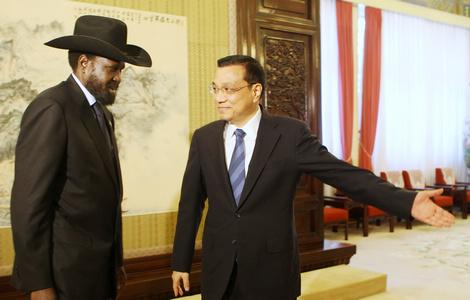
Sudan and China have enjoyed cordial relations for decades, developing a fruitful economic and political partnership dating back to their mutual estrangement from the West in the late 1980s and early 1990s. But Sudan’s 2011 partition has presented China with a new set of challenges. Namely, Beijing will be challenged to advance its interests in the Sudans while upholding its foreign policy principle of non-intervention in other states’ affairs.
As it stands now, a toxic byproduct of our obsession with Iran’s nuclear program is the increased chance of nuclear war with Russia and China.
It’s old, and likely thoroughly forgotten now, but last summer the Washington Post ran an excellent article on the U.S. military‘s “pivot” toward Asia, its origins, and its budget implications. It presented some meaningful background on where the pivot came from, and how it so quickly became dogma in Washington as the decade-long ground wars receded in the national rear-view mirror.