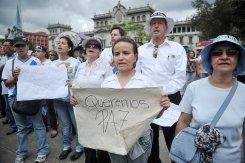
Hanging from City Hall in the center of downtown Bogota is an enormous banner that reads: “To arm or to love?” [Armar or amar], advertising an initiative being carried out by the new administration of democratic leftist mayor Gustavo Petro Urrego. The initiative bans legal firearms from public places in an effort to reduce the number of homicides. The measure is also intended to strengthen the ability of the police to dismantle criminal bands and decommission illegal firearms and other weapons.
Drug War Madness
In 1936, a church group commissioned a film “to strike fear in the hearts of young people tempted to smoke marijuana.” But it was not until the 1970s that Reefer Madness — billed as “the original classic that was not afraid to make up the truth” due to its grotesque portrayal of the supposed dangers of marijuana — obtained cult status.
U.S. and Mexican Governments Continue to Brush Aside Perspectives of Drug War Victims
Public confidence in the Mexican army and judiciary has declined considerably. Meanwhile, 73 percent of Latin Americans perceive corruption among public officials as a widespread problem.
The Audacity of Free Trade Agreements
Congress could vote any day now to strike a new blow against already-battered U.S. workers and the unemployed. Committees in the House and Senate recently marked up the Colombia, Panama, and South Korea Free Trade Agreements (FTAs). The Obama administration is urging passage of all three relics of the Bush administration before the summer recess. The full-court press on the FTAs represents a reversal for a president elected on a trade reform platform.
WikiLeaks: Cable Revives Horror of Colombia’s “False Positives” Carnage
While commander of the its army, Gen. Montoya presided over open season on Colombia’s citizens.
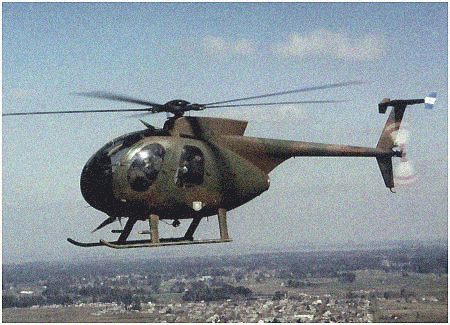
WikiLeaks: “Laundered” U.S. Helicopters Wind up in the Hands of Colombian Paramilitaries
Latest WikiLeaks cable details the hunt for two missing helicopters originally been sold to the Israeli military by the United States, but ended up in the hands of Colombian paramilitaries.
Two, Three, Many Colombias
This past September, U.S. Secretary of State Hillary Clinton drew criticism for comparing the current situation in Mexico to “Colombia 20 years ago.” Most of that criticism questioned whether the analogy was appropriate or whether the statement was an unnecessary affront to a close U.S. ally, the Mexican government of Felipe Calderón. But the more significant part of Clinton’s comments was her enthusiastic praise for Plan Colombia—the massive U.S. military aid package started by her husband in 1999—and her insistence on the need “to figure out what are the equivalents” for other regions, particularly Mexico, Central America, and the Caribbean.
U.S. Base Deal for Colombia: Back to the Status Quo
As the dust settles on the August 10 Colombian Constitutional Court ruling declaring invalid the U.S.-Colombia military bases agreement, politicians and analysts are saying that the decision was for the better. Most of those voices come from former supporters of the deal —including Liberal Party presidential candidate, Rafael Pardo.
Has Incoming Colombian President Santos Inherited a “Captured State”?
Outgoing Colombian president Alvaro Uribe left a legacy of death and displacement. Can new president Juan Santos move his country in a new direction?
Colombia’s Elections: Under the Gun
Colombia’s congressional elections on March 14 were hailed by the United Nations as the most peaceful in years. The victory of the coalition led by President Alvaro Uribe suggests an easy win for his party in the presidential elections scheduled for May 30.