Egypt

Egypt’s other revolution: Modernizing the military-industrial complex

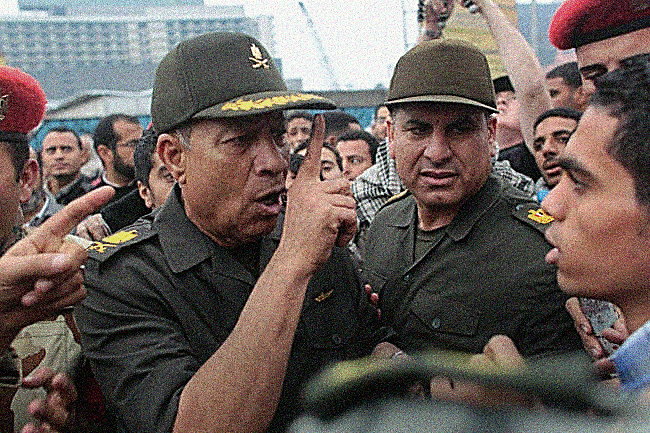
The Egyptian military produces a staggering array of manufactured goods: kitchen cutlery, flat-screen televisions, agricultural and household chemicals, refrigerators, industrial machinery, railway cars, and election booths. And while many of the military’s factory webpages make a concerted attempt to promote their wares, the careful observer gets the feeling that the production of air conditioners and gas stoves has superseded the production of guns and ammo. Although the military has been co-producing weapons systems in its factories under license from Western arms manufacturers for decades, the production lines and maintenance facilities constructing and modifying American M1A1 tanks, British armored vehicles, French Alpha Jets, and Chinese versions of Soviet MiGs are remnants of agreements originally signed in the mid-1980s and early-1990s, initiated by the now-deceased former Field Marshal (and staunch US ally) Mohamed Abdel Halim Abu Ghazala.

read more
A Year after Tahrir

A Year after Tahrir

The Arab revolts that began in December 2010 have immediate, material causes. But their deeper wellspring has been the determination of Arab peoples to reclaim their historical agency from both the condescension of outsiders and the mind-numbing repression of Arab rulers. 

read more
Egypt and the Islamists

Egypt and the Islamists

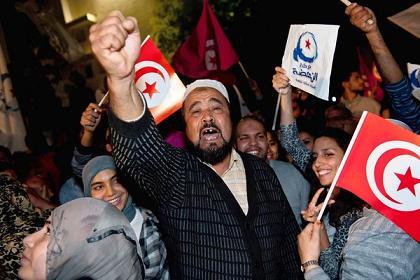
The Egyptian electoral results, as in similar elections in Tunisia, Palestine, Iraq, and Turkey, suggest that in any fair and transparent elections in the Islamic world, Islamist parties and their affiliates can easily win at least 40 percent of the votes. In fact, in the case of Egypt, Islamist parties together won over 77 percent of the seats. These results can be used as predictors of future elections in other Arab and Islamic countries in the area.  The question, then, is no longer whether Islamists can win a majority in elections, but which strain of Islamism and by how much.

read more
Arab Islamists Are Here to Stay

Arab Islamists Are Here to Stay

The hysteria of the West about the Arab awakening turning into an Arab Islamist nightmare is reaching full-blown proportions. The United States and Israel, self-appointed referees of democracy in the region despite their long-running support for the Middle East’s most corrupt and authoritarian regimes, are crying foul.

The incitement? A series of victories by Islamist parties in Tunisia, Morocco, and Egypt. Yet, given the history of Western support for governments that simultaneously quashed secular opposition movements and persecuted Islamists, the popularity of moderate Islamist parties should come as little surprise—nor should it be cause for concern.

read more
Egypt’s Evolving Foreign Policy

Egypt’s Evolving Foreign Policy

The new Egypt is looking to normalize relations with countries like Iran, re-evaluate ties with Israel, and tilt more toward the Palestinian cause. Given its profound cultural capital, powerful military, huge population, and strong economic fundamentals, Egypt could not only regain its regional influence but also play a more assertive and prominent international role. More importantly, the emergence of a democratic system in Egypt could transform the country into a model for the Arab world.

read more