Pakistan walks a tightrope between the United States and the Taliban.

Playing One Side Off the Other Only Hurts Pakistan in the End
read more

Pakistan walks a tightrope between the United States and the Taliban.

The Project for Government Oversight appeals to Secretary of Defense Panetta to cease deploying U.S. nuclear weapons to Europe.

The majority party in Scotland’s parliament is calling for Scottish independence.
What shape will the convergence of Egypt’s civilian and military management with the Muslim Brotherhood take?

Newt Gingrich, not to mention President Obama, outdo British Deputy Prime Minister Clegg in their support for Israel.

Renowned economics columnist Robert Samuelson tried to make the case that austerity measures in Latvia saved its economy.
Libertarians and atheists have some commendable stances — but for the wrong reasons.
John F. Kennedy essentially bought his way into politics. His father, the wealthy Joseph Kennedy, picked out a nice congressional seat in Massachusetts and basically paid the occupant of the position to step down and run instead for the Boston mayoralty. JFK’s father then tried to pay off the Democratic frontrunner to drop out of the race, and when that didn’t work, persuaded William Randolph Hearst not to run any of the candidate’s ads or pictures in Hearst-owned newspapers. Joe Kennedy even paid a janitor named Joseph Russo to run in the race in order to dilute support for another leading candidate named Joseph Russo. Recognizing the importance of PR, the Kennedy family contributed $600,000 – an enormous sum in 1946 – for a children’s hospital in the district where JFK was running for office.

Each year Conn Hallinan’s blog Dispatches From the Edge awards news stories and newsmakers that fall under the category of “Are you serious?”
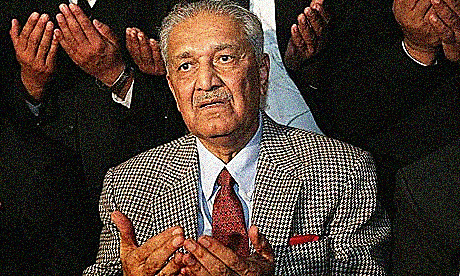
Strange as it seems, the “godfather” of Pakistan’s nuclear-weapons program may have sold nuclear know-how and technology to India.