Once upon a time, cooking was a more visceral experience.
Gie Her a Haggis! (Vintage Recipes for the Holiday)
read more

Once upon a time, cooking was a more visceral experience.
Only fifteen months after his historic Cairo speech, there are alarming signs that President Obama’s new engagement policy with the Middle East may soon find its place in history’s dustbin. The Obama administration’s withdrawal announcement of US “combat” troops from Iraq by the end of August is nothing more than a PR campaign to rename the occupation.

“Conspiracy theorists” marvel at the sight of Viktor Bout on the front page of the New York Times.

Though their crime rate is no higher than the population at large, Roma are the victims of the most widespread roundup of a minority since World War II.

In a speech he gave on March 27, 2009, President Obama referred to the remote areas of the Pakistani frontier as, “for the American people…the most dangerous place in the world.” It is from this speech that Imtiaz Gul drew the title of his book, The Most Dangerous Place: Pakistan’s Lawless Frontier. Gul provides a comprehensive, inside look at the chaotic situation in Pakistan’s tribal areas, which have become an epicenter for extreme Islamic militancy.
In last month’s blitzkrieg tour of Central and Southeast Asia, two of the four stops Secretary Clinton made share the unfortunate bond of enduring an invasion by U.S. air and ground forces. In the space of a few days, Clinton visited both Vietnam and Afghanistan, thus physically linking what had once been, and then what has now become the United States’ longest war. One of the more insidious links that tie these conflicts together was highlighted in a few of the news stories about Clinton’s trip. That link, in a word, is agribusiness.

After 65 years, is there anything new to say about nuclear weapons? Their immense and almost incomprehensible destructive power is well known. Their tenacious endurance as the weapon, even after the collapse of the Soviet Union and the end of the Cold War, is an unavoidable fact as nine nations currently stockpile these world menacers. Their super-power allure to emerging states remains untarnished despite international treaties discouraging proliferation.
The refusal to face up to reality that the United States cannot succeed in Afghanistan, despite all evidence to the contrary, suggests that the political elite is desperately clinging to the American system of global military hegemony.
Consider the following statement offered by Admiral Mike Mullen, chairman of the Joint Chiefs of Staff, at a news conference last week. He was discussing Julian Assange, the founder of Wikileaks as well as the person who has taken responsibility for the vast, still ongoing Afghan War document dump at that site. “Mr. Assange,” Mullen commented, “can say whatever he likes about the greater good he thinks he and his source are doing, but the truth is they might already have on their hands the blood of some young soldier or that of an Afghan family.”
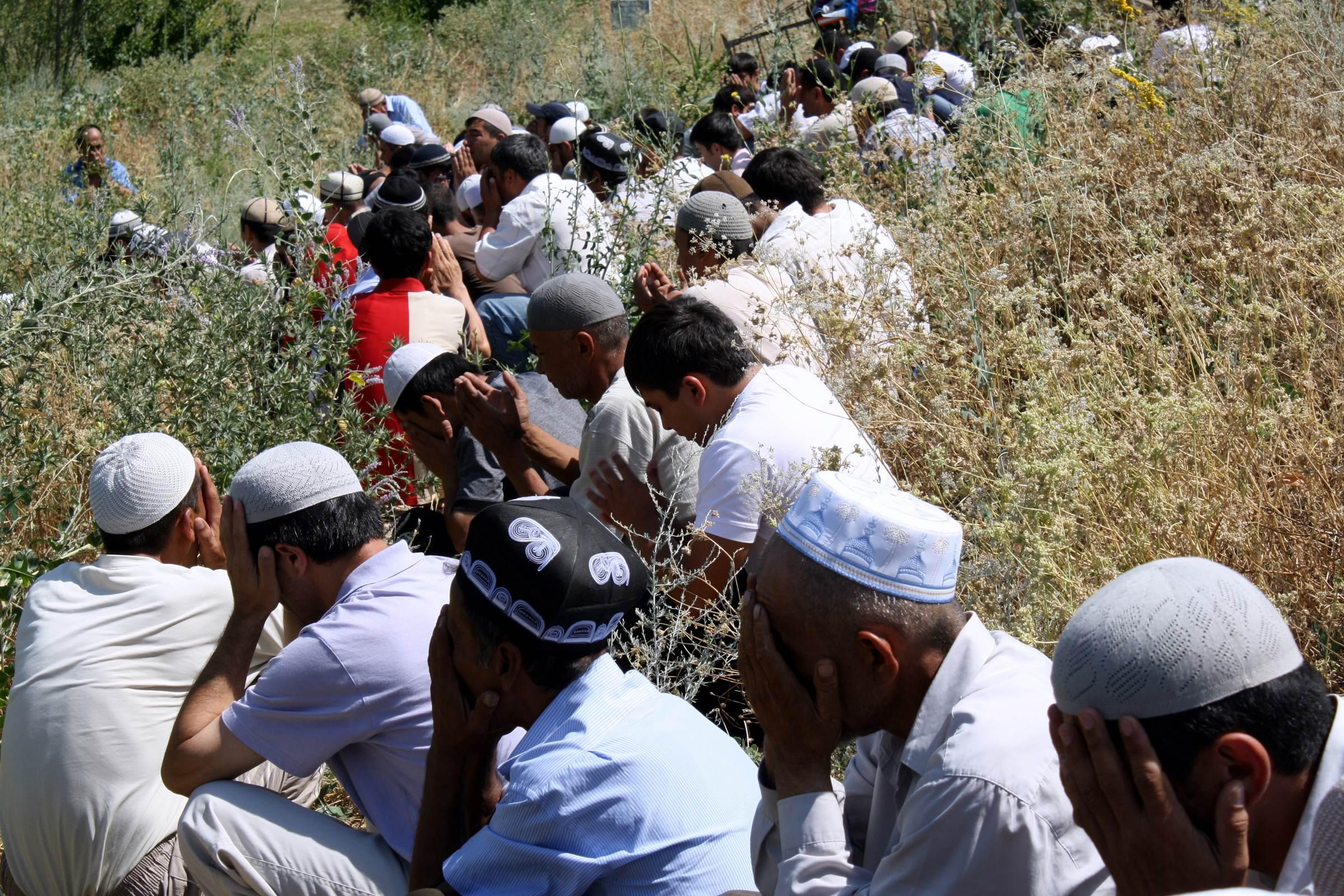
Just weeks after widespread ethnic violence in southern Kyrgyzstan killed hundreds of people, destroyed thousands of houses, and caused hundreds of thousands of ethnic Uzbeks to flee their homes, widespread abuse by Kyrgyzstan’s law-enforcement agencies is again fueling tensions.