And you thought Colin Powell’s claims of Iraqi WMD before the UN was the low point of U.S. foreign policy.
Unlikeliest of Bedfellows: Iran’s Revolutionary Guard and a Mexican Drug Cartel
read more

And you thought Colin Powell’s claims of Iraqi WMD before the UN was the low point of U.S. foreign policy.
Uber think-tanker suggests Iran doesn’t fear American retaliation for its alleged assassination plot because it thinks its nuclear program will deter us.
Will Operation Red Coalition eclipse or compound problems created by Operations Fast and Furious?
Unsafe construction practices may have been used to build Iran’s first nuclear energy facility, Bushehr.
Iran’s need for uranium for medical purposes may make it amenable to compromise over its nuclear program.
The bomb-Iran crowd draws sustenance from how weak claims that Iran won’t possess nuclear weapons soon makes disarmament advocates look.

Set in the aftermath of Iran’s fraudulent elections of 2009, Zahra’s Paradise is the fictional story of the search for Mehdi, a young protestor who has disappeared in the Islamic Republic’s gulags. Mehdi has vanished in an extrajudicial twilight zone where habeas corpus is suspended.
There’s not much that a smaller power like Iran can do when the West assassinates one of its own except roll with the punches.

In the absence of genuine democratic institutions, a set of common economic grievances is galvanizing the Arab Street against a diverse host of unaccountable regimes across the Arab world. However, deep and structural economic problems also characterize much of the Middle East, including non-Arab Iran. Recognizing the depth and gravity of the country’s economic challenges, Iran’s supreme leader Ayatollah Khamanei has declared 2011 as the year of “economic jihad.”
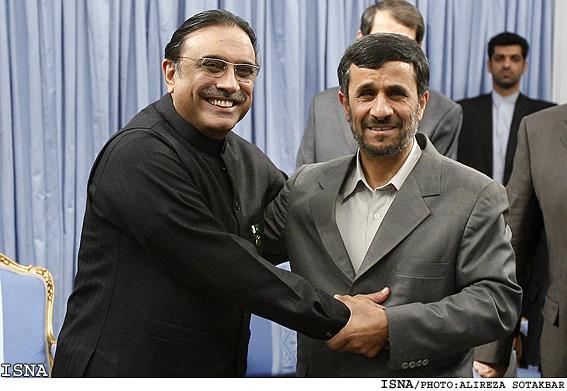
Pakistani President Asif Ali Zardari paid a second visit to Tehran last weekend after having been there only three weeks ago. Official reports by Pakistani and Iranian sources broadly characterized the visit as “part of the ongoing process to strengthen bilateral ties, step up consultations with countries in the region for peace and stability at a time when tension was developing in some parts and for promoting peace and stability in Afghanistan and fighting militancy.” But this rationale hardly warrants two head-of-state level official visits in such a short span of time. After all, lower-level officials could have dealt with such concerns, as in the past.