Can we close the Futenma U.S. Marine Base in Japan Without Constructing Additional Marine Bases in Okinawa?
Congressional Briefing: Okinawa Marine Bases and U.S. Military Spending
read more

Can we close the Futenma U.S. Marine Base in Japan Without Constructing Additional Marine Bases in Okinawa?
Japan needs China’s market for its technology. It also needs low-priced daily necessities made in China.

The Philippines, Australia, and even China helped the United States defeat imperial Japan in World War II.
Reality TV today has nothing on a show from the 50s that hosted both a prominent Hiroshima victim and the co-pilot of the Enola Gay.
Some Fukushima refugees have been exposed to the same stigmatization as Hiroshima and Nagasaki’s victims of radiation sickness
The first robot to go into one of the plant’s reactor buildings, where high radiation was measured after the accident, was a U.S. PackBot. Japanese-made robots, said to be the best in the world, were not at the vanguard of such a crucial event. This has begged the question: Where has the country’s pride as a scientific and technological giant gone?

Lady Gaga went to Japan for a charity concert, proceeds of which go to victims of the March 11 earthquake. All week, Lady Gaga commanded the airwaves, Japan’s current turmoil notwithstanding. The panda eyes she wore on a morning talk show could be the single greatest make-up event ever. But it was something else that Lady Gaga did that really commanded my attention, and the attention of so many Japanese.
Nuclear safety needs to share the light that Fukushima has shone on it with nuclear security. Russ Wellen at the Foreign Policy in Focus blog Focal Points.
The emotions felt by those leaving Japan were varied and often complex. Many expressed joy and hope at the prospect of a new life in North Korea – even though the vast majority came originally from the southern half of the Korean Peninsula, and were going to a place they had never seen before. Some took a more somber view – traveling without high expectations, but at least in the belief that a future in North Korea would be more secure than their life in Japan, where they had been deprived of citizenship and had no assured residence rights, very limited access to welfare and (in most cases) few educational or employment opportunities.
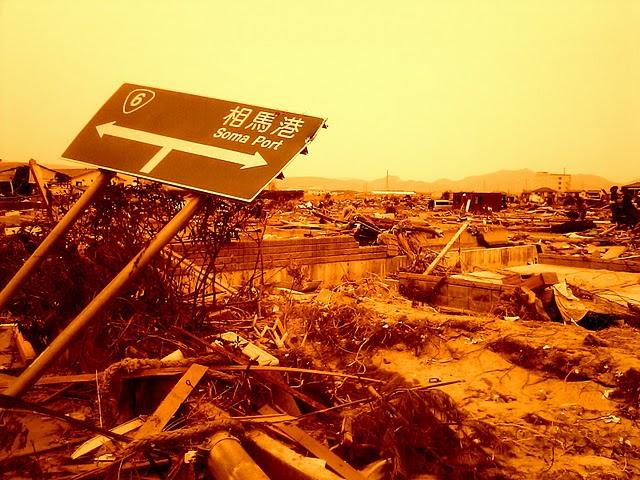
Situated on the east coast of Honshu 30 kilometers to the south of Sendai and 50 kilometers north of the Daiichi nuclear facility, Soma received the full brunt of the March 11 Tohoku earthquake and tsunami. The tragedy there is ongoing; it is messy, and it is chaotic. Small streets crowded with homes, shops, and schools are simply gone. Digging through the sand I find photos, toys, and furniture, things that were cherished. They are now lumped into two piles: combustible, non-combustible. Tatami mats dotting the newly flat landscape mark where bodies were found once the water receded.