Middle East & North Africa
On Drugs and Democracy

On Drugs and Democracy

The UN Office of Drug Control (UNODC) has thoroughly documented the violence, crime, and corruption linked with the worldwide heroin and opium trade. The U.S. news media report every day on the mayhem and corruption of government officials caused by the drug wars in Mexico, Colombia, and other points south of our border. In Afghanistan, the Taliban tax the opium trade and protect poppy farmers from eradication, fueling the insurgency and our 11-year war.

However, these problems are all consequences of drug prohibition, not of the drugs themselves.

read more
Art and the Arab Awakening

Art and the Arab Awakening

The visual landscape of the Arab World has changed greatly as various forms of creative expression have flourished in the days since the Arab Spring. Graffiti and street art not only played a distinct role in the political dissent of this revolutionary period. Art has also been an ongoing experience for the revolutionary youth that is strengthening civil society and the democratic process.

read more

Sanctions Derail Diplomacy on Iran

Mohammad ElBaradei, former International Atomic Energy Agency (IAEA) chief, used to say using the so-called “carrot and stick approach” on Iran – simultaneous use of sanctions and incentives to induce cooperation – is doomed to fail, because “Iran isn’t a donkey”. Others would go further and say that Iran is a proud civilization, and an ambitious regional power, which will not give up an iota of its nuclear ambitions, no matter how painful the price.

read more
Military Intervention in Syria: No

Military Intervention in Syria: No

Whatever our humanitarian concerns might be, real decisions about direct military intervention will be made with little regard for Syrian civilians, Syrian civil society, or Syria’s national survival – all of which will suffer consequences that could last a generation or more. A U.S./NATO air war against Syria would likely not end like Libya’s – with no western casualties and a quick exit. Given Syria’s military, especially air capacity, it will look far more like Iraq than Libya.

read more
African Migrants and the Israeli Apartheid Debate

African Migrants and the Israeli Apartheid Debate

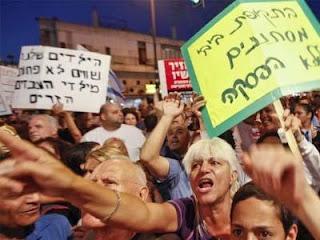
The name of the neighborhood could not have been more symbolic. Located in southern Tel Aviv, the impoverished Hatikva quarter has always born the stigma of sharing a name with Israel’s national anthem, while playing home to some of the poorest, most marginalized Jews in the country—as well as a growing population of African asylum seekers, mostly from Eritrea and South Sudan.

read more
Divesting from All Occupations

Divesting from All Occupations

The Palestinian solidarity struggle would be considerably strengthened if, instead of calling for divestment specifically from companies supporting the Israeli occupation, the call was for divestment from companies supporting all foreign belligerent occupations.

read more